
 E-Paper



Review: The Broken Script by Swapna Liddle
A comprehensive exploration of key events in Delhi between 1803 and 1857 and their impact on different groups of people, economic and social relations, and “ways of thinking and belonging”

 Prefer HTon Google


As a former resident of and perennial yearner for Delhi, I can extol its charms despite its many deficiencies. It’s a sentiment that many would echo. As the Urdu poet Mir Taqi Mir wrote in the 18th century, “My heart and my Delhi may both be in ruins/ There are still some delights in this ravaged home.”
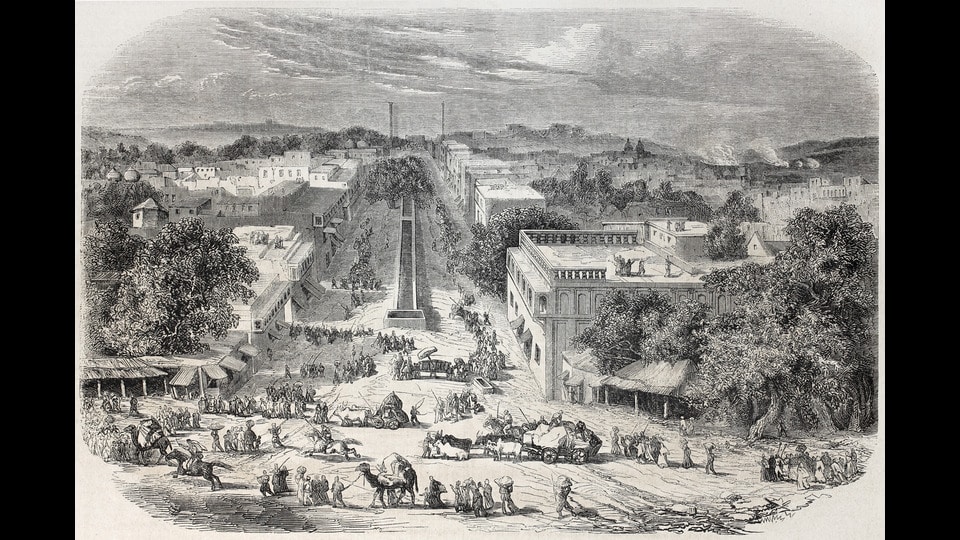
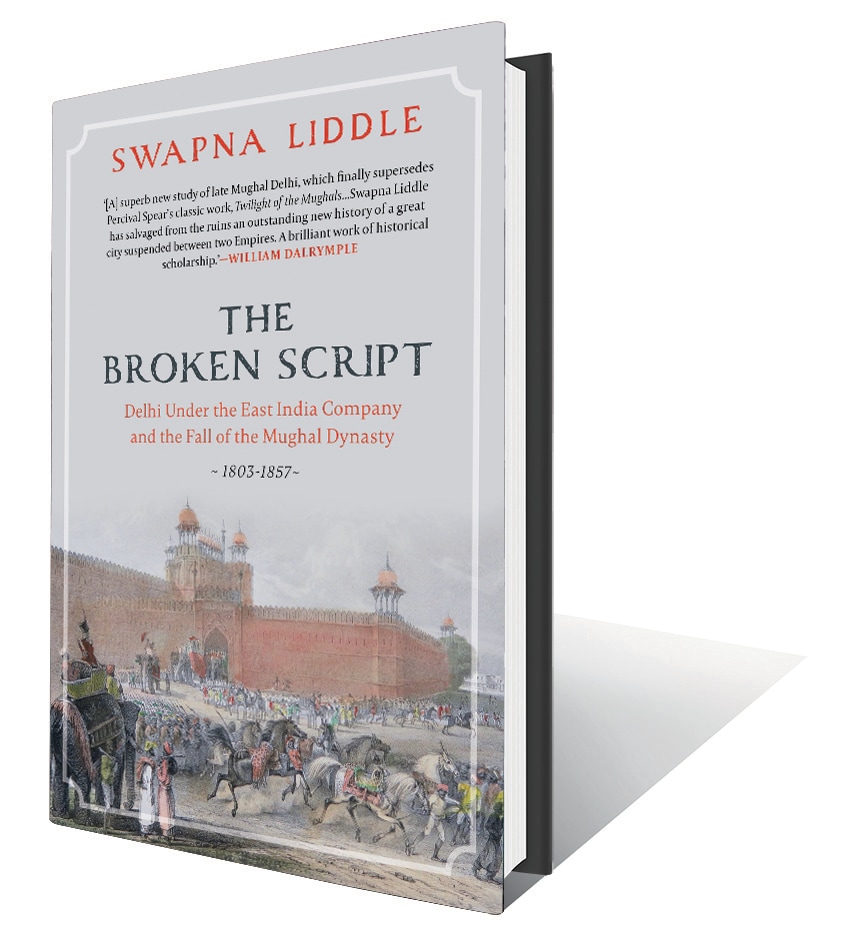
Perhaps, that’s why not a year goes by without a new book, movie, or play about Delhi or featuring it in a pivotal role. There is plenty of fiction, non-fiction, and works combining the two, such as Khushwant Singh’s Delhi: A Novel. While the city’s past and present are both fecund grounds for writers, the aftermath of the city’s conquest by the British seems particularly compelling. In 1803, the East India Company exerted its dominion after wresting Delhi from the Marathas, while the Mughal empire went into further decline, culminating in the dynasty’s end after the revolt of 1857.
The works of Narayani Gupta, CM Naim, Gail Minault, Percival Spear, and William Dalrymple, among others, have delved into various facets of this period. Joining their ranks is Swapna Liddle’s The Broken Script: Delhi Under the East India Company and the Fall of the Mughal Dynasty, 1803-1857.
Her book comprehensively explores key events and their impact on different groups of people, economic and social relations, and “ways of thinking and belonging”. Anecdotes and interesting minutiae of everyday life enliven her observations and arguments. She writes about how when Bahadur Shah Zafar, the last Mughal emperor, urged his wives to leave the palace upon his death, one of them did so immediately. We read about a newspaper reporting on 14 June 1810 that the British Resident had not eaten his breakfast as he was suffering from a hangover. Another incident pertains to Begum Samru, a dancer who eventually ruled the Sardhana principality and commanded about 4,000 troops. After the British victory in Bharatpur in 1826, she hosted an event where mimics mocked an English prize agent trying to extort money from an impoverished peasant — in front of an audience comprising British officers.
Liddle is an excellent raconteur, as people who have participated in her heritage walks can attest. However, that does not always reflect in the book. Her prose is largely dispassionate and clinical — suitable for a scholarly exposition, but not as much for a non-academic audience. A couple of chapters seem like a litany of events and facts, which make for dry reading. These stand out more because of the stark contrast with Part Five: 1857 and its Aftermath. In this section, as she recounts how mutineers took over Delhi and the subsequent British push back, the narrative tension suddenly tautens and her storytelling engages.
All in all, The Broken Script is an excellent and rigorous introduction for readers interested in history but unfamiliar with this pivotal era of Delhi’s past. However, for those who have read other works on the period, it can be underwhelming in parts.
In the book’s introduction, the author mentions her “trepidation” about working on subjects that scholars have studied in detail, but does not explain how her work differs from others’. It would have been good to know the current state of scholarship, how it evolved, the rationale behind her choices of sources, and how different historiographical methods might have contributed to the multiplicity of narratives about that era.
There are a few glimmers of engagement with other works. For instance, she cites evidence against the romanticized notion of the “White Mughal” — the idea that relationships between European men and Indian women were the “product of an age of greater racial intermingling and understanding”.
Liddle quotes from newspapers, letters, and poetry, and the book’s endnotes are extensive, but as a non-historian, I could not figure out how her book was expanding the scholarship on the topic or what its raison d’etre was. In the epilogue, she writes against the various characterizations of the age: “sometimes as a period of ‘twilight’, at others as a ‘renaissance’; and as if to somehow reconcile the two, as the last bright flicker of a candle before it goes out”. But it is not clear who, if anyone, still subscribes to these assumptions, considering that CM Naim, whom she cites, dispelled these two decades ago. Or is she merely synthesising the extant scholarship for a new crop of readers?
It would have been good to know, for even if the book does not provide novel insights, it chronicles a history that bears repeating. Liddle’s nuancing of narratives is significant considering how rewriting history to reflect popular prejudices has become a national obsession. With her methodical analysis and measured tone, she dismantles neat binaries and hasty assumptions. Her description of how the Mughals celebrated Holi, Rakshabandhan, and other festivals associated with Hinduism is worth highlighting at a time when just about every day someone blames long-dead kings and their presumed descendants for all ills blighting the country.
Besides, many of the themes Liddle highlights would be all too familiar to residents of Delhi — and India. Her exploration of the harnessing of religion for political expediency, religious and caste conflict, freedom of the press, and debates on tradition versus innovation two centuries ago provides sweeping perspectives on our contemporary world. Even concerns like fake news, slum demolitions, profligate weddings, and bribing of government officials make an appearance. For its striking illumination of our historical underpinnings, The Broken Script is a book worth reading and repeating.
Syed Saad Ahmed is a writer and communications professional.


