
 E-Paper



Review: Sweet Malida by Zilka Joseph
Written by a member of the Bene Israel community, this book is a reminder that the Jewish presence in India stretches back many centuries

 Prefer HTon Google


The Jewish presence in India is far older than the tourist footfalls we get from former Israeli soldiers hitting the Hummus Trail across Himachal Pradesh, Uttarakhand, Jammu and Kashmir, Rajasthan, Goa, Karnataka and Tamil Nadu. Zilka Joseph’s book Sweet Malida: Memories of a Bene Israel Woman is a reminder of this rich history, and the fact that the earliest Jews came to India either to escape persecution or due to a shipwreck; not for yoga, meditation and cannabis.
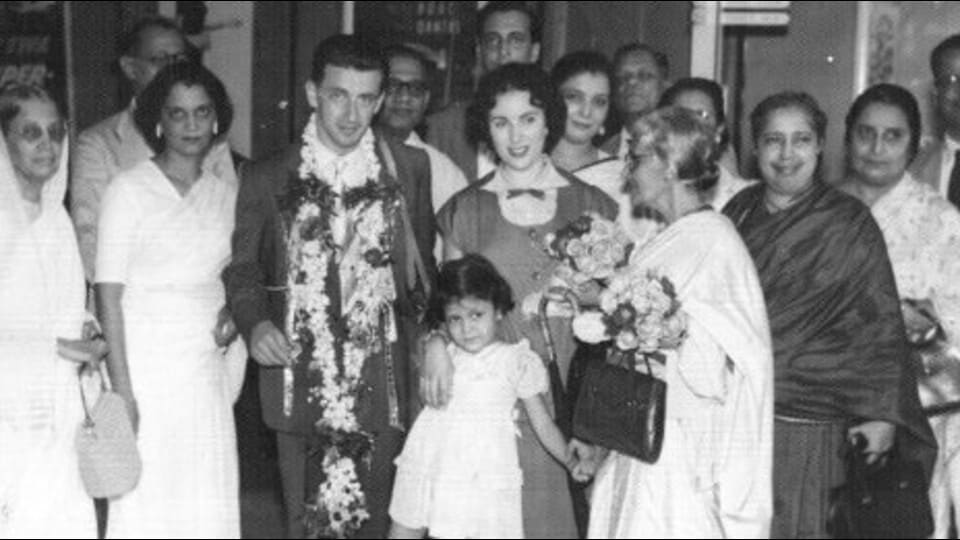
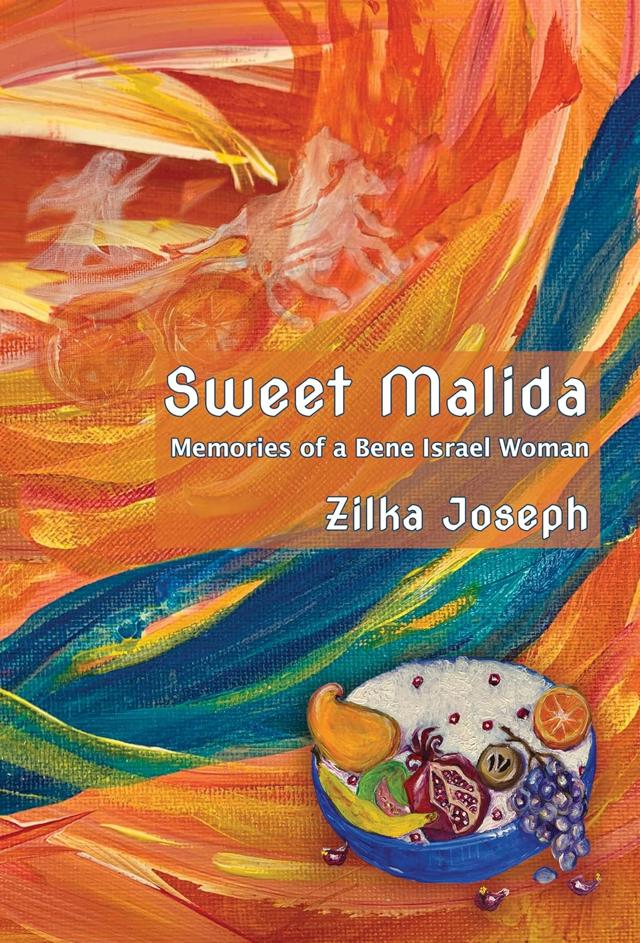
This is an anthology of poems and essays, written by a Jewish author who was born in Mumbai, lived in Kolkata, and migrated to the United States in her thirties. She lives in Ann Arbor, Michigan. These autobiographical details are revealed through the opening essay in the collection, aptly titled What’s in My Bones, which doubles up as a history lesson for readers unfamiliar with Jewish communities in India, among which the Bene Israel are rooted in the Konkan region of Maharashtra. They tend to live in Mumbai, Thane, Alibaug, Pen and Pune.
Joseph writes, “My ancestors were called Shanwar telis – Saturday Oil Pressers.” Tel is Marathi for oil. A presser of oil seeds is called a teli. This is the profession that many of her ancestors took up. Additionally, the coinage carries religious associations. Saturday, the day of Shabbat, is particularly significant for observant Jews. It is set aside for rest, and spiritual nourishment.
The essay also looks at competing theories regarding the arrival of the Bene Israel. According to one of these, “two ships from the Middle East were shipwrecked on the west coast of India in 175 BCE.” The survivors settled down in villages and rebuilt their lives from scratch. “Others think they came after the destruction of the Second Temple in 70 CE, or they were descendants of the Lost Tribes who came around the 10th century, perhaps around King Solomon’s reign.”
Some scholars believe that the Bene Israel came from Yemen, Persia or South Arabia in the fifth or sixth century CE. The most popular theory, however, is that they were “fleeing the rule of the Greek overlord Epiphanes” in 175 BCE. The lack of consensus does not bother Joseph. She seems comfortable with ambiguity, and the possibility of multiple origin stories, perhaps because of her childhood fascination with “world epics, folktales, literatures, and mythology”.
One assumes that Jewish history lives on through languages like Hebrew, Aramaic and Yiddish but Joseph’s book challenges that belief. Her Bene Israel ancestors spoke Marathi. She writes, “The new arrivals, who had lost everything, were peacefully allowed to settle and travel. They adopted Indian ways, clothes, foods… Except for the Shema and maybe a few other prayers, they did not remember most rituals.” This assimilation is most evident in the case of food.
The book takes its title from a poem called Sweet Malida, which is about a dessert made of flattened rice, sugar, dried fruit and nuts. It is usually prepared for Shabbat and the breaking of fasts. In this poem, the narrator says, “We had many foods/ in common with our Muslim,/ Christian and Hindu neighbours,/ and we often celebrated together/ their festivals or ours”.
As the population of the Indian Jews continues to shrink due to emigration, this heartwarming memory captures an old-fashioned way of life for posterity. It also proves that religious identity need not be a source of conflict because people have the ability to find common ground.
In another poem titled Eliyahoo Hanabi, the narrator sounds like a culinary anthropologist describing the Malida ceremony: “Let us heap the sugar-sprinkled poha/ tall as a pyramid, mixed with shredded/ coconut, precious dried fruit and nuts,/ scented with the most fragrant of spices.” Poha, a Maharashtrian staple, is seamlessly incorporated here into a Jewish ritual offering.
The poem Pantoum for Chik-cha Halwa celebrates another Bene Israel dish. The migrant’s life is distilled into a breathless expression with four unpunctuated words: “new land new life new history”. Departure seems to be separated from mourning. It is registered as a fact with finality.
It is hard not to think of Esther David’s book Bene Appétit: The Cuisine of Indian Jews (2021) while reading Joseph’s book. David shows how Indian Jews found ingenious ways to keep kosher by drawing from locally available ingredients in the various regions they settled in.
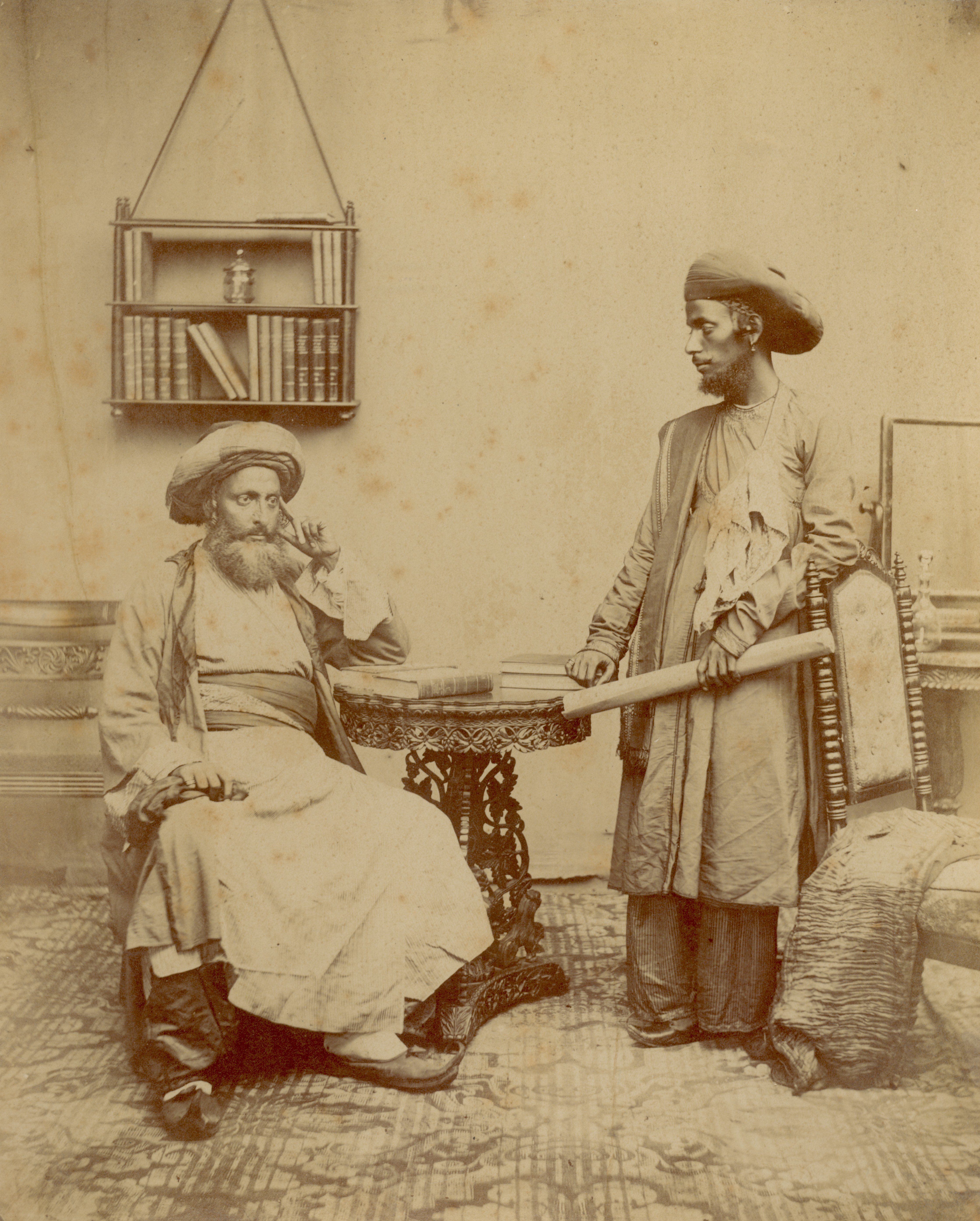
Assimilation, however, is only one part of Joseph’s experience. When she moved to the United States, she discovered that the flavours and aromas she grew up with as an Indian Jew were quite different from what American Jews were conditioned to. Her previous book, In Our Beautiful Bones (2021), for instance, has a poem called The Scent of an Indian where neighbours complain about cooking smells that “float out of her window/ and into their apartments”.
Joseph belongs to a minority within a minority. Her writing is, therefore, a careful act of preservation. It is as much a record of being Indian, as it is of being Jewish. In the poem Homegrown, which is part of Sweet Malida: Memories of a Bene Israel Woman, she writes about a chili plant on her window sill: “Its parrot-green pods/ spice many a curry.” This chili is not merely an ingredient. It carries the precious memory of home, of her former life in India.
In the same poem, she goes on to say, “Though bred here in temperate climes,/ sheltered from the outside world — / it still knows it’s autumn./ Its heart is as tropical as can be.” The plant is a metaphor for the poet, who has been transplanted from India to the US. Despite the change of geography, her heart too is still “as tropical as can be”.
Green Kaanji and Destiny, another lovely poem in this collection, delights in documenting images from her younger days. Her descriptions are packed with nostalgia and sensory detail. She recalls peanut oil, the Postman brand, heated in a dekchi, with “a handful of kari leaves” and “one or two green chilis”. The seeds are removed to reduce the heat but noses and eyes water briefly. The reader can almost hear the sound of leaves crackling as the oil heats up.
Remembering cilantro leaves ground on a stone, and added to the kaanji, Joseph says, “Oh the dhanya, so dhanya – / a blessing and the blessed herb/.” Her Bene Israel ancestors used it in the villages on the Konkan coast. The same herb also appears in another poem, Dhanya Patta in In Our Beautiful Bones, where she calls it “rough”, “fiesty” and “essential”. Truly, it is hard to imagine Indian cooking without the liberal use of dhanya.
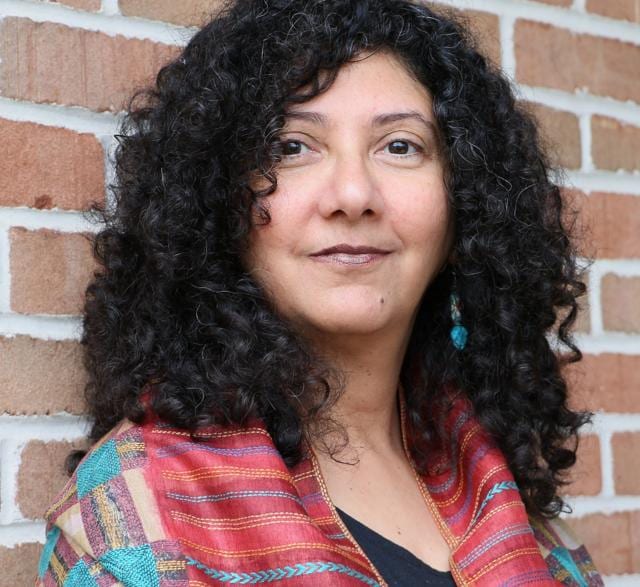
There are moments when Joseph seems less like a poet and essayist, and more like a living archive, whose work will be of great value to scholars working on non-Western Jewish histories. Her poem At the Edge of Park Circus, set in Kolkata, is a vibrant montage of chulahs emitting smoke, dogs barking, saris drying under thatched roofs, papads being fried in mustard oil.
These images have been filed away, like archival records, ready to be accessed at will. The specificity, right down to shop names, is striking: Joy Pharmacy, Salim’s car repair shop, singara and sandesh from Nabalok Sweet Shop. It seems as though n emotional geography lives inside the author and is demanding to be spilled on the page for others to witness and hold with care.
Joseph is acutely aware of this. In the essay, The Laadu Makers, she calls her body “the vault that holds these histories, these memories”. She adds, “No one else in our family will remember the same things or remember them the same way, even if they were present then, at the same time and place.” Here, she also pays homage to the labour and creativity of women, especially in matters of cooking and feeding. She conjures up an image from her childhood, of her mother “roasting besan and ghee” to make “laadus” (Marathi for laddus).
Her grandmother, who has come to check if her mother “is doing it right”, elicits a chuckle. She inspects the mixture of besan, sugar crystals, ghee, fried raisins and cashews. Before the child in the poem tastes it, she is asked, “Have you washed your hands?” The memories have not been washed away by time.
They exist because, as Joseph states, in her opening essay, “In India, they (Jews) were not persecuted, and it became their home. Their descendants thrived, and they have become active and successful in every profession including literature, art, music, dance, science, social work, Hollywood, Bollywood, and the military”. This remains a factor influencing India-Israel ties. Joseph’s book, a must-read, shows that Jews feel at home in India because the country welcomed them when they were being killed elsewhere, much before the Holocaust.
Chintan Girish Modi is a journalist, educator and literary critic. His writing has appeared in several anthologies, including 101 Indian Children’s Books We Love (2013), Borderlines: Volume 1 (2015), Clear Hold Build (2019), Fearless Love (2019), and Bent Book (2020).


