
 E-Paper



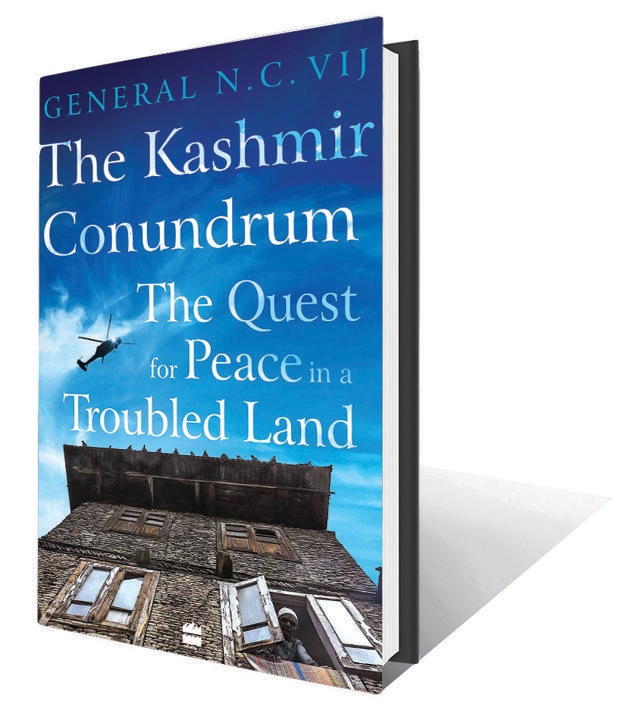
Review: The Kashmir Conundrum by General NC Vij
While several books have been written on the Kashmir imbroglio, this work by a former army chief stands out for dealing with it comprehensively and making assessments that are perceptive and based on impeccable logic

 Prefer HTon Google


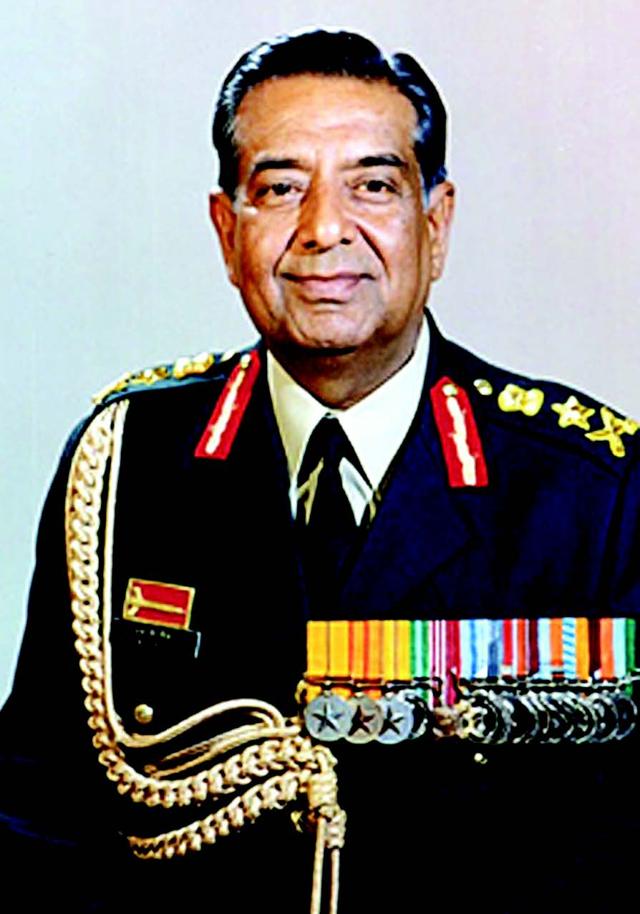
The Kashmir Conundrum will find ready readership as its author, General Vij, has the intuitive insights of an insider from the state and the hands on expertise of a former Army Chief. Indeed, the declining trend in terrorist infiltration into the State may be attributed to the fencing of the LoC which was pushed through by General Vij.
While several books have been written on the Kashmir imbroglio, this work stands out for dealing with it more comprehensively than most. The author misses out little, inter alia, detailing the State’s geographic and demographic characteristics, its age-old Indian connect, the Kashmiri mindset, the nature of Kashmiryat, its strategic importance, its invasion by Pakistan and subsequent accession to India, its constitutional relationship with India, the confabulations pertaining to it in the UN and between India and Pakistan, the Indo-Pak military confrontations, the ups and downs of the insurgencies instigated by Pakistan in it and the Indian reaction, and the modification of Article 370 which has brought about a paradigm shift putting the seal on Kashmir’s accession to India.
Most of the author’s assessments, as detailed below, are perceptive and based on impeccable logic:
•Kashmir’s accession to India is legally and constitutionally complete;
•Taking the Kashmir issue to the UNSC and accepting a ceasefire were major “blunders;”
•A plebiscite in Kashmir conditioned on vacation of aggression, as proposed by the UN, became impossible as Pakistan failed to do so;
•Kashmir is merely a symptom of India Pakistan differences arising from Pakistan’s quest for parity with India and desire to break it up;
•Both the 1965 and 1971 conflicts were “disasters” for Pakistan;
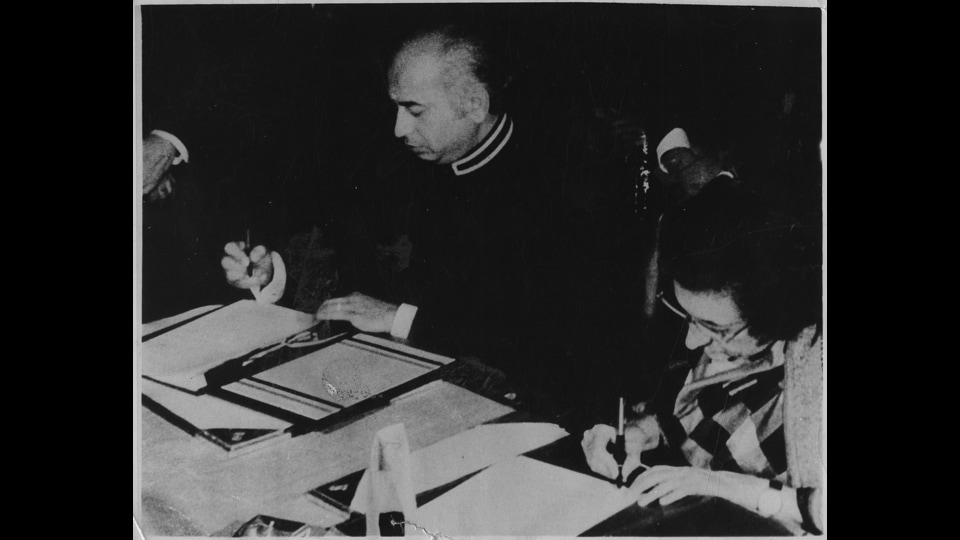
•India missed “a golden opportunity” to settle the Kashmir issue for good at Shimla in 1972.
•Realising, after the 1971 conflict, that it could not defeat India militarily, Pakistan evolved a three pronged strategy against the former involving nuclearisation, proxy war, and radicalization of the Valley;
•Vigorous anti-terrorism measures have improved the security situation in the State;
•India has never had a well-defined and consistent national strategy to address Pakistan sponsored terrorism;
•The Balakot strikes surprised all and constituted a new response paradigm with India exercising the right to retaliate as deemed appropriate by it;
•Pakistan is unlikely to desist from its proxy war against India and is determined to “grab Kashmir”.
•The abrogation of Article 370, which was a temporary provision, constitutes a decisive step ending all uncertainties.
Two assessments that are, however, difficult to take on board are that the Shimla Agreement could be taken both as a success and a failure and that Article 370 served a purpose at the time. The former in my view was an unmitigated failure, and the latter, with Kashmir having already acceded to India, unnecessary.
The book contains a telling comparison between the areas of Jammu and Kashmir with India and those under Pakistan’s occupation, conclusively demonstrating that the former score handsomely over the latter both in developmental terms and in the enjoyment of civil and political rights.
The book is rich in recommendations. Some of those designed to pressurise Pakistan are novel and innovative such as threatening to walk away from the Indus Waters Treaty and not accepting the Durand Line. The only major recommendations difficult to endorse are those calling for revisiting our nuclear doctrine and making tactical nuclear weapons since the existing doctrine fully meets our requirements and makes tactical nuclear weapons redundant. The single most important recommendation is the call for the creation of a dedicated organization for perception management. Such an entity addressing and operating through, not only the traditional media, but also the internet and various social media platforms is a pressing requirement as the latter, in particular, are being abused both to create an anti-Indian narrative and to radicalize youth.
Occasionally repetitive, the book could have done with a crisper and tauter text.
Satish Chandra is a former ambassador to Pakistan and Vice Chairman of Vivekananda International Foundation.


