
 E-Paper



Review: The Only City edited by Anindita Ghose
A new collection of original short stories tries to capture Mumbai’s contemporaneity and looks ahead while also adding to the rich literature on the metropolis

 Prefer HTon Google


In Shanta Gokhale’s short story, The Storyteller’s Tale, the narrator Kinnari buys an anthology of stories from a bookstore in Mumbai. “(E)everybody was reading it and raving about it, and I… was looking forward to reading and raving about it too,” says Kinnari. However, by the third page of the book, Kinnari is bored by one of the stories, which is about “a company executive who battered his wife on a regular basis.” “The blurb praised the author for the delicacy of observation she brought to human relationship,” says Kinnari. “What delicacy?”
Then, she reveals her real-life experience of her drunken father regularly assaulting her mother, and her mother crying copiously at his death. “Now, explain the delicacy here,” demands Kinnari. “Delicacy of observation, my foot.” Kinnari is a 35-year-old Mumbai resident, evidently from a working-class or lower-middle-class background, who grew up in a chawl. But, she has had the benefit of a good education, even learning French in school. Her brother has become a journalist, who gets invited to literary soirees and book launches. Kinnari likes collecting stories, closely observing life in the metropolis in which she lives.

The entire narrative of The Storyteller’s Tale revolves around the simple narrative conceit that whatever story Kinnari narrates, it is stolen and repurposed by her childhood friend, Ketaki Ghosalkar, who is an actress in popular Marathi theatre. This narrative conceit — and Gokhale’s characteristic wit — is classical in style, reminding one of Chekov or Maupassant. It not only allows her to critique the pretentions of literary and artistic circles in Mumbai, but also implicates the reader: “My brother Dinkar Rangnekar — yes, I’m a Saraswat, if you must know, and I’m not asking why you must know — is a journalist of renown. You wouldn’t know? Ah, you don’t read newspapers? …You get all your news on WhatsApp.” A swift use of parenthetical em-dashes to intertwine toxic ignorance with casteism — champions of ChatGPT must be crying in the corner.
Gokhale’s story is one of the 18 included in The Only City: Bombay in Eighteen Stories, a recently published anthology, edited by journalist and novelist Anindita Ghose. It brings together some of the most exciting Indian writers working in English, focussing on the country’s most exciting city — Mumbai. The city, of course, has inspired generations of writers, not only those writing in English, but other languages as well. Another recent anthology, Maya Nagari: Bombay-Mumbai, A City in Stories (Speaking Tiger, 2024), edited by Jerry Pinto and Shanta Gokhale, had brought together fiction inspired by the city in eight languages. Instead of looking back at the legacy, Ghose’s anthology looks ahead, trying to capture Mumbai’s contemporaneity.
Take, for instance, Amrita Mahale’s Aai-Tai’ whose protagonist, 19-year-old high school graduate Sayli, finds a job as an Artificial Intelligence (AI) annotator. As a BBC story from last month shows, the grunge work of training AI models has been outsourced to Global South nations like India, where the annotators are paid minimum salaries, while the corporate bosses of AI models in the West rake in billions. For a meagre monthly salary, Sayli and her colleagues annotate pictures of newborns, while she wonders how this software could ever replace doctors. But Sayli hardly has an option: Raised by a single mother with three daughters, she is the first in her family to finish high school, to touch a computer screen, to open a bank account or not be married off at 18. Despite her trying circumstances, however, Sayli is able to protest when confronted by injustice.
While all the stories in the book are of a high standard, reflecting the quality of writers, Ghose does not explain her methodology in choosing them or even the objective of another book on Mumbai. In her introduction, she quotes from the poet and translator Arvind Krishna Mehrotra and claims that all anthologies are “subjective”. But she does not explain how her subjectivity — as a Mumbai resident, a writer and journalist, caste, gender, class, etc. — influences the editorial process.
Why is this necessary? It is necessary because, like a curator at an art gallery or museum, an editor performs the task of inclusion and exclusion that determines value of the work of art. Transparency around the process through which this value (both quantitative and qualitative) is determined makes the selection more legitimate for the reader. For instance, almost all the writers who have been included in this collection are well-known. Their writing can be easily accessed through other sources, so why should a reader pick this book? Also, there is no paucity of books on Mumbai. Where does this volume locate itself within the vast body of literature? And, most importantly, what is the intended intervention of this book in the process of canon-making in Indian literature?
US-based writer and scholar Matt Reeck, who has translated from Hindi and Urdu into English, describes what he calls “Bombay fiction”, in the context of Manto’s stories, as “A merging of place and character… to write about Bombay means to write about a certain group of characters of a particular milieu… a motley crew of prostitutes, pimps, writers, film stars, musicians, the debauched and the rich.” Several stories in this collection also depict this “motley crew”.

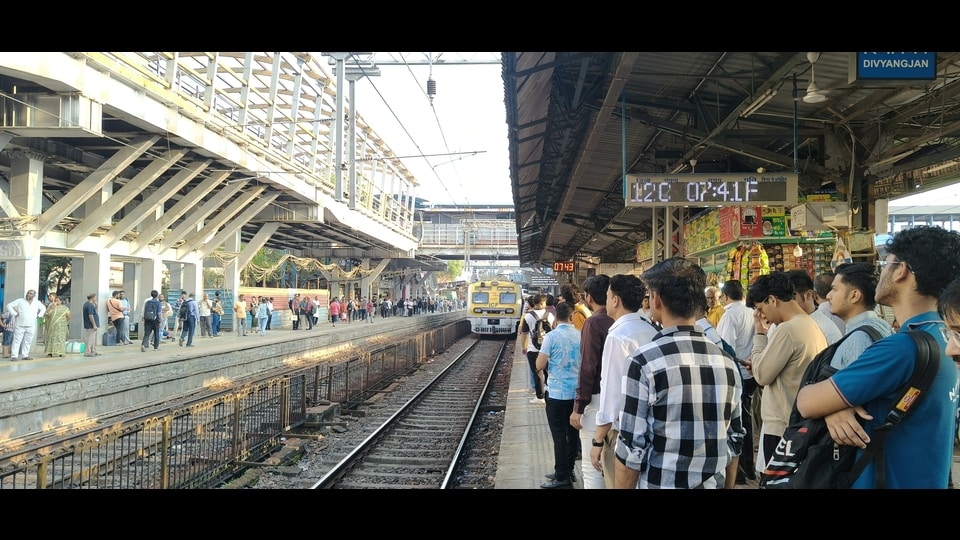
In Pratyush Parasuraman’s Two Bi Two, an evening commute in a local train — oh, that eternal metaphor for Mumbai — becomes an occasion for exploring homoerotic desires. There is almost no plot in the story, but the pleasure of reading it is Parasuraman’s prose: “Over the balding heads, and others full of swept hair, I can see the city blur past, all impressionist renderings, even when the train stops, the sense of a city smudged remains — all the lights from apartments rupturing the skies, all the tenements, built over one another, shrouded by the blue tarpaulin that is out in preparation for the incoming monsoon.” Imagine being pleasurably assaulted by sentence after sentence like this, somewhat like the Mumbai monsoon itself. The inherent confidence in the prose conceals the fact that Parasuraman makes his debut as a fiction writer in this book. So do Ranjit Hoskote, Raghu Karnad and Jairaj Singh. For me, this was one of the greatest successes of the book.
Like Kinnari in Gokhale’s story, all the writers in this collection capture fragments of the city. (Is it even possible to have a definitive portrait of something as beautifully maddening as Mumbai?) Most importantly, the anthology reminds the readers that storytelling about Mumbai is never a neutral act — it is shaped by who gets to tell the story, who remains unheard. Ghose’s collection captures the flux of the metropolis. Read it like you would watch the montage of the cityscape from your window in a crowded local train.
Uttaran Das Gupta is an independent writer and journalist.


