
 E-Paper



Hansa Wadkar – a woman ahead of her time
In her centenary year, recalling the story of an actor who battled sexual oppression and wrote fearlessly about it all in her autobiography

 Prefer HTon Google


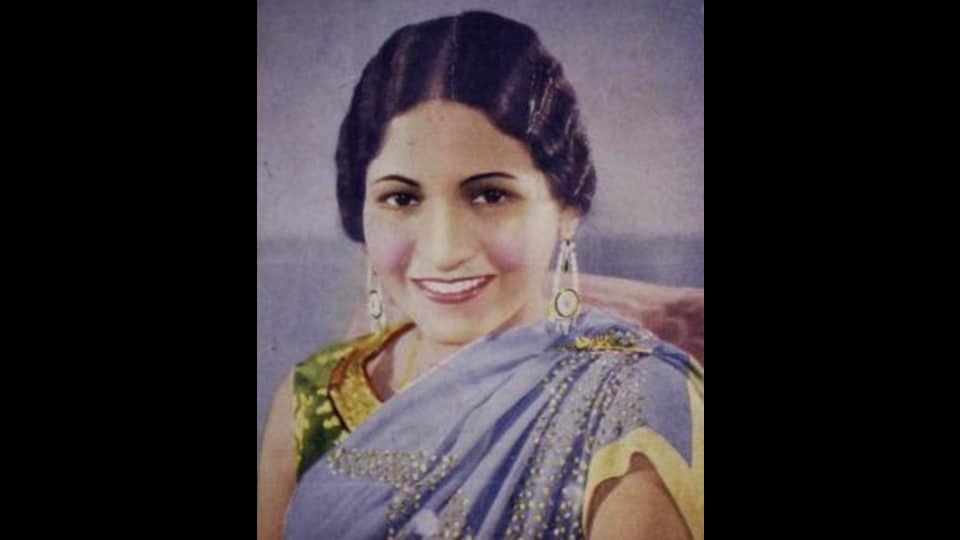
Few remember that this is the centenary year of one of Indian cinema’s proto-feminist stars. Born in Bombay on 24th January 1923 and originally named Ratan, Hansa Wadkar’s life followed a radical path.
While her mother, Saraswati, was the daughter of a devdasi, her father, Bhalchandra Salgaokar was the son of a kalavantin, a courtesan noted for her musical talents and expertise. Her great grandmother, whom the extended family addressed as “Jiji”, was an affluent woman. After her death and the division of property, the family moved to Sawantwadi. But they soon had to return to Bombay as they became impoverished by Salgaokar’s alcoholism. Two of Ratan’s older sisters stepped into films to support the family. She was sent to a Marathi medium school to begin with followed by two years in an English medium school but her education was cut short because the family believed her younger brother, the only son, deserved schooling more.
Ratan herself was trained in music and dance and was very attractive, which made it inevitable that she would step into the nascent cinema industry in India.
Her first screen appearance was as the leading lady in Baburao Pendharkar’s Vijayache Lagaane (1936), which was remade in Hindi the same year as Shaadi Ka Mamla, directed by Mama Warerkar. The film was a success but her brother insisted she change her name to avoid “sullying” the family name. So she became Hansa, tacked on the surname “Wadkar” borrowed from her cousin, actor Indira Wadkar, and a new entertainment persona was born. At this point, she was already drawing a princely salary of ₹250 per month and the entire family depended on her. Instead of being independent, however, Wadkar’s life was entirely controlled by the family, which included her much older husband. The exploitation became so severe that she eventually fled her family and her home to lead life on her own terms.
Next, she joined Golden Eagle Movietone, learnt Hindi from a specially-appointed Hindi tutor, and worked in several Hindi films including Meena (1944), Prem Patra, Zamana (both in 1938) and Raj Kumar with Chetan Anand (1944). She also acted in two stunt films. In all, she acted in 25 Marathi films, 28 Hindi films and sang songs in 10 films between 1936 and 1969.
Though she was married just once and had a daughter, she had other relationships. Though most of them ended with her walking out on when she discovered she was being exploited or controlled by her partner, she did finally find stability with theatre actor, Rajan Jawale.
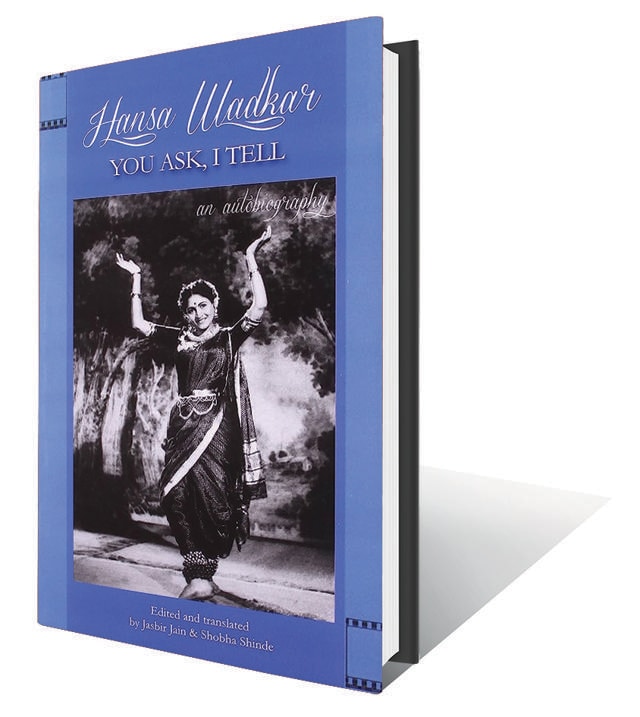
Wadkar wrote frankly about her life in her autobiography, Sangtye Aika (Marathi for “You Ask, I Tell”). Published in 1970, it was named after her biggest hit that broke all box office records in 1959. Shyam Benegal’s Bhumika (1977), that won Smita Patil a national award, was based on Sangtye Aika.
Patil played Wadkar with a fine blend of fragility and strength.
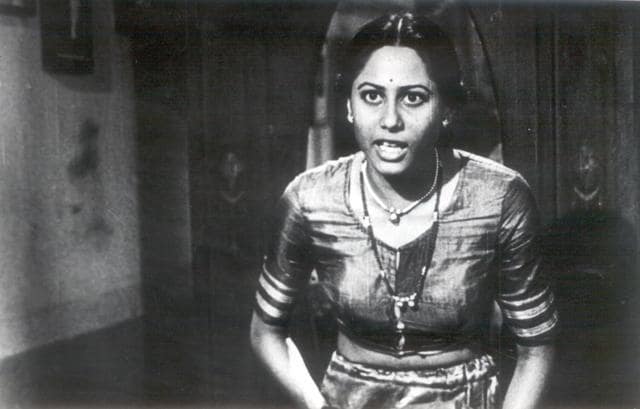
The film explores female subjectivity and its structural complexity suggests that the journey of self exploration undertaken by the female protagonist is circular, full of snares and forever incomplete. The central character’s childhood is marred by memories of an alcoholic father, a grumpy mother (Sulbha Arya) and the mother’s conniving lover (Amol Palekar). The lover marries Usha (Smita Patil) when she grows up and lives off her earnings. When this becomes too suffocating, she breaks free, only to try and find solace in the arms of different men. Usha’s dilemmas are ironic because she is an actor doomed to play a variety of roles but is confused about her own role in life.
While Benegal’s Usha might have been troubled, Wadkar herself emerged victorious. Her autobiography is a direct attack on patriarchy, men, and the institution of family.
Readers had to wait until 2013 to read the book in English. Edited and translated by Jasbir Jain and Shobha Shinde and published by Zubaan, You Ask, I Tell provides a view of a life that grapples with concerns that are surprisingly contemporary.
In his introduction to the English translation, VL Kulkarni writes: “I have read Hansabai Wadkar’s autobiography. It is fragmentary and incomplete with many gaps in the narration. Perhaps, because of these reasons it makes a deep impression. Hansabai went through a great deal of suffering; her experience was more bad than good. But there is no bitterness either in her voice or in her writing. This is quite unusual. Something which even great writers have not been able to attain, has been easily achieved by this woman who never went to school or college but was instead educated in the university of life. Hansabai looks at her own life and talks about it with a kind of innocence.”
Revisiting Bhumika and reading Sangtye Aika/You Ask I Tell would perhaps be the best way to raise a toast to the indomitable Hansa Wadkar in her centenary year.
Shoma A Chatterji is an independent journalist. She lives in Kolkata.


