
 E-Paper



Silently fiery – Tapan Sinha’s cinema
With characters who were simple and relatable until they surprised the viewer with their swansong, Tapan Sinha minutely observed the Bengali middle class.

 Prefer HTon Google


Today, Tapan Sinha’s name may sound rather obscure to most. Even after a fairly intense Google search, only a sketchy, half-hearted Wikipedia page and a few academic essays appear. In contrast, there is voluminous material available on Satyajit Ray, Ritwik Ghatak and Mrinal Sen. Perhaps 2024, Sinha’s centenary year, will put the spotlight once again on the filmmaker who has been unjustifiably overshadowed by his three Bengali peers.
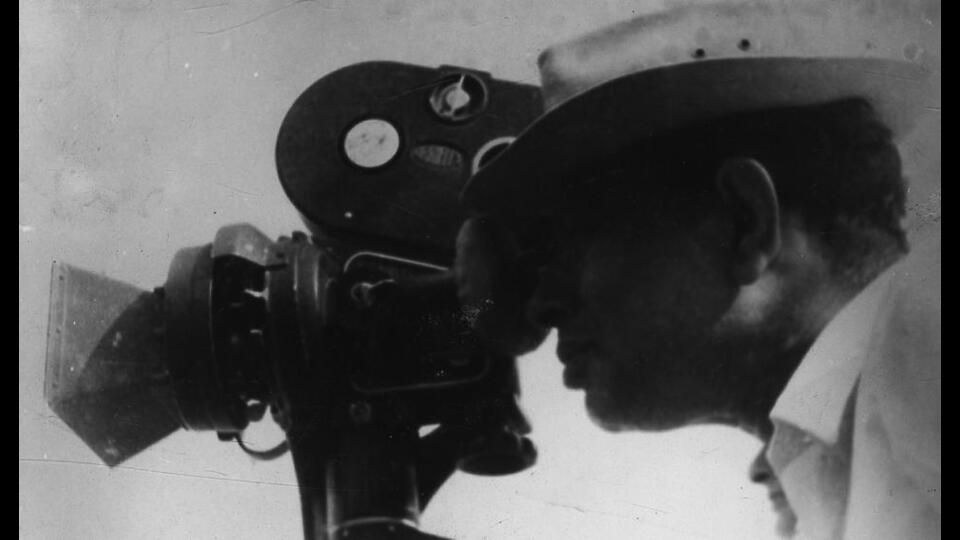
Yet, Sinha’s works holds its own with the oeuvre of Ghatak, Ray, Sen,Tarun Majumdar, Asit Sen and Ajoy Kar – all of whom had unleashed new energy into Bengali cinema post 1947. At the time, the industry in Calcutta was broken and in no time, it was relegated to being regional while “national cinema”, read Hindi Cinema, strengthened its base in Bombay.
It was around this phase that Tapan Sinha appeared. His films gently broke barriers; they were diverse and ushered in shifts in film narratives. Interestingly, a single thread ran through most of them – the portrayal of the Bengali middle class, whom Sinha observed closely from behind his viewfinder. Often, his films were open ended, a directorial style that few dared to attempt in the 1950s and 60s. His characters too seemed simple and relatable until they surprised the viewer with their swansong.
It is hard to tell if Sinha’s otherwise simple characters transforming into inspiring ones was a well-informed cinematic style that he adopted right at the start of his career. However, after being recognised as an auteur, he was intentional in his directorial approach depicting catharsis, which can also be called subversion. A quick list of films built on this understanding would include Jatugriha (The House of Wax, 1964), Galpo Holeo Satti (Though it’s a Story But its True, 1966), Hatey Bazarey (The Market Place, 1967) Sagina Mahato and Sagina (1970, 1974 respectively), Aadmi Aur Aurat (Man and Woman, 1982), Ek Doctor Ki Maut (Death of a Doctor, 1990).
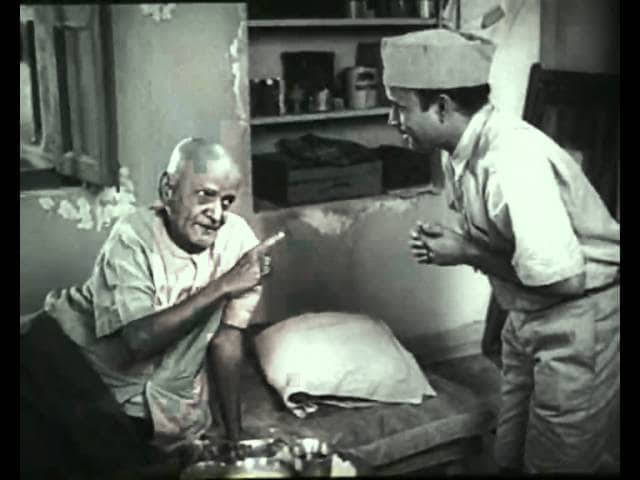
The transformations of ordinary characters in Sinha’s screenplays can be attributed to the core ideas he chose from the vast repository of Bengali literature. Early on, the director realised adaptation was the way to go – 27 of his films are adaptations from literature. He believed his audience would relate to the cultural backdrop even as he would be able to manage expectations due to the specificity of the medium. The first big risk Sinha took was to choose the eponymous short story Kabuliwala (1892) by Rabindranath Tagore. The film won the National Film Award and put Sinha in the limelight.
Tagore’s short story is a universal tale of fatherly affection, described through the unusual bond between Rahmat, a middle-aged Afghan dry fruit seller, and Mini, a five-year-old Bengali Hindu girl child. In the story, Tagore established the idea of the universal parivar (family) and antimyo (relative), a notion that transcends religion and ethnicity. Sinha diligently adhered to that essence of universalism. Later, he went on to produce Kabuliwala in Hindi, starring the legendary Balraj Sahani, who was cast as Rehmat.
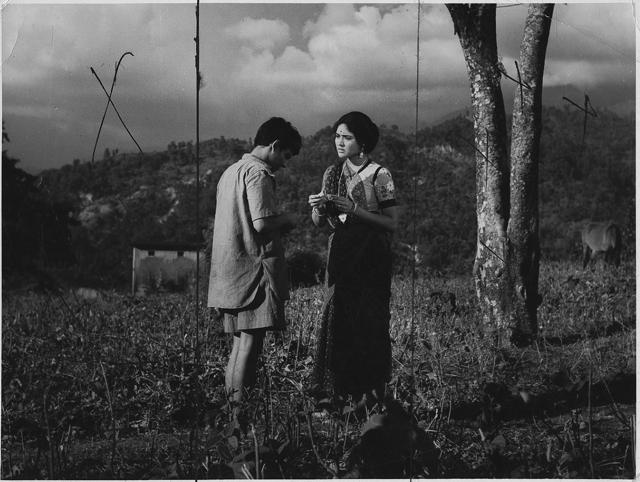
With Kabuliwala, Sinha signalled that he would take up unassumingly brave narratives. He also zeroed in on the interpersonal relationship between the characters, through whom he would convey his directorial voice without being preachy. The two best examples of this are The Desolate Beach (1963) and The Market Place (1967). The former, based on a short story by Sahitya Akademi winner Samaresh Basu, is about four conservative Hindu widows of different ages on a pilgrimage to Puri without a male escort and how the intended religious trip metamorphoses into a reflective holiday on the beach.
As the story unfolds, Sinha uses conversational language in his dialogues to reveal the burdened widowhood of the characters and their zest for life that’s subdued but intact. A sublime, honest scene emerges when the four women go on a walk to the beach, an unusual thing for widows of the period, who were expected to cut themselves off from worldly desires. The four Bengali actors, including Sharmila Tagore, were awarded the Silver Peacock at the 3rd IFFI – International Film Festival of India (1965) for their brilliant performances.
It wouldn’t be off the mark to suggest that Sinha’s cinematic style was tender and brooding and spurting with life all at once. This started with The Desolate Beach and continued well into the 1990s. In the years following The Desolate Beach, he would expand his scale of filmmaking with the big budget The Market Place, that had an ensemble cast led by stars Ashok Kumar and Vyjayanthimala. It was the adaptation of a story of the same name by Bengali author Balaichand Mukhopadhyay, whose nom de plume was Bonophool (Wild Flower). Relevantly, Bonophool, the author, was born and raised in Purnia district of pre-Independence India and was a professional doctor. Hatey Bazarey, published in 1961, was thus autobiographical in parts. Though Sinha expanded the sensitive story adding additional plot points, he stayed true to the premise of class and racial contradictions between Adivasis and the local feudal gentry in the story. The Market Place became one of the major commercial successes of Bengali cinema in the 1960s. The film pivoted around a Bengali brahmin civil surgeon (Anandi Mukherjee played by Ashok Kumar), a liberal medic based somewhere in South Bihar, who is willing to go to any length to provide free healthcare to the local community. His frugal family structure includes his ailing wife, his driver, a Muslim, and his cook, a Hindu. In retrospect, Mukherjee’s character seems to have saviour complex but when situated in the timeline of a newly independent nation trying hard to advance scientific mass education, it falls in place. What remains ahead of its time is Sinha’s commitment to effortless pluralism, which is hard to replicate today.
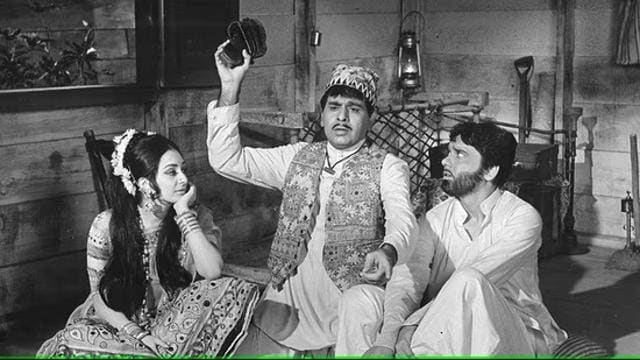
At the turn of the 1970s, Tapan Sinha decided to make Sagina Mahato, a film that would become the highlight of his career. The script was derived from the true story of a labour leader of the same name who was active around 1942. A Hindi version was released four years later. While the Bengali original was successful and had a silver jubilee, the Hindi language version failed. Even with these contrasting box office responses, Sagina Mahato, with Dilip Kumar in the titular role, can be considered Tapan Sinha’s most ambitious venture. The story engages with Left labour politics against the backdrop of the nationalist movement. It continues to be one of the most humane portrayals of the plight of a common man and the flawed system. Kumar’s groundbreaking performance as a rustic tea plantation worker whose life gets entangled in nasty trade unionism is remarkable but underrated. Sinha, on his part, directs the thespian with ease, bringing out a power packed performance from the actor who, by then, was considered “past his prime”.
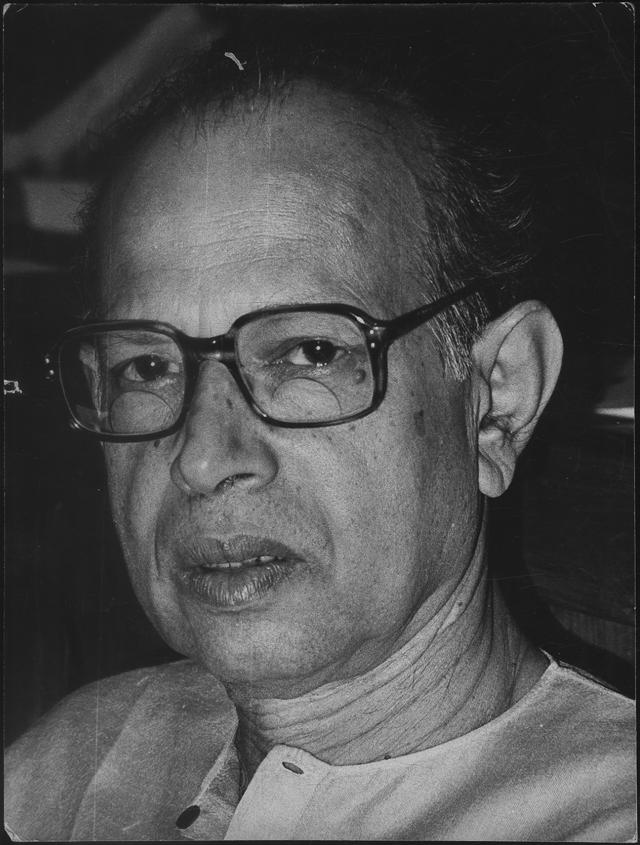
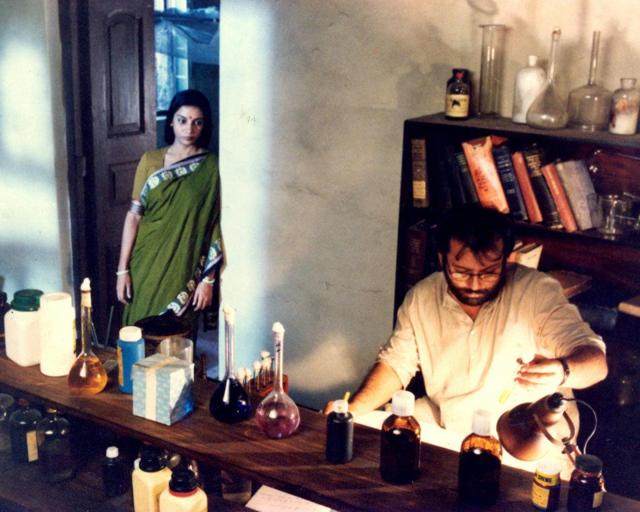
Post Sagina, Sinha’s films became more defined in their query of social justice. These films included Ekhoni (Now,1971), Aandhar Periye (Beyond Darkness, 1973), Adalat o Ekti Meye (The Law and the Lady, 1982, a sensitively told story of a rape survivor), Aadmi aur Aurat (Man and Woman, 1982, a Hindi telefilm starring Amol Palekar and Mahua Roy Chowdhury). Aadmi aur Aurat had a poignant storyline of a pregnant Hindu woman accompanied to the hospital by a Muslim man. The film won the Nargis Dutt Award Best Feature Film for National Integration. In the next few years, Sinha made films on a range of subjects but never lost sight of the relationship between the individual and society. In 1990, he produced one of his most haunting works, Ek Doctor Ki Maut, starring Pankaj Kapoor and Shabana Azmi. Based on the life and death of Dr Subhash Mukhopadhyay, a pioneering physician and scientist who worked on in-vitro fertilisation. By now, the filmmaker, who was nearly in the last decade of his prolific career, had become more direct in his filmic disposition and showed the oppressive medical research system, peer pressure, and toxicity. He axed the establishment in his utterly moving cinematic style, leaving the audience pondering.
READ MORE: Review: Amitava Nag’s The Cinema of Tapan Sinha – An Introduction
Though his films were always ahead of their time, scholarly interest in Sinha’s works is brewing. The cinema he made cannot be bracketed as parallel or mainstream. It would not be an exaggeration to view Sinha’s cinema as a nonchalant showstopper holding its own even in a culture of the consumption of continuous and often mindless content.
Perhaps that’s why Tapan Sinha continues to be young even in his centenary year.
Nilosree Biswas is an author and a filmmaker.


