Interview: Sumit Purohit - “No one can predict what the audience is going to like.”
On Scam 92, incorporating his own life experiences in shows, and how helpful it is for writers to have a good agent
Updated on: Jun 23, 2023, 16:59:20 IST
By Mihir Chitre
Prefer HTon Google
Share via
Copy link
How did writing begin for you? What’s your story?
In school, I was writing and sketching a lot. When I look back, I realise that my sketches had a narrative; I was trying to communicate an idea through them. Then, after my 12th standard, I wanted to get into animation because I wanted to tell stories through animation. This was in Uttaranchal where I’m from and where I grew up. I was not very serious about writing at that point but I was writing a few plays. I was preparing for NID (National Institute of Design) but ended up getting into the Fine Arts course at MSU (Maharaja Sayajirai University) in Baroda. That’s when I began realizing that I probably didn’t have the skill for animation, and what I actually enjoyed was the narrative part of what I was doing. Baroda has a strong theatre scene. There were people around me who were involved in it. I started contributing to some of those plays, and I started writing. After Baroda, I took the one-month film appreciation course at FTII. Until then, I had only watched Bollywood and Hollywood cinema; at FTII, I discovered world cinema. I was very inspired by Abbas Kiarostami. I watched Where is the Friend’s House (1987) and loved it. The landscape of the Iranian villages, for me, was reminiscent of Uttaranchal. I could immediately connect with that film. I even applied for the FTII direction course but did not get through. After that, I went back to Baroda and kept working on plays.
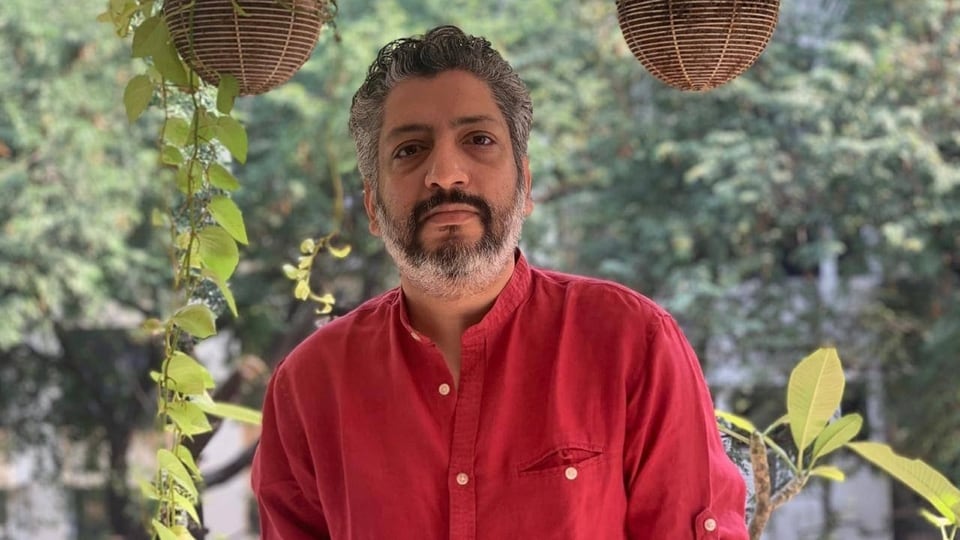
Screenwriter Sumit Purohit (Courtesy the subject)
Later, I came to Bombay and started assisting on a film. There, I met someone who said, “Let’s make a film.” So I wrote a film that was set in my home town, and one thing led to another. I always maintain that I am very specifically, a screenplay writer. There’s a difference. If I call myself a writer, I would be writing books. I can write visually. I need to see the scene in my head before I write anything. I need visual stimulation to be able to write. Also, I believe, as a screenplay writer, you need to have some skills which are different from those that a writer has. If you want to be a professional screenwriter, you need to know the software to write screenplays, you need to have a sense of the structure and so on. There are certain skills you need to have as a screenwriter. I have seen some new writers, who are good writers, finding it difficult to see how some of their ideas could translate onto the screen. I am an editor as well. That certainly helps me as a screenplay writer. Sudhir Mishra once tweeted, “All writers should spend one year in the editing room.” He had a point there.
I always thought the real hero of Scam 92 is its screenplay. Tell me about writing it. How did it all happen?
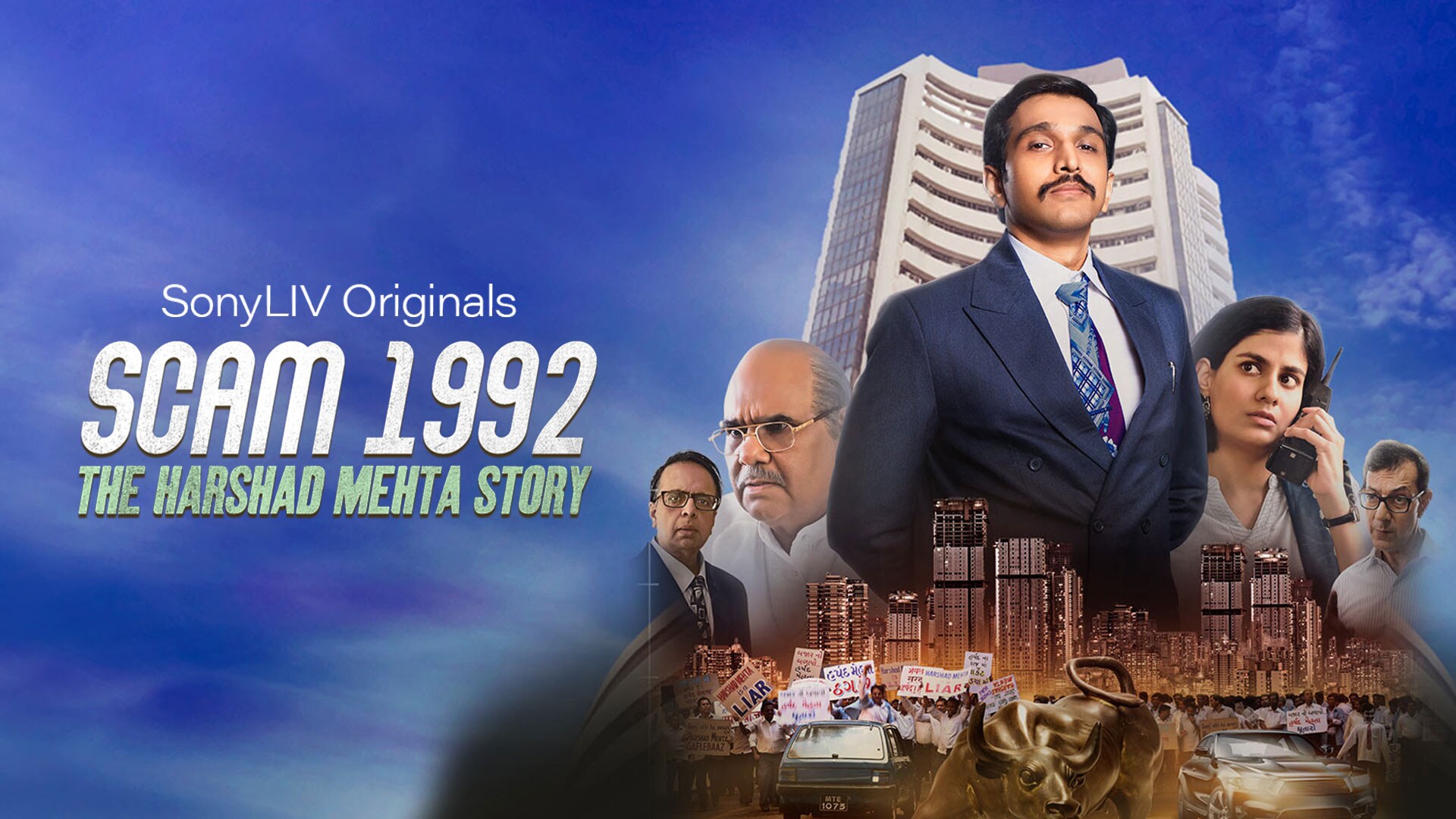
I knew Hansal Mehta, and he saw Inside Edge and liked it. One day, he told me about the book he wanted to adapt. The only memory I had of Harshad Mehta was of people in my home town discussing him back when things were happening. Issues from Bombay and other places were rarely discussed there so that was quite something. I remember them saying, “Such a rich man has been put behind bars and he has to now make do with shoes in place of a pillow.” If you remember, there is a dialogue in the show, when Harshad comes home from jail, his mother asks him, “Beta, maine suna jail mein joote ko taqiya banake sona padta hai.” When people ask me how I do my research, I say my life experience is my research.
(Sony LIV)
When I started writing the show, it was already greenlit by the producers, Applause Entertainment. The book rights were bought and we had access to Sucheta Dalal and Debasis Basu, which helped me with the information. I was really interested in the story but the only problem was I had no idea how the stock market worked. So I told Hansal that my friend Saurabh (Dey), who I had met years ago at my FTII interview and had kept in touch with, would be a great co-writer on this. That’s how he came on board. He is very good with research. We started reading the book and realised it’s not an easy book to adapt. There are many concepts of commerce and the stock market that are not easy to understand. That’s when we thought we should also get into the story of how the book was written. Because, along with Harshad Mehta, in a way, it’s also the story of Sucheta Dalal and Debashish Basu.
There are two kinds of research when it comes to writing. One is numbers and statistics, which is the easy part. What is difficult is the conceptual part. In the case of this show, what Harshad Mehta was talking to, say, a stock market guy, needed to be understood at a conceptual level, first by us and then by the audience. To simplify those concepts for the lay man, we needed to understand them well. Sucheta also introduced us to some of the characters in Harshad Mehta’s life at that point. Most of them didn’t want to be on record and they just helped us with information.
A lot of times, they didn’t allow us to record the conversation – we could just write and take notes. Many of the examples and metaphors in the dialogue of the show came from what they told us and how they told us what they did. The fact is that Scam 92 is a very technical show and we had to get the facts right. But along with that, everyone we met had a Harshad Mehta story and those stories became seeds for some of the moments in the show and the dialogue.
How true was Scam 92 to the book and how true was the book to the real events that unfolded? Also, how committed should one be to truth while adapting a book that was, in a way, an adaption of a real event?
Well, truth is important, but at the same time, you need to have your own politics. For us, Harshad Mehta was clearly not a hero. But where he rose from – his rags to riches story – was meant to make him feel like a hero to a lot of people. Even if you watch a show like Narcos, which showcases a full-blown criminal, you do end up developing sympathy for the protagonist and somewhere you are rooting for him. We were aware that this was going to happen. It’s important that you know this when you start writing. To tackle this issue, we surrounded Harshad Mehta’s character with people who keep telling him that what he is doing is not right. There are many such examples in the show – his brother, Sucheta, his friend who commits suicide. Now, we live in a time when it’s difficult to imagine journalists as heroes. But for us, Sucheta and Debashish were the heroes of this story. As far as accounts are concerned, some of them are fictionalised. For instance, I never met Harshad Mehta and nobody really knows what the police did to him but I met someone who was once arrested for something and I know how the police treated him. So I used some of that in Harshad’s story to create those scenes. We knew that RK Laxman worked at the Times of India at that time. So we thought that when a character enters the office, instead of him meeting the receptionist, he bumps into RK Laxman. These incidents may not have happened exactly as we wrote them – there is no way to know – but it’s important that you retain the soul of the scenes and the events they stand for while you fictionalise them to make them interesting on screen. Debashish and Sucheta were already married when this event took place but we played around a little bit with the timelines and posed their love story as unfolding while this event was taking place. You do these things to make your show as interesting as possible.
(Amazon Prime)
Inside Edge is totally different from Scam 92 and was made much before. What was it like to work on it?
Inside Edge was the first Amazon Original in India. In fact, it was the first OTT show in India. It happened even before Sacred Games. Karan (Anshuman) and Amey (Sarda) were already developing the show and then they needed more writers, so I came on board as did some others. Although we are all credited for separate episodes as writers – and I am credited for two episodes – in reality, it’s hard to say who exactly wrote what. Because everyone contributed to everything. It’s not like we were writing separately. I was around for the whole first season and I also edited some of the episodes.
At that time, the show writing process for an OTT was not tried and tested. So we were all jamming, changing, writing whatever we could. But even at that time, we made sure that we got our facts right. We got the cricket part right. We researched on how match-fixing works; how bookies approach players. We also followed some betting sites and understood how the odds are set. It was all pretty real. Even the way the show was shot was very different. In any other film or show, the cricket doesn’t look like it does in Inside Edge. Because it was shot using sports cameras and not your regular cameras. The approach to was honest and I think that showed and Inside Edge was very well received.
Do you think you found your voice more in OTT than you did in film?
I don’t think I have done enough work to think that. I have enjoyed writing my films a lot – some of them never got made. Writing Baagistan was one of the most fun writing experiences for me. Yes, Scam 92 was very special because we wrote it with complete freedom, which Hansal gave us. We never knew it was going to be so big. We didn’t even know if it was ever going to get made. We kept researching, found interesting stories within and wrote them. It was a very organic process. We thought nobody was going to watch this show beyond people from the share market or a small group of people in general. But it all worked out well. If you call that finding my voice in OTT, then maybe I have. At the same time, I maintain that I have to do a lot more work to discover the answer to this question.
How important is money in the journey of a screenwriter?
Money is very important. Screenwriters deserve money because that’s where the entire process of filmmaking begins. The actors, the producers, the crew, they all come on board after and because of the screenplay. So writers definitely deserve good money. You cannot expect someone to write a big project and pay them like they are working on an independent film. I think with OTT and the studios, it has becoming a little fairer for writers than it was before. I would strongly suggest that all screenwriters, even the young ones, get an agent. I’ve had an agent since before Scam 92. Writers tend to undervalue themselves. Agents help in negotiating contracts and take that load off us. Some agents are really good. Now, I do not write unless there is a signing amount. If someone is paying you a signing amount, you know that they are serious about you as well as about the project. Of course, if there is someone I know very well and trust enough, I may not take a signing amount. But as a principal, now, I always take a signing amount. If you are working for a studio or a platform, it’s very important to have a proper contract with strict timelines and the terms of the deal must be followed. The projects where you don’t have these things in place, mostly go nowhere. I am telling you from experience that I have done such projects in the past and all of them remain unreleased to date; some of them didn’t even go to the floor.
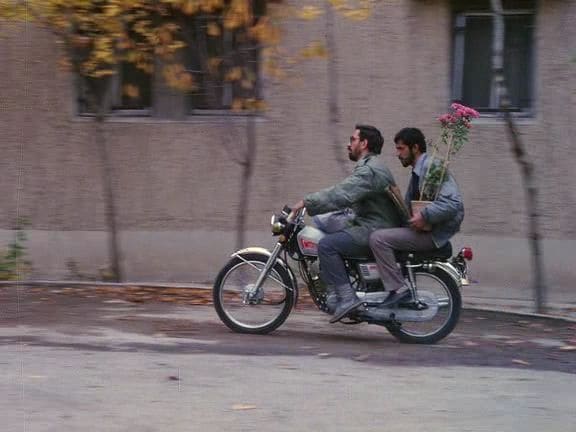
A scene from Abbas Kiarostami’s Close-up (1990). (Film still)
What are your influences in cinema and shows as a writer?
Different films have influenced me at different points. The film that got me interested in the craft of film was Sholay. I remember watching it on VHS back in the day and it stayed with me. The scene where Thakur narrates the story of why he did not pick up the gun when Gabbar attacked, I went like, “Wow, how did this even happen!” Sholay is a film I remember shot by shot. Other than that, it would be Jurassic Park. I read about the film before I watched it. This Hindi magazine called Sarita published a long article on Jurassic Park. I read it and then watched the film and loved it. The third film is Abbas Kiarostami’s Close Up. It was very different from anything I had ever seen before in my life. The first film I ever made, the first documentary, is in a way influenced by Close Up. These are the three films that have been milestones in my journey in cinema. Other than these, I am a very big David Lynch fan. What he achieves in the first season of Twin Peaks is nothing short of greatness. Everyone should watch Twin Peaks. I am a very big Tim Burton fan. I also have great respect for Guru Dutt’s films and I grew up with Hrishikesh Mukherjee’s films. Then, of course, I love Michael Haneke, Charlie Kaufmann and several others. I love Scorsese and Vishal Bharadwaj as well. When I watched Maqbool for the first time, I was blown away. I love anything that has a strong and unique visual appeal.
What do you seek from your journey as a writer?
That’s a difficult question. I would say freedom. At the end of the day, you want to be free of the tangibles like box office collection and how many people have seen your film and just want to be able to write what you want. That is what I seek. People in the industry say things like “The audience likes this” or “The audience won’t like this.” I want to tell them that I want to meet this audience. No one can predict what the audience is going to like. People think that OTT is going to change things and someone else is going to change things. But the fact is that some of our best work has happened on TV. Look at shows like Malgudi Days in the 1990s. They were not written by crunching numbers and wild predictions about the audience’s behaviour. They were made with freedom and that’s why they were so good.
Mihir Chitre is the author of two books of poetry, ‘School of Age’ and ‘Hyphenated’. He is the brain behind the advertising campaigns ‘#LaughAtDeath’ and ‘#HarBhashaEqual’ and has made the short film ‘Hello Brick Road’

 E-Paper