
 E-Paper



Review: Terminal 3 by Debasmita Dasgupta
Debasmita Dasgupta's "Terminal 3" follows the story of Khwab Nazir, a 17-year-old Kashmiri girl pursuing her dreams despite the challenges she faces.

 Prefer HTon Google


Debasmita Dasgupta’s graphic novel Terminal 3 charts the life and dreams of 17-year-old Kashmiri girl, Khwab Nazir. Named Khwab, which literally means “dream”, by her father, she wants to fulfill his abandoned dreams of sporting glory. He played football for 25 years despite little support from his family and finally gave it up to start a business.

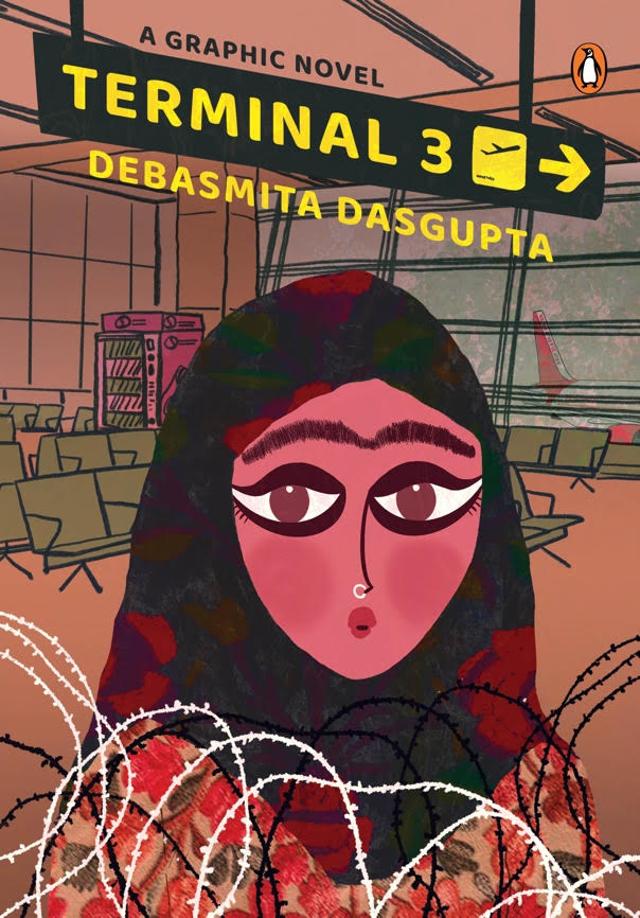
The reader meets Khwab as she is about to depart from New Delhi’s international airport in August, 2019 – the month the region’s special status was revoked and a seven-month long communications shutdown was put in place. She is leaving home to represent India in an international jiu-jitsu tournament in the United States. At the airport, she is sombre, reflecting on her life in her home state. She thinks of her best friend Noor, whose lover dies in a street protest, and is herself later blinded by pellets fired to quell more protests. She thinks too of her encouraging and supportive parents and her coach who believes in her talent and helps crowdfund her journey to participate in the martial arts tournament abroad.
Intruding into her fragile world is her aunt, who talks about the futility of chasing dreams. Her thinking is typical of those who disapprove of young girls defying traditional social norms: “If you become so thin, tomorrow when you marry, how will you have children?” she chides Khwab after a training session. She talks too about the limitations of being born in Kashmir: “The moment we are born in the Valley, your destiny is set. No matter where you go, the shadow will chase you.” Despite relatives who keep reminding her that marriage is the ultimate goal since she is “a woman in a man’s world”, Khwab singlemindedly works towards realizing her dreams. Her supportive parents help her thrive in her chosen sport and her coach too helps keep her on track with training.
“Even when we have nothing,” she says in a video released as part of a crowdfund campaign called Azaad Khwab (free dreams), “we’ve dreams that nobody can take away from us.” The campaign is a success and funds her travel to the US tournament.
A sharply drawn graphic novel that shows how, despite coming from a disturbed region, young people, including girls, continue to make a mark by excelling in their chosen fields. The characters are believable with their attire, dialogue, apprehensions and actions like those of an average individual in a Kashmiri household. However, in some places, the politics is muddled. The political situation Khwab finds herself in – and the blindness inflicted on her best friend Noor, for example – is defined in terms of being caught between two sides, when we know it was the indiscriminate use of pellet guns post the uprisings of 2010 and 2016 that led to serious injuries among numerous young people. The international press coverage at that time described it as an “epidemic of dead eyes.”
To its credit, the graphic novel is able to capture the broken lives of young people in Kashmir. Some young girls, like Noor, do not emerge unscathed. Others, like Khwab, manage to survive and chase their dreams.
At one point, Khwab’s mother’s words seem to be a speech bubble for all of Kashmir: “We are so used to silences that we forget we have a voice.”
Majid Maqbool is an independent journalist based in Kashmir.


