
 E-Paper



The English moors: of furze, whinstone and wild passion
From the Brontës to Arthur Conan Doyle and Paul Kingsnorth, this dark and wind-blasted landscape has inspired authors down the ages

 Prefer HTon Google


“Unreclaimed, without refinement, without cultivation; an arid wilderness of furze and whinstone.”
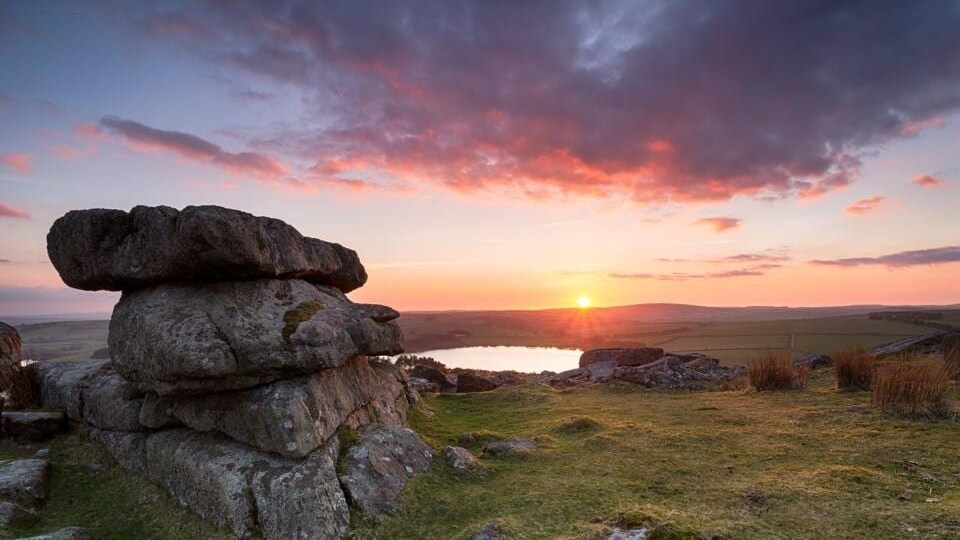
Was Catherine referring to Heathcliff, the original toxic hero, or the moors, the dark, boggy surrounds that set the tone for almost all that happens in Wuthering Heights?
Published in 1847, Emily Brontë’s only novel traces the life of the Earnshaws and the Lintons, two families of the landed gentry living on the West Yorkshire moors, and their turbulent relationships with Heathcliff, a foundling who becomes the Earnshaws’ foster son.
Initially published under the pen name Ellis Bell, Wuthering Heights impressed and appalled early reviewers with its sexual passion. This became even more pronounced when it was known that it was written by a young woman who had led a sequestered life – by the moors.
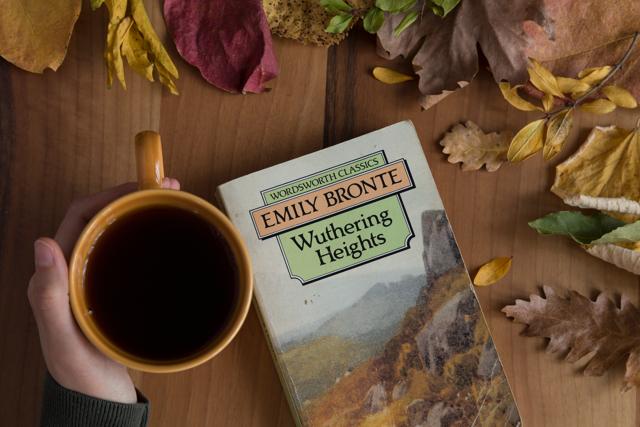
Born in 1818, Brontë was the daughter of Irish clergyman Patrick Brontë and his English wife, Maria Branwell. The couple had six children (she was fifth in line), who grew up in Haworth, a small village in West Yorkshire, England, where he served as the resident parish priest.
The death of their mother in 1821 meant the Brontë children were left to themselves in the bleak rectory. They spent their childhood on the moors, a dramatic landscape that went on to influence and provide a fitting backdrop for Brontë’s turbulent, tumultuous tale of wild, uncontrollable passion.
Wuthering Heights shocked reviewers and readers alike.
A reviewer from Douglas Jerrold’s Weekly Newspaper wrote: “The reader is … disgusted, almost sickened by details of cruelty, inhumanity, and the most diabolical hate and vengeance.”
Another wrote: “There is not in the entire dramatis persona a single character which is not utterly hateful or thoroughly contemptible.”
The characters in Wuthering Heights, now considered a classic, seemed to mimic their milieu: They were stormy, choppy, unsettled, chaotic, and wild.
But would Heathcliff and Catherine’s tempestuous and doomed love story be the same without the backdrop of the dark Yorkshire moors?
The Oxford English Dictionary defines a moor as “a piece of unenclosed waste ground; uncultivated ground covered with heather; a heath”. The ecosystem is seen across the UK, from the Scottish highlands and mid-Wales to Cornwall and Yorkshire.
The Yorkshire moors, home to one of the largest expanses of heather moorland in the UK, are known for their harsh terrain, bad weather, and stark, dramatic beauty. They clearly inspired Brontë to craft the setting of her novel and the people who populated it. In Wuthering Heights, the landscape and characters are often transposable.
As the story begins, we enter the titular Wuthering Heights, an isolated farmhouse that overlooks the wild and windy moors, with Lockwood, the novel’s narrator. Exceptionally bad weather leads him to initially seek shelter and ultimately stay the night.
Lockwood provides an explanation of sorts as to why the house got its name. “Wuthering being a significant provincial adjective, descriptive of the atmospheric tumult to which its station is exposed in stormy weather. Pure, bracing ventilation they must have up there at all times, indeed: one may guess the power of the north wind blowing over the edge by the excessive slant of a few stunted firs at the end of the house; and by a range of gaunt thorns all stretching their limbs one way, as if craving alms of the Sun.”
We soon meet Heathcliff, the doomed hero who loves Catherine with all his heart, but, like the moors, is dark, mysterious, and dangerous. His name seems to stand in for the Yorkshire landscape – a heath is an open area of uncultivated land that grows heather and coarse grasses; a cliff is a steep rock face.
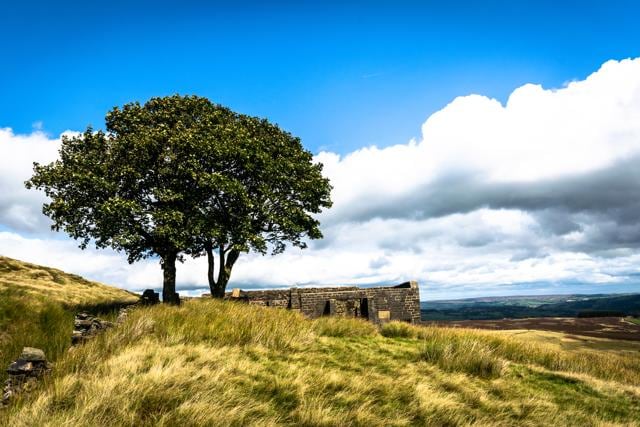
The moors lie high on the crest of the Pennines, a range of uplands located in Northern England and often called the “backbone of England”. They may seem bleak, barren, and desolate, but these tracts of open country, either dry with heather or wet with acid peat vegetation, have been the setting of many fictional masterpieces.
Brontë was strongly influenced by Romantic and Gothic traditions that favoured run-down buildings and untamed landscapes to showcase the characters’ stormy emotions. The topography and unending emptiness of the vast moorland seem to be mirrored in the trauma, turmoil, and terror her characters lived with.
Writing about her sister, Charlotte Brontë, author of Jane Eyre, wrote: “My sister Emily loved the moors. Flowers brighter than the rose bloomed from the blackest heath for her. Out of a sudden hollow in the hillside, her mind could make an Eden. She found in the bleak solitude many and dear delights, and best loved was liberty.”
Charlotte Brontë herself tapped the moors to good effect in Jane Eyre, using them to represent her heroine’s desolation and loneliness after leaving Mr Rochester.
But the Brontës aren’t the only ones who found inspiration in the wild moorlands.
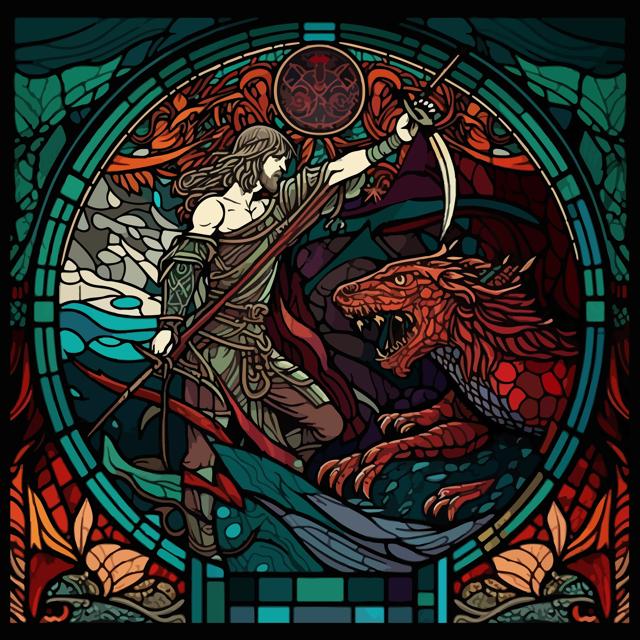
Beowulf, an Old English epic poem in the tradition of the Germanic heroic legend and said to have been composed between the 8th and 10th centuries, tells the tale of a warrior who travels to Denmark to kill a monster, one who “haunted marshes and moors, fens and heath”.
A century after Brontë, Daphne du Maurier, who attained fame with Rebecca, also wrote about the moors in her 1936 novel Jamaica Inn.
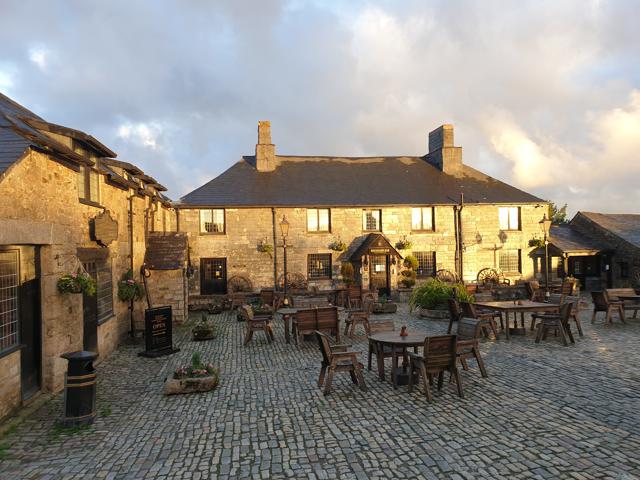
After her parents die, Mary Yellen is on her way to the titular inn (a real tavern on Bodmin Moor in Cornwall) to live with her aunt and uncle. Her thoughts on beholding the sterile landscape are telling. “No human being could live in this wasted country… and remain like other people; the very children would be born twisted, like the blackened shrubs of broom, bent by the force of a wind that never ceased.”
Apart from Gothic fiction, the harsh moorland also inspired a section of Frances Hodgson Burnett’s The Secret Garden, now considered a children’s classic.
As Mary Lennox journeys through the moors along a rough road to Mistlethwaite Manor, a wind rises, making “a singular, wild, low, rushing sound”.
“It’s – it’s not the sea, is it?” said Mary, looking round at her companion.
“No, not it,” answered Mrs Medlock. “Nor it isn’t fields nor mountains, it’s just miles and miles and miles of wild land that nothing grows on but heather and gorse and broom, and nothing lives on but wild ponies and sheep.”
She goes on. “That’s the wind blowing through the bushes,” Mrs Medlock said. “It’s a wild, dreary enough place to my mind, though there’s plenty that likes it – particularly when the heather’s in bloom.”
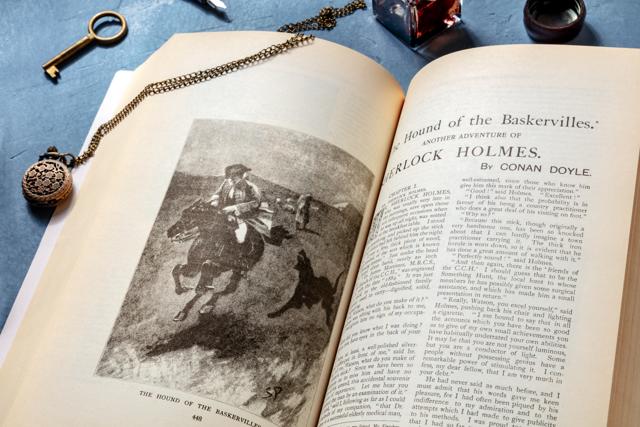
Arthur Conan Doyle’s imagination too was spurred by the sparse countryside. In June 1901, he wrote to his mother from a hotel in Dartmoor: “We did 14 miles over the moor today. [It] is a great place, very sad and wild, dotted with the dwellings of prehistoric man, strange monoliths and huts and graves. In those old days, there was evidently a population of very many thousands here and now you may walk all day and never see one human being.”
Doyle, as Dr Watson, used a few telling words to describe the moor: “gloomy”, “sinister”, “so vast, and so barren, and so mysterious”, and “like some fantastic landscape in a dream”.
In The Hound of the Baskervilles, the moors are referred to as “enormous wilderness of peat and granite” where squalls “drift across the russet face of the melancholy downs and heavy, slate-coloured clouds trail in grey wreaths down the sides of the fantastic hills”.
Poets Ted Hughes and Sylvia Plath were among the many who visited Top Withens, a ruined farmhouse near Haworth, said to have been the inspiration for the Earnshaw family house in Wuthering Heights. The bleak moors took Hughes fancy, with the Calder Valley often the setting for many of his poems.
“Moors are a stage for the performance of heaven. Any audience is incidental,” he wrote.
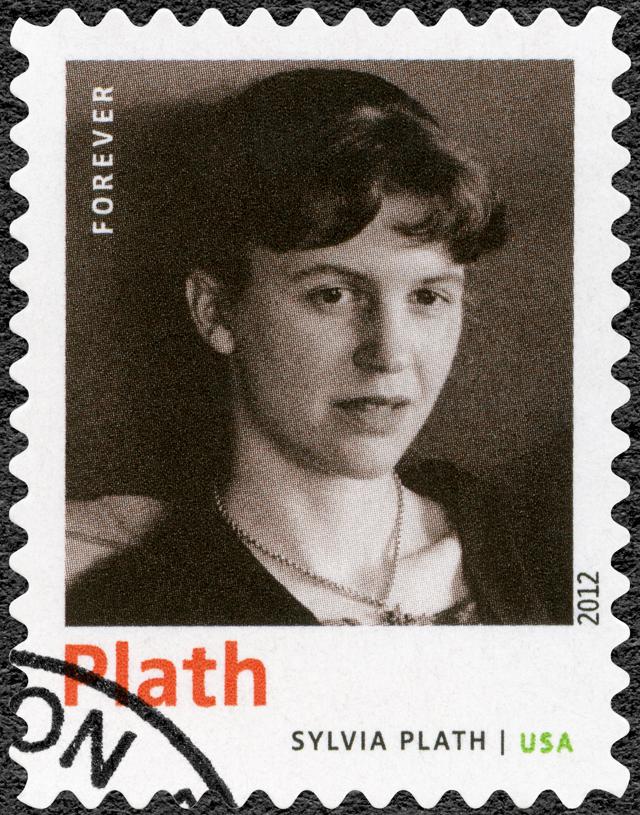
Plath, his first wife, agreed. “It is wild and lonely and a perfect place to work,” she is said to have told her mother.
Many writers down the ages have set their books in the moors.
Much-loved children’s writer Enid Blyton sent Julian, George, Dick, Anne, and Timmy across various moorlands as they hunted down crooks and criminals in the Famous Five series. Walter Bennett set The Pendle Witches, said to be the true story of some of England’s most infamous witch trials, in the Lancashire moorland. In Erin Hunter’s Warriors series about feral cats, one of the four Clans, WindClan, lives in the moorland.
Michael Jecks’ Knights Templar books, a series of historical mystery novels, follow Sir Baldwin Furnshill and his friend Simon Puttock, Bailiff of Lydford Castle, in and around Dartmoor.
In Beast, the second volume of Paul Kingsnorth’s trilogy, a man alone on the moor is hunted by a mysterious foe. The former climate-science journalist turned novelist explores the interplay between society and environmental collapse, using the landscape and fields of heather to communicate themes of timelessness, immutability, and distance from civilisation.
The authors are as numerous as their books, but the moors stay the same. Writers down the ages have used them to symbolise different things: darkness, danger, emptiness, wildness, freedom, independence, power, strength, endlessness, timelessness, and even love and harmony.
To Emily Brontë, the moors seem to have been a happy place. As a 16-year-old, she wrote in a poem:
“For the moors! For the moors, where the short grass
Like velvet beneath us should lie!
For the moors! For the moors, where each high pass
Rose sunny against the clear sky!”
But her Wuthering Heights does not show us this side of the moors.
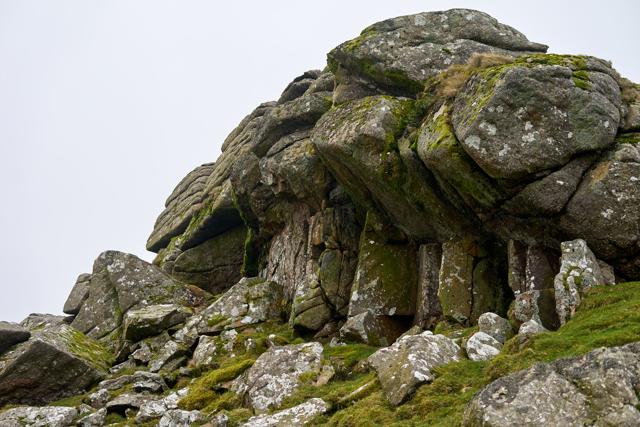
Charlotte Brontë’s opinion says it all: “Wuthering Heights was hewn in a wild workshop, with simple tools, out of homely materials. The statuary found a granite block on a solitary moor: gazing thereon, he saw how from the crag might be elicited a head, savage, swart, sinister; a form moulded with at least one element of grandeur – power. He wrought with a rude chisel, and from no model but the vision of his meditations. With time and labour, the crag took human shape; and there it stands colossal, dark and frowning, half statue, half rock: in the former sense, terrible and goblin-like; in the latter, almost beautiful, for its colouring is of mellow grey, and moorland moss clothes it; and heath with its blooming bells and balmy flagrance, grown faithfully close to the giant’s foot.”
Teja Lele is an independent editor and writes on books, travel and lifestyle.


