
 E-Paper



Bengaluru's growth will hinge on how its reinvents its urban fabric
This article is authored by Vivek Singhal, co-founder & CEO, Multigen India.

 Prefer HTon Google


For nearly two decades, Bengaluru has responded to growth in a fairly predictable way. Every time the city needed more homes or office space, development simply moved a little farther out. New corridors emerged, infrastructure followed, and the city's boundaries kept stretching.
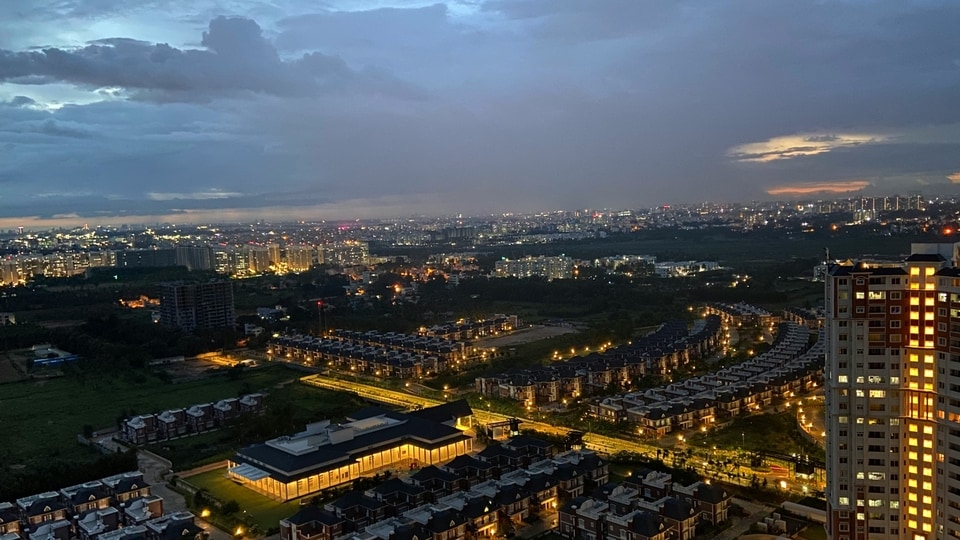
That model worked because Bengaluru had room to grow. Today, the conversation is beginning to change.
The question is no longer whether the city can continue expanding. It probably will. The more important question is whether expansion alone is enough for a city that has already established itself as India's technology capital.
In my view, it isn't. A mature city eventually reaches a stage where growth has to become smarter, not just bigger. Bengaluru is approaching that point.
When people talk about the future of real estate, the discussion often revolves around launching new projects in emerging micro-markets. While those markets will continue to play an important role, I believe an equally important opportunity lies much closer to the city's core, in neighborhoods that have quietly supported Bengaluru's growth for decades.
Many of these localities continue to enjoy excellent connectivity, thriving social infrastructure and strong community networks. Schools, hospitals, workplaces and public transport are already part of their ecosystem. Yet a significant portion of the built environment was designed for a Bengaluru that looked very different from the one we see today.
That presents an interesting challenge.
Should cities continue consuming more land at the periphery while valuable urban spaces remain underutilized? Or should they begin asking how existing neighborhoods can be renewed to meet contemporary expectations without losing the character that made them desirable in the first place?
Too often, redevelopment is viewed as a conversation relevant only to developers. I see it differently. At its heart, redevelopment is about improving the quality of urban life. It is about replacing ageing infrastructure with buildings that are safer, more efficient and better suited to how people live today. It is equally about making more responsible use of land in a city where every square meter has become increasingly valuable.
This isn't about replacing Bengaluru's identity with a skyline of taller buildings. The city's established neighbourhoods possess a sense of place that cannot be recreated overnight. Their value lies not just in the buildings they contain but, in the communities, they have nurtured over time.
That is precisely why urban renewal must be approached thoughtfully.
The objective should never be redevelopment for its own sake. It should be to strengthen neighborhoods while preserving what residents already value about them. Better planning, improved infrastructure and modern housing should complement the social fabric of these areas, not erase it.
Policy reforms in recent years suggest that urban planning is gradually moving in this direction. The emphasis is shifting towards making more efficient use of serviced land instead of depending exclusively on outward expansion. In many ways, that reflects a broader understanding of how successful global cities evolve as they mature.
Of course, redevelopment is not without its complexities. It requires alignment among residents, developers and civic authorities. It demands patience, transparency and long-term planning. Every neighborhood presents its own set of challenges, and there can never be a single blueprint for urban renewal.
Yet these complexities should not discourage the conversation. If anything, they make it more important.
The choices Bengaluru makes over the next decade will shape not just its skyline but also the quality of life it offers future generations. A city cannot keep extending its boundaries indefinitely without eventually confronting questions around infrastructure, commuting, land utilisation and sustainability.
Growth, therefore, needs to be viewed differently.
Perhaps the next milestone for Bengaluru is not another ring of development around the city. Perhaps it is learning how to make better use of what already exists.
Cities are remembered not only for how rapidly they grow but for how intelligently they adapt. Bengaluru has reached a stage where evolution may matter more than expansion. If the city embraces that mindset, its next chapter could be defined not simply by building more, but by building better.
(The views expressed are personal)
This article is authored by Vivek Singhal, co-founder & CEO, Multigen India.


