
 E-Paper



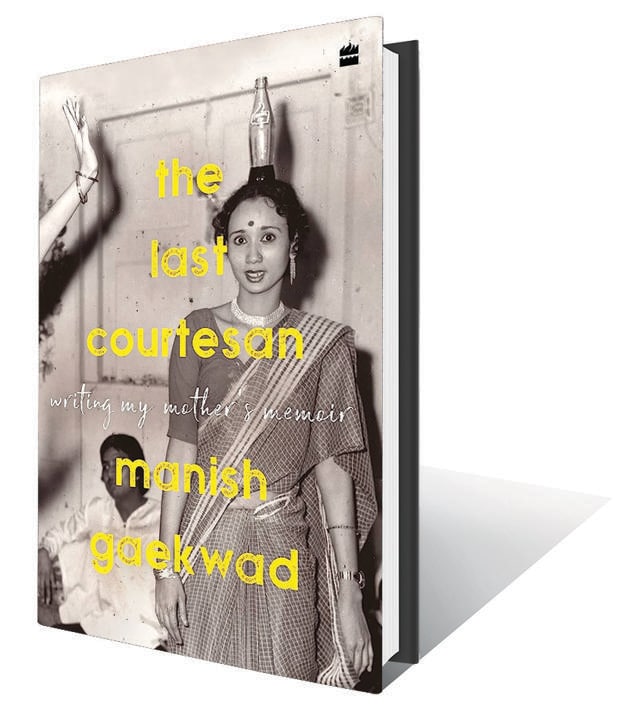
Review: The Last Courtesan; Writing my Mother’s Memoir by Manish Gaekwad
The story of a remarkable woman, who made a living dancing for patrons in the kothas of Calutta and Bombay, narrated by her son

 Prefer HTon Google


She brought out a doll from inside the frock she was wearing, held it up for all to see and said, “Didi, dekho, mera bachcha (Look, my child)”. Ritu or Meetu, I can’t recollect her name – it happened decades ago – was play-acting. Rajan, making a face as he tried to drink his glass of milk, said he wanted to be a cop. “Woh sab @&#* aadmi ko maarunga (I’ll beat up all those horrible men)”.
I was stirred by their innocence and the simultaneous loss of childhood. It was dinner time. We were sitting on the mat in a brightly-lit room where the NGO I was volunteering at provided food and a room at night to the children of sex workers, who would be busy with clients at that hour – drunk, smelly, sometimes diseased men they did not know and might never meet again, but who they shared a few minutes of intimacy with in an hourly transaction. Come morning and they would be at the school asking the teachers about the progress of their kids whose fathers took no responsibility, if ever they returned at all.
I have admired these women, the hard knocks of life making them stronger and resilient.
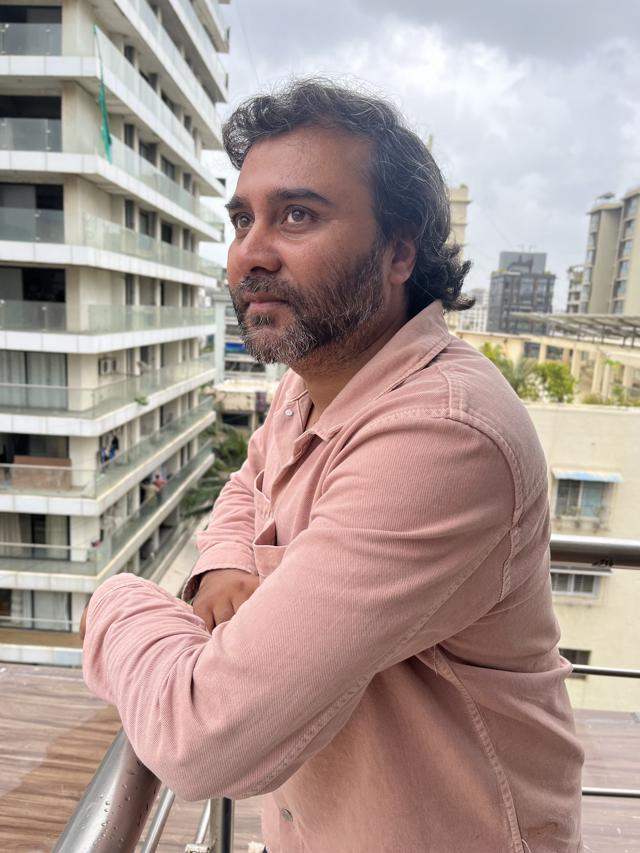
And I have admired Rekhabai through her son Manish Gaekwad’s cryptic observations even before he related her story in The Last Courtesan: Writing My Mother’s Memoir. As he mentions in the Introduction: “She never ever fully realized till now that, one day, she will have to recount her story for a cheap paperback, or so she thinks of my idea to write about her life… What’s the point of raking up the past? She fears the samaaj, society.
Rekhabai was a courtesan. The vocation is a grey area where a woman dances and sings for her male patrons but does not sell her body. It is obvious from the narrative and yet I feel that the writer tries often to emphasise this distinction. Was it the son’s or the mother’s fear of how society would view them? He has often penned frank essays about his upbringing. Here, he writes, “Like her, I too have lived alone and aloof for most of my life. I grew up in kothas and in boarding schools… We don’t share a typical mother-son relationship… We meet like strangers, trying to read the other as politely as possible…looking for a crack to let the neon light pass and illuminate both sides.”
This is surprising for, as a reader, I sense an inextricable bond. Perhaps the mother had a point when she chided him, “Tu aur tera dimaag; marwa ke rahega hum sab ko. You and your imagination will get us killed.”
Our intimate relationships survive to a large extent due to our ability to imagine how they are. Manish, whose last name Gaekwad itself was a made-up one – belonging to no one he knew – probably imagined a chasm based on the enforced distances Rekhabai had to put him through to keep him alive and secure, away from a life of humiliation. At infancy, he quite obviously couldn’t experience her celebration of his birth when she requested the other courtesans to pray for his well-being: “Aaj kothe mein mere ladke ki khushi ka jalsa hai; aap log se guzarish hai uski salamati ke liye dua karein”. And he was too young to understand her later dilemma: “One thing patrons did not like to see in the kotha in the evenings was a child. They had left their own at home to be there. They did not want to see children running around, or hear them crying. They certainly did not want to be reminded of their domestic lives.”
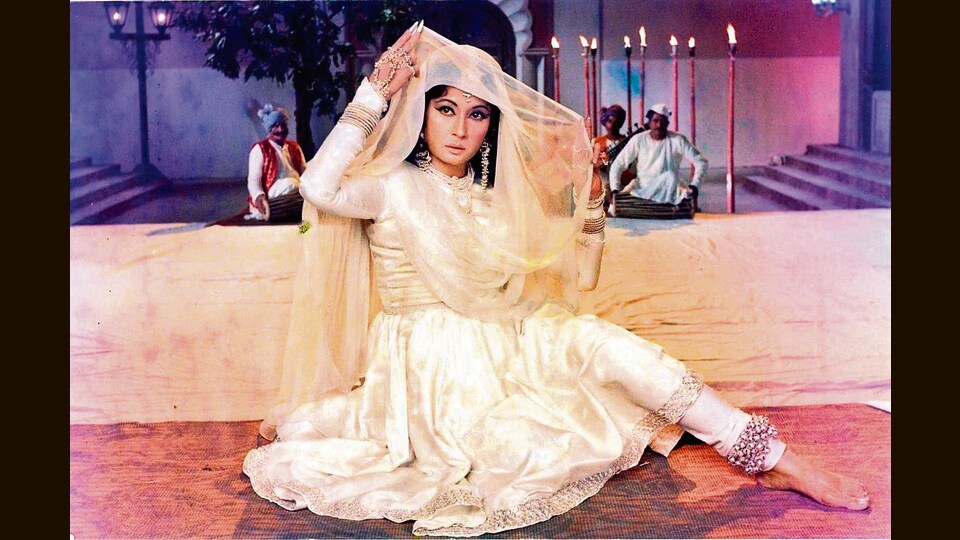
What about her own domestic life? At times, there seem to be two Rekhabais. In one, the authorial projection, she appears to be less mother and more of a character, as though the writer is trying to convey that, although he is relating the story of the woman whose womb he came from, he is in fact an objective observer of her travails. In the other, as narrator of her life, she speaks as a woman with a steely resolve, more “Mother India” (the old Hindi film in which the protagonist fights a daily battle to keep her family alive) than the Meena Kumari the writer has a special leaning towards.
You can’t blame him. Meena Kumari’s life, unbeknownst to her, was performative tragic art that anybody with hidden wounds could identify with. So, when Rekhabai is reminded of her snipped-off finger (again reminiscent of the actress), “She laughs, trying to appear enigmatic about her scars. She is definitely holding back the horrors of the past… My mother thinks of herself as a tragedienne like the actress – unwanted and unloved. The pitiable story of any tawaif’s life, actually. Many become obsessed with their unending gham, misery, retracing into a flashback. Mother didn’t do it in the beginning, but, as she began to fade in the kotha, alone and aloof, she became Meena Kumari.”
Rekhabai travelled from the outskirts of Poona to Agra, Calcutta and Mumbai, and made a home in small rooms laid with mattresses and bolsters for the patrons to enjoy the music and the mujra. The tawaifs also had to go to the villages and perform at fairs. In a touching account, she says, “I was too young to know how well I did. There were no rewards. I was a slave, so I did not see the colour of money come into my hands… But I learnt something important from this mela. I saw how so many people came to see us. They were mostly common, ordinary folk. I saw how they tossed currency notes at us. I would notice the notes falling near our feet. I could not pick them up and run. I felt so rich and yet so helpless!”
She learned an even more important lesson: she had to be the master of her own fate. That came with its own breakdowns, but she persisted. From the little girl whose “deranged father” wanted to drown her in a pond after she was born, to the one who would eat whatever was placed before her because “hunger has no taste”, she was being treated at fancy restaurants. Not all men were predators; a few truly cared, sometimes in unrequited love, others as genuine well-wishers.
There are touch-and-go references to the famous people who visited the kothas – a well-known classical musician here and a political leader there – “once, some Bangladeshi freedom fighters also came. One of them was called Mujibur”. It would be too much to expect an intensely personal memoir to delve into the socio-political background, although the author does provide details and minutiae of the petty jealousies, the sisterhood, the musicians, the mafia, and the sarees, the anklets…these indeed are the protagonist’s life.
However, there are minor language lapses where Rekhabai uses contemporary catchphrases that stand out as anachronistic: “We did not know what a good touch or a bad touch was”, “went to him and played the helpless-woman card”, “her bosom drooped like fruits from a bough. Which man would not like to wait in such a museum of tits!”.
I also wonder: Had somebody else penned Rekhabai’s memoirs, would we have got a glimpse of her sexual awakening, her desires, the quivering love she might have felt for a special one or one that was not reciprocated?
Perhaps it is aankhon ki sharam, where parent and son need to retain some abashment regarding matters of love and lust, if they are discussed at all, that left a few things unsaid. Or maybe Rekhabai was herself self-conscious. At one point she says, “Telling a stranger my name made me feel shy, as if I was giving a part of myself to him.”
Such vulnerability hit me most in the palpably wrenching scene at the train station where the father of her son tries to grab him from her arms.
His loathsomeness aside, when she didn’t agree to become Rehmat’s second wife, did her need for independence deny her son a father, and did she suffer from guilt that also added to the schism the writer speaks about?
Manish Gaekwad begins the book with, “I have entertained the thought of killing my mother” only to make her – an otherwise unknown woman from the many gullies and hovels that are invisible to most of us – come alive in these pages. But this is not an ode. It is the half-empty space he has inhabited that will, one hopes, be filled in his forthcoming book in which his father gets fleshed out: “A man got out of bed and stood in front of me. A woman sat behind me, adjusting her petticoat…I could tell it was my mother from the silvery sounds of her bangles and anklets – the music was home to my ears.”
And, like Meena Kumari, Rekhabai will see her prayers answered and valiantly watch as the arrow pierces the wounded soul:
“Aaj hum apni duaon ka asar dekhenge
Teer-e-nazar dekhengein
Zakhm-e-jigar dekhengein”
Farzana Versey is a Mumbai-based writer. She tweets at @farzana_versey


