
 E-Paper



Dan Brown decoded
He always knew he was going to be famous - but it took him four decades to figure out how. Just like his books, Dan Brown’s life is rooted in controversy, criticism and cliffhangers. This is the story of writer Dan Brown before and after The Da Vinci Code.


Success is nearly always accompanied by scrutiny. And for Dan Brown, after he wrote The Da Vinci Code in 2003, it came in stages. Controversy at first. Lawsuits soon after. And cruel jokes and criticism that have lasted a decade.
"You have to ignore it," says Brown. "In the same way you must ignore people who say wonderful, wonderful things." This is a rehearsed answer, regurgitated over and over again. But it is also great advice.
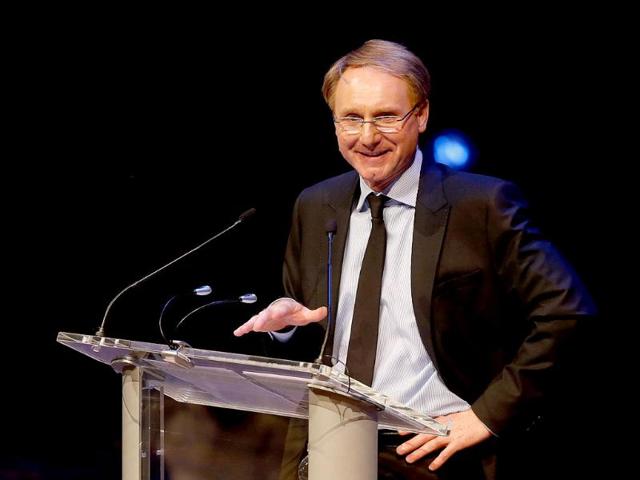
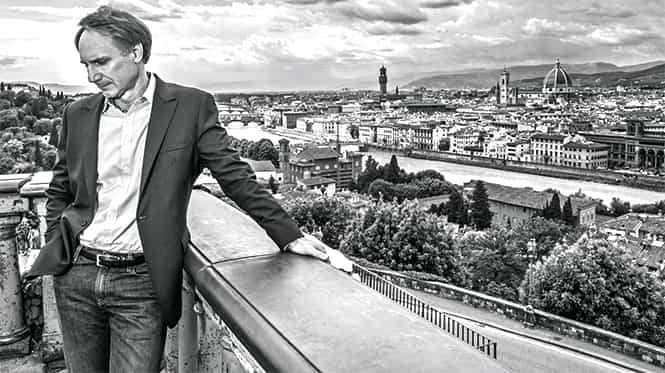
(Photo: Claudio Sforza)
"If you believe your fans, you become lazy and think, 'Ah! They'll read anything'. If you believe your critics, you become insecure and think, 'Maybe I shouldn't write'. Neither one is helpful. You just need to be true to yourself. Plug your ears, look straight ahead. And do what you gotta do."
Dan Brown was in India last week. He had been in Delhi for a day when we met on a Monday morning. He had seen the Red Fort, "It was beautiful" and two elephants on the road - "like any good American, I stopped to take pictures."
Later in the evening, at the Penguin Annual Lecture, Brown would repeat himself about ignoring criticism. When asked to respond to Salman Rushdie's gibe at
The Da Vinci Code
, "a book so bad that it makes bad books look good," Brown instantly replied, "He sounds like a very nice man." A thousand-odd people burst into peals of laughter and delighted applause.
Somebody in the audience admitted that the first novel they ever read was Dan Brown's. Another asked permission to rush to the stage to get a copy signed before everybody else. In this crowd, you could not help but realise that it is still not fashionable to scrunch up your nose at Dan Brown in most circuits.
It has been 11 years since
The Da Vinci Code
. Its plot was based on a theory that Jesus was married to Mary Magdalene and that the bloodline of Christ continues to date.
The novel has sold 80 million copies worldwide and been translated into 52 languages. When it was published in 2003, the Vatican had to appoint a cardinal to rebut its claims, calling it "a sack full of lies". Copies of the books were burnt, protests were held at readings.
All this controversy made the book an unparalleled success. And it gave Brown instant fame and recognition. His fictitious account was seen as a secret history now out in the open. Several versions of the same question are plastered all over Yahoo Groups. "Did Jesus have kids?" "Was Jesus married?" "How many children did Jesus and Mary Magdalene have?"
Ironically, as noted by Time magazine, the Bible is one of the few books to have outsold it.
Brown was born in Exeter, New Hampshire, USA, in 1964. His father, Richard G Brown, taught mathematics (and wrote maths textbooks, "used all over the world, maybe even here"). His mother was a church organist. While his father taught young Dan about the Big Bang Theory, his mother told him that God created the world in six days. It was a childhood seeped in religion and science.
The Browns loved riddles and puzzles. On Christmas, the three children (Dan was the oldest) wouldn't find presents under the tree, but had to use clues and a treasure map to find their presents hidden around the house.
Even as a child, Brown knew he was going to be famous. He would have "visions" and "epiphanies". He'd see himself on a stage surrounded by a big crowd. He had an intuitive sense that "I would connect with a lot of people… be successful at what I did."
It would prove to be misplaced confidence. Brown always loved music, so he assumed "I would be singing or playing the piano or something." And so, a 27-year-old Brown, a few years after graduating from Amherst College, moved to LA in search of the success he had always dreamt of.
The '90s are perhaps the worst decade in the history of modern music, a time for pretty boy bands and proto Biebers. Singer/songwriter Dan Brown released two albums. Some of his songs resurfaced last year. The World Wide Web had a field day crooning to
976 Love
, a terrible song about phone sex:
When I'm feeling small you're the one that I call / I know you understand / I take you to bed, I push the phone to my head / You make me feel like a man / I don't know who you are but I know that you're real / I feel a face in my mind / I feel your love come pulsing through my telephone line.
"It was a total failure," Brown says, of his music career. But he had a great manager. Blythe Newlon was well-connected in the music industry. She was the director of artistic development at the National Academy For Songwriters in LA. She was convinced he was as talented as Paul Simon, Billy Joel, Prince.
He wasn't.
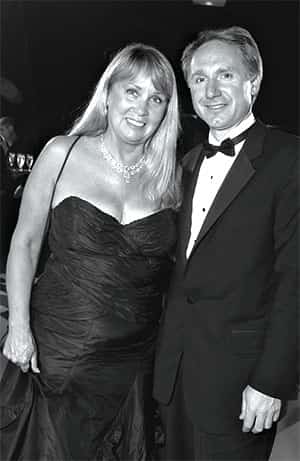
He still plays the piano, but music for him is now a personal thing, he promises: "I will not subject the world to any of it". And admits it took him "about 10 years" to joke about this.
Dan and Blythe would meet every week to discuss his work. Lunch once a week became twice, then thrice but "nothing was happening in my career - there was nothing to talk about. We were now having lunch four times a week. Then we were having dinner. At some point we said, I think we like each other."
They began secretly dating. Blythe is a Californian blonde, with some Native American blood. She is also 12 years older than Dan. When his parents asked him who "this Blythe woman" was, he told them - because he didn't want them to guess he was dating his manager - that she was a "middle-aged Indian woman."
It was funny when they finally met her because "my father had pictured somebody from New Delhi, who was 45 years old!"
Until this point in the conversation, Brown could be mistaken for a suit. He is fit and well dressed. He is charming and witty. But it is only when he talks about Blythe that his face lights up. He looks younger, handsome even.
"When I was a little boy, I saw a movie called
A Little Romance
, set in Venice. It's about two kids who fall in love, and kiss at the Bridge of Sighs. I told myself, when I get married, I'm going to propose at that spot, and I did," he says. It is impossible to take notes now. Brown lowers his voice till it's almost hypnotic. "I took her to Venice, we went to the Bridge of Sighs, I had the ring. I proposed to her right there."
They've been married for almost 20 years.
In 1993, Brown quit his music career and moved back to Exeter with Blythe. In the same year, when the two were on holiday in Tahiti, he read Sidney Sheldon's
The Doomsday Conspiracy.
(A US Naval Intelligence officer is asked to track down ten passengers who had taken a bus in Switzerland. As he finds them, they die one by one, and then he realises he's the one being hunted.) "What inspired me was how fun the reading experience was! So I set out to write a book that I would want to read."
Before he attempted fiction, he wrote a self-help book in 1995 called 187 Men To Avoid, under the pseudonym Danielle Brown.
And then, between 1998 and 2001, he wrote his first three novels: Digital Fortress (about the NSA's surveillance of citizens), Angels & Demons (about a secret society, the Illuminati, trying to destroy the Vatican using antimatter from CERN. It is where Brown's 'alter ego' and hero Robert Langdon first appeared) and Deception Point (about possible extraterrestrial life in the Arctic).
They sold fewer than 26,000 copies combined. If Brown had been a writer in India, he would have proclaimed himself as a bestseller with these numbers. In the US, the books bombed.
"I remember finishing Angels & Demons, and thinking, 'this is a great book. I love this book.' It didn't sell... that was hard," he says.
But it was inevitable that Brown would write The Da Vinci Code. He had spent a year studying art history in the University of Seville. And in Spain, he attended a lecture on Leonardo da Vinci's The Last Supper, which introduced him to references in the painting that would make up a bulk of the plot of the book.
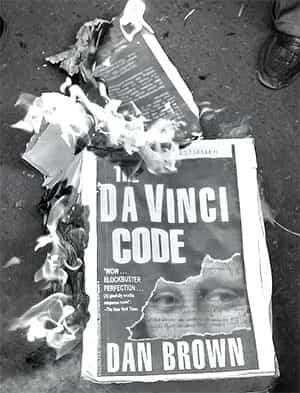
Years later, when he told Blythe about the lecture, she felt very passionately about Mary Magdalene. And so Dan and Blythe, who "now operated as a team," according to UK's
The Telegraph
, spent "thousands of hours poring over books and documents in Rome, Paris and Washington… until they had an almost plausible framework for a work of outrageous fiction."
When Brown's editor, Jason Kaufman, left his job at Pocket Books and moved to Doubleday, he insisted his new publisher take Brown on. "I think if
The Da Vinci Code
had not worked, I probably would have had to stop writing and get a real job," Brown says.
The 60-page proposal of the book got Brown a two-book $4,00,000 contract. On 18 March 2003, Doubleday released
The Da Vinci Code
. The rest, as they say, is history. In the months that followed, millions of readers, desperate for another dose of Dan Brown, devoured his three earlier books.
The visions he'd had as a child had come true. "I stood on a stage with a huge crowd, and thought, 'This is what it was!' I just didn't understand then."
Brown had finally come into his own. He had taken the world by storm, and he wanted to make sure the impression lasted. Carefully, the image of Dan Brown, the seemingly scholarly writer was constructed and cultivated.
According to the
Boston Magazine
, a newspaper wasn't allowed to use the photo it had taken of him. Instead, photos where he looked like his protagonist Robert Langdon (dressed in a tweed jacket and turtleneck) were to be used by the press. Even all these years later, this publication was not allowed to photograph Brown.
When Brown speaks at a public event, a part of the speech is devoted to science and religion. His demeanour and appearance too, seem altered. While he looked boyish during this interview, he transformed into a bespectacled professor at the event. He still joked (he is American after all) but was almost pedantic.
Stranger still, is the fact that his speech in Delhi (in Mumbai two days after) sounded almost the same as the one at the Sharjah International Book Fair the week before. And that too was recycled from earlier speeches.
One could argue that in creating Robert Langdon - a Harvard University professor who is an expert on symbology and Christian art, but thrilling in a Bond way - Brown simply re-invented himself. "He shares all my interests: symbols, codes, ciphers, religion and science. But he's smarter, more daring and lives such an exciting life." He is, Brown has said, "everything I wish I could be". He is what Brown becomes in the spotlight.
During interviews, certain anecdotes reappear, in different settings. Here's one: Brown needed a photo ID for something, but had left his wallet at home. They used his book to identify him. For an interview with the New York Times in 2004, the story went that he managed to board a flight by borrowing somebody's copy of
The Da Vinci Code
. In 2013, for a Penguin Random House Google Hangout, it is how he said he passed security at the Google office: with copies of the just-released
Inferno
.
It was a strange time," says Brown, of the period immediately after
Da Vinci Code
. ""There was a lot to get used to very, very quickly. The level of success, the level of criticism, it all came as a tidal wave."
The Church wasn't the only one upset. Two plagiarism suits followed. The first was by Lewis Perdue, the author of the novels
Daughter of God
(2000) and
The Da Vinci Legacy
(1983), who claimed that Brown's novel was too similar to his books. Brown later said he had never even heard of Perdue. Brown won the suit.
The second was by two English authors. In 1982, Michael Baigent and Richard Leigh had put forward a theory that Jesus and Mary Magdalene had a child in a non-fiction book called
Holy Blood, Holy Grail
. In 2005, they sued Random House in London. The judge ruled in Brown's favour, saying that a fiction writer could borrow material from a non-fiction book.
Soon after, Dan Brown became an even bigger celebrity. The two film adaptations,
The Da Vinci Code
(2006) and
Angels & Demons
(2009), starring Tom Hanks as Robert Langdon, made over a billion dollars worldwide.
It wasn't until April 2009, that his next novel appeared.
The Lost Symbol
, about Freemasons, a brotherhood of secrets, in Washington, was a bestseller. Last year,
Inferno
, too inescapably became a bestseller. This time round, Brown became the butt of all kinds of jokes. Critics wrote entire reviews in clunky Brown-like prose, full of malapropisms and incomplete sentences. It didn't seem to affect the sales.
Forbes
, in 2005, estimated Brown's annual income at $76.5 million. As of June this year, his earnings are stated as $28 million.
"I'd rather have money than not have money," says Dan matter-of-factly. "I could just sit by the pool all day and have people bring me whatever it is I want. But I'm still writing, still learning, still working… Money is just the icing on the cake - it's not the cake."
The Browns live reclusively in a house fit for Langdon in New Hampshire. "It's funny. People come to our house and they can't believe it," beams Browns. There are codes and symbols all over the place, in the mouldings and the windows. "People will step out of a wall - it will look like a solid wall - but it will swing. Huge paintings rotate, so you go into other rooms." A large mahogany bookshelf moves into a passageway that leads into a sculpture garden. "You're never quite sure where you are in the house."
It is, he says, their one indulgence, "We love art, we love architecture. So we decided we wanted to create a piece of art that we can live in." The fame, on the other hand, is a different story. It is unprecedented to get this amount of notoriety as a writer, especially considering that Brown has written only six novels - and in the last decade since he became famous, only two.
"I don't think you ever get used to being famous," he says. "Blythe worked in the music industry around real celebrities - like rocks stars - Jackson Browne, Stevie Wonder. So she's not impressed by me at all, which is good. It's important."
But the fame needs to be factored in, especially while he is working on future books. While researching his last book,
Inferno
(which had references from Italian poet Dante's 14th-century poem of the same name), he would have to use a disguise. "If somebody knew I was coming [to ask them questions for research], I would ask maybe five questions about Dante and 10 questions about Machiavelli. And so the guy would go back and say, 'He's writing about Machiavelli!'"
Just after Brown's music career had died, and before the writing began, "It was wonderful. We were barely making ends meet." Brown was a teacher, Blythe was working at a dental office. "When she moved out East with me, there was no music business. So she had to get a job because we had to pay the rent."
They had one car, which she drove to work. "I would get on my bike, ride 10 miles to school, teach, ride 10 miles back, go home, shower, then go to a different school and teach there. We'd meet at the end of the day. And go out for dinner and maybe share a glass of wine if we were feeling rich. We were totally happy," he says.
A few months ago, they found themselves, by chance, at their old apartment building. "We looked at each other and said, you know what, if it all went away tomorrow, all the money, we'd still be just as happy."
Follow @SaudaminiJain on twitter
From HT Brunch, November 23
Follow us on twitter.com/HTBrunch
Connect with us on facebook.com/hindustantimesbrunch


