
 E-Paper



What to expect from finance minister Nirmala Sitharaman’s Budget 2021-22
The budget is likely to boost public health spending in the wake of the Covid-19 pandemic. The Economic Survey 2021-22 has sought an increase in public health spending to 2.5-3% of GDP.

 Prefer HTon Google


Union finance minister Nirmala Sitharaman will present the budget for the financial year 2021-22 on Monday. All eyes are now on the minister’s speech expected to begin at 11am in Parliament’s Lok Sabha. Several sectors of the economy have their hopes pinned to the upcoming budget following the losses due to the Covid-19 pandemic.
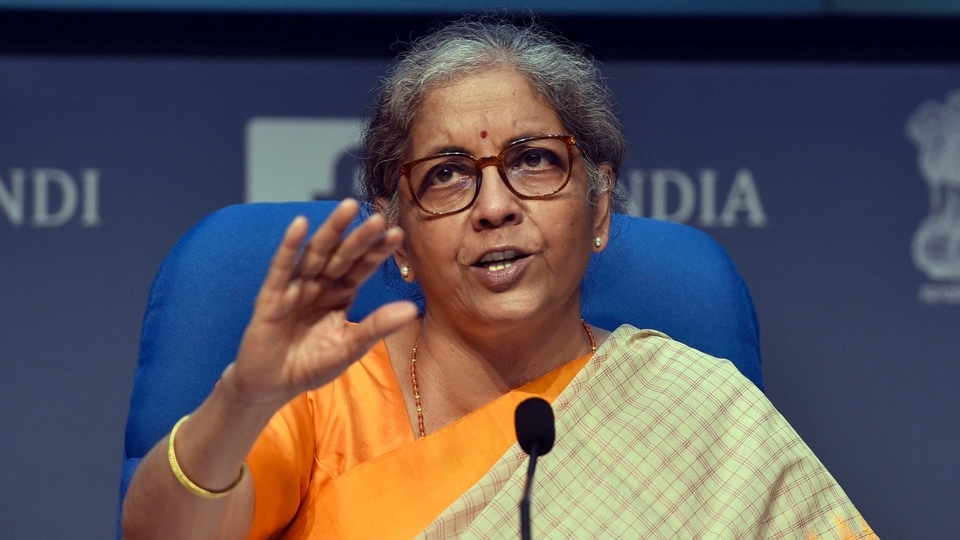
Sitharaman’s February 1 budget may offer more stimulus packages to various sectors of the economy still reeling from the damage caused by the coronavirus pandemic. Earlier this week, Prime Minister Narendra Modi said that the Union budget for FY22 will be seen as a continuation of the string of economic packages that the finance minister had to announce in the last few months.
Follow latest updates on Budget 2021 here
With the vaccination drive in place and recovery in consumption, the Economic Survey 2021-22, which sets the economic context for the Union Budget, has projected a growth of 11% for the economy, a V-shaped recovery in growth. Though the economy is expected to contract by 7.7% in 2020-21, the growth projection comes in the backdrop of the International Monetary Fund’s recent forecast that said India would be the fastest growing major economy in the world with a growth of 11.5% in 2021-22 and 6.8% in 2022-23.
The survey stressed on the significance of the government continuing to increase its spending and called for an asset quality review across Indian banks. According to the survey, inflation is likely to moderate in the coming months which creates the context for the Reserve Bank of India to cut rates.
The budget is likely to boost public health spending in the wake of the Covid-19 pandemic, which highlighted gaps in the country’s health infrastructure. The survey has sought an increase in public health spending to 2.5-3% of GDP from the existing 1%.
“Higher investment in health, at both central and state levels, is absolutely essential now to counter public health emergencies but to provide all needed health services efficiently and equitable manner... If we are serious in our commitment to universal health coverage, we must raise the public financing of health to at least 2.5% of GDP in the next 2-3 years...,” Dr K Srinath Reddy, founder, Public Health Foundation of India said.
Meanwhile, the real estate sector, one of the hardest hit by the pandemic, looks for the Union budget to ease regulatory norms and for steps which will help in completion of pending projects and sale of build-up houses. The sector has also been demanding infrastructure status.
"People on average invest their one-third of their savings in real estate. The real estate sector is largely suffering due to over-regulation and incomplete projects that has led to delays and defaults. Though the government has put the system online, developers still need to approach 50 departments for approvals. This needs to be taken care of. There should be restructuring of the past loans to complete the projects," Navin Raheja, Chairman, Raheja Developers told news agency ANI.
PM Modi addressed an all-party meeting on the Budget session of Parliament on Saturday where he highlighted the role India can play to further global good in many sectors. He referred to the skills and prowess of India’s citizens, which can be a force multiplier for global prosperity.
The Budget session, which began on January 29, will conclude on April 8 with a recess from February 15 to March 7.


