
 E-Paper



RBI guv Urjit Patel keen to shed ‘hawkish’ tag
Former Reserve Bank of India governor Raghuram Rajan was widely perceived to be a “hawk” when it came to monetary policy matters. His successor Urjit Patel, however, does not want to inherit the tag.


Former Reserve Bank of India governor Raghuram Rajan was widely perceived to be a “hawk” when it came to monetary policy matters. His successor Urjit Patel, however, does not want to inherit the tag.
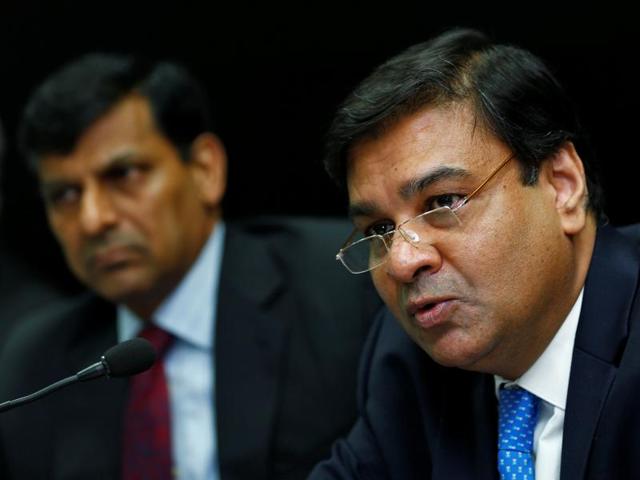
In a customary meeting with the country’s top economists last Thursday ahead of the upcoming policy review, sources said Patel downplayed the risks emanating from inflation, and the fact that goods and services tax (GST) may not increase prices as much, while maintaining the central bank’s focus on growth.
In economic terms, a hawk is someone who favours a monetary policy focussed on inflation, while a dove tailors policy to suit growth.
One economist who attended the closed-door meeting said there could be a 0.25% to 0.50% interest rate cut in the policy review on October 4.
In its assessment of the hawkdove split of the current six MPC members, Japanese financial services firm Nomura categorised government nominee Ravindra Dholakia as a dove, Pami Dua and RBI deputy governor R Gandhi as neutral, and government nominee Chetan Ghate as neutralhawk; RBI executive director Michael Patra and committee chairman Urjit Patel are hawkish, it said.
Though not overtly optimistic, experts are taking this an indication of an imminent rate cut, if not in the October 4 policy review, then at least in December.
Another economist, who was not part of the meeting, said there is more than a 50% chance of a rate cut on October 4 and the repo rate, the rate at which banks borrow from the RBI, could be reduced to 6% over the next 12 months. The repo rate currently stands at 6.5%.
It was under Rajan that the RBI adopted the inflation targeting policy, under which the central bank tailors its monetary policy to achieve a retail inflation target of 4% by March 2018, plus or minus 2%.
When asked about his interpretation of the 4% (+/-2%) inflation target for the next five years, Patel had said after the August 2016 policy that “it is called flexible inflation targeting for a reason, and it is our failure if only for three successive quarters we are piercing the upper bound or the lower bound. It is a range and therefore a bit of flexibility is endowed even in the definition of what constitutes a failure that the RBI needs to explain”.
Consumer price index-based inflation fell to a five-month low of 5.05% in August. India’s GDP growth, on the other hand, slowed to 7.1% in the April-June quarter.
The monetary policy committee, headed by the RBI governor, has a mandate to maintain price stability while keeping in mind the objective of growth.


