
 E-Paper



Oil reverses losses as European Union looks to open borders
Brent crude reversed losses in Asian trading and rose 0.2% to around $66.90 a barrel. A European Union plan to ease restrictions for vaccinated travelers over the Summer holiday season boosted sentiment.


Oil futures ticked up as optimism over easing travel restrictions and the global economic recovery offset falling demand in India, the world’s third-biggest importer.
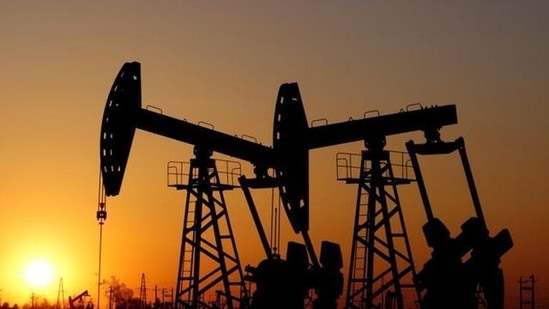
Brent crude reversed losses in Asian trading and rose 0.2% to around $66.90 a barrel. A European Union plan to ease restrictions for vaccinated travelers over the Summer holiday season boosted sentiment.
Oil has rallied 30% in 2021 as the rollout of Covid-19 vaccines allows some major economies to reopen. That’s enabled the Organization of Petroleum Exporting Countries and its allies to start easing the supply curbs they imposed last year to drain bloated global stockpiles.
However, the recovery has been uneven, with some nations suffering from new waves of cases. Sales of gasoline in India were the lowest in April since August, while average daily diesel sales were the lowest since October, preliminary data from officials with direct knowledge of the matter show.
“The biggest factor is still India and how much demand has been hit there,” said Howie Lee, an economist at Oversea-Chinese Banking Corp, adding that recoveries in China and the US are already factored in. “Prices may continue to move in a range. Above $68 is when selling pressure starts to build.”
Iraq’s oil minister, Ihsan Abdul Jabbar, said crude would probably remain around $65 in the coming months. OPEC, of which Iraq is the second-biggest producer, will continue trying to keep prices “within normal averages,” he told reporters in Baghdad on Monday. “There is no concern about a drop in prices.”
Traders are tracking talks between the Iran and world powers including the US over the revival of a nuclear accord. A deal would potentially lead to Washington easing sanctions on Iranian crude exports, though U.S. officials said a deal isn’t close yet. The Islamic Republic has presidential elections next month, which may complicate the talks.
“The market is ready for it and has been pricing it in to a certain extent,” Mike Muller, Vitol Group’s head of Asia, said Sunday on a call hosted by consultant Gulf Intelligence. “It’s a question of when this agreement takes place -- is it this month or after the elections under the next Iranian administration?”
Meanwhile, US oil output may drop as domestic drilling fell for a second straight week. American explorers battered by last year’s crash in prices are showing unprecedented caution and the rig count is still at half pre-pandemic levels, despite prices having since recovered. Also, the Arctic blast that swept through the southern US in February caused a much bigger loss in supply than previously estimated.
Production constraints are helping to erode global stockpiles. “The market remains underpinned -- not buoyant, but underpinned -- by the fact that there is a stock draw,” said Muller. Inventories have been depleted at a slower rate than expected for the first four months of the year, he said.
Brent’s prompt time spread was 45 cents a barrel in backwardation, a bullish pattern where near-term prices trade above those further out. That compares with 62 cents a week ago and 40 cents at the start of April.
“The near-term futures price will be watched very closely for any signs of whether this backwardation can be maintained,” said Ole Hansen, head of commodities strategy at Saxo Bank A/S. “Clearly, that will be very much to do with India on the one hand, in terms of demand, and the increase in production from OPEC on the other.”
Many countries around the world -- including China, Japan and the UK -- have national holidays on Monday, which may lower trading volumes.


