
Sign in

Saturday bank holiday: Are banks open or closed on July 6?

According to the Reserve Bank of India (RBI) holiday list, banks in different states will be closed for 12 days in July.

Published on: Jul 5, 2024, 14:12:38 IST
Share
Share via
  • facebook
  • twitter
  • linkedin
  • whatsapp
Copy link
  • copy link

Banks in India are closed on the second and fourth Saturdays, Sundays, and national and regional holidays. Bank customers should note that regional holidays vary depending on the state. Bank holidays are designated by the Reserve Bank of India (RBI) as follows: Holiday under the Negotiable Instruments Act, Holiday under the Negotiable Instruments Act and Real-Time Gross Settlement Holiday and Banks' Closing of Accounts.
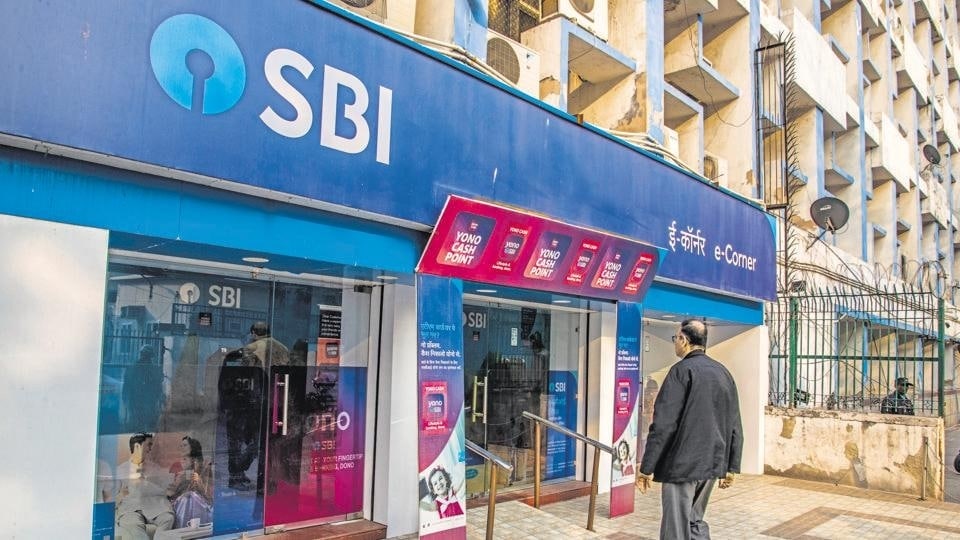
Bank holidays have been designated by the RBI as follows: Holiday under the Negotiable Instruments Act; Holiday under the Negotiable Instruments Act and Real-Time Gross Settlement Holiday; and Banks' Closing of Accounts.

Read more: Defence stocks surge as India posts highest ever growth in defence production

Is it a bank holiday on this Saturday July 6?

The first Saturday of July is a bank holiday in only one state and is not observed as a bank holiday in other states. Banks will be closed in Mizoram which is observing MHIP Day which stand for ‘Mizo Hmeichhe Insuihkhawm Pawl.’

MHIP Day is celebrated on July 6 each year in Mizoram.

Read more: Ola's Bhavish Aggarwal on Tesla not investing in India: ‘Their loss, not ours'

Bank holidays in July 2024

According to the Reserve Bank of India (RBI) holiday list, banks in different states will be closed for 12 days in July. Banks will be closed in July on Beh Dienkhlam, MHIP Day, Kang (Rathajatra), Drukpa Tshe-zi, Harela, and Muharram/Ashoora/U Tirot Sing Day.

July 8- Banks will be closed in Manipur on the occasion of Kang (Rathajatra).

July 9- Banks will be closed in Sikkim on the occasion of Drukpa Tshe-zi.

July 16- Banks will be closed in Uttarakhand on the occasion of Harela.

July 17- Banks will be closed in Tripura, Mizoram, Maharashtra, Karnataka, MP, Tamil Nadu, Andhra Pradesh, Rajasthan, Jammu, Uttar Pradesh, Bengal, New Delhi, Patna, Chhattisgarh, Jharkhand, Meghalaya and Himachal Pradesh.

  • HT News Desk
    ABOUT THE AUTHOR
    HT News Desk

    Follow the latest breaking news, major developments and agenda-setting stories from India and around the world with the newsdesk at Hindustan Times. Operating round the clock, the desk brings together experienced editors, reporters and correspondents to deliver fast, accurate and contextual reporting across subjects that influence public policy, governance, business, society and international affairs. The HT News Desk covers politics, elections, government policies, the economy, business and markets, science and technology, the environment, law and order, infrastructure, education, climate issues and geopolitics, while closely tracking developments across states, institutions and global capitals. The team also leads coverage of major breaking news events, policy announcements, court proceedings, natural disasters, public emergencies and significant international developments. Reports published by the newsdesk are based on information gathered from reporters on the ground, official statements, government agencies, court records, regulatory filings, recognised institutions and other authoritative sources. Stories undergo editorial scrutiny and verification processes to ensure accuracy, fairness and relevance, and are updated as events evolve and additional information becomes available. Whether covering a key political decision in New Delhi, an economic policy shift affecting millions, a landmark court ruling or a major global event, the HT News Desk aims to provide readers with reliable, fact-based journalism that delivers not only the latest developments but also the context and analysis needed to understand their wider implications.Read More