E-Paper



Trade pact a step closer as Australia parliament gives nod to India deal
The India-Australia Economic Cooperation and Trade Agreement (ECTA) was signed on April 2. Less than two months later, the ruling Liberal Party of Australia was replaced by the Labour Party in the national election.

 Prefer HTon Google


The India-Australia trade agreement is expected to be operational by early 2023 as both sides are expeditiously completing formalities – while New Delhi has sent the pact for Presidential assent, Australian Prime Minister Anthony Albanese on Tuesday tweeted that it has “passed though” Australian parliament.
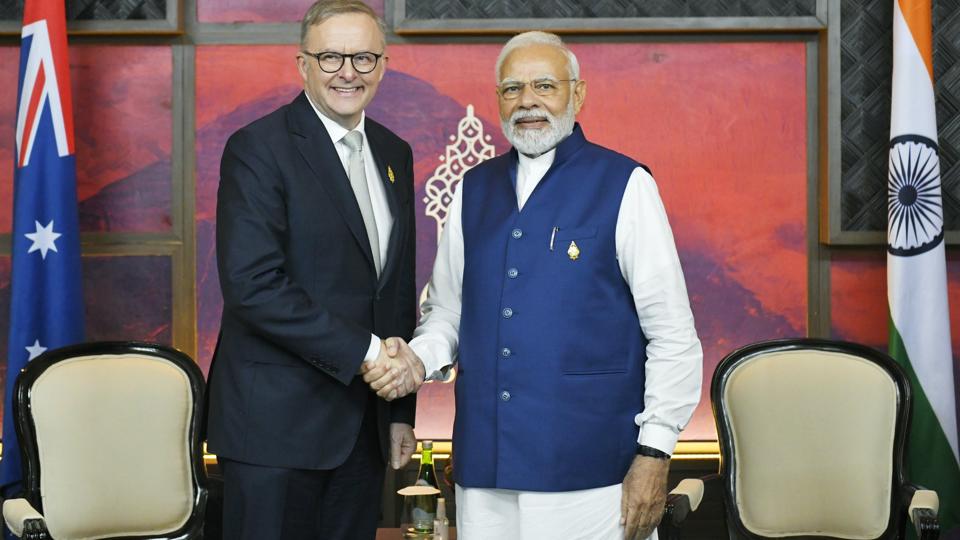
Commerce minister Piyush Goyal said this is “a landmark” development, which reflects “the trust” and “the strong bond” that “Prime Minister Modi has built with Australia” because one government, led by Scott Morrison negotiated the pact and another, under Albanese approved it. The India-Australia Economic Cooperation and Trade Agreement (ECTA) was signed on April 2. Less than two months later, the ruling Liberal Party of Australia was replaced by the Labour Party in the national election.
A commerce ministry official said now formalities needs to be completed by both parties – while India awaits Presidential assent, Australia needs approval of its executive council “to get Royal Assent”, which is like a Cabinet approval. However, the pact will be operational 30 days after an exchange of written notifications on completion of processes by both sides, the official added, asking not to be named.
Goyal said it is a “win-win” deal for both India and Australia where care has been taken to accommodate all stakeholders. He added that the two government will discuss all factors, and formalise a deadline for its operationalisation.
The minister said this is India’s first free trade agreement (FTA) after a decade with any developed country. “Australia’s Parliament passing the #IndAusECTA is a big recognition of India’s growing global stature. Our IT industry, students and many labour intensive sectors will soon reap the benefits of this landmark deal,” he said in a tweet. India last signed an agreement with a developed country with Japan in 2011
Besides ECTA, the Australian parliament also passed bills related to Double Taxation Avoidance Agreement (DTAA), which will resolve long pending tax-related issues for IT and ITES firms and result in financial savings of more than $200 million per year, the commerce ministry official mentioned above said.
The deal is expected to boost total bilateral trade to $45-50 billion in five years from existing $31 billion and India’s merchandise exports to Australia, to $10 billion by 2026-27 from $7 billion, the official said. The trade has a potential to create more than 1 million additional jobs in India besides increased remittance flows to India, he added.
The agreement will help Indian manufacturing sector in sourcing cheaper raw materials and vast market for products ranging from textiles to pharmaceuticals and gems and jewellery.
Prime Minister Albanese said new trade agreements with India and the UK will strengthen existing trade and economic relationships. “These new agreements will create new opportunities for trade diversification and great outcomes for Australian business and Australian families,” he said.
The passage of legislation demonstrates Australia’s commitment to free trade and the rules-based trading system, and is an acknowledgement of the “centrality of trade to our economic resilience”, Albanese added.
Tagging PM Albanese’s tweet that announced the passing of the trade deal in the Australian Parliament, Prime Minister Narendra Modi tweeted: “Thank you PM @AlboMP! The entry into force of IndAus ECTA will be greatly welcomed by our business communities, and will further strengthen the India-Australia Comprehensive Strategic Partnership.”
The Australian Parliament also ratified a free trade deal with the UK. For Australia, ECTA is perceived as crucial for the country to diversify its exports from China to India, the world’s fastest growing major economy, at a time when relations between Canberra and Beijing continue to be rocky.
India is Australia’s ninth largest trading partner, and the balance of trade is in favour of Australia. During 2021, two-way trade in goods and services was worth $27.5 billion, with India’s exports valued at $10.5 billion and imports at $17 billion. India’s merchandise exports to Australia grew 135% between 2019 and 2021. The main exports to Australia are refined petroleum, pharmaceutical products, pearls and gems, jewellery, textiles and women’s clothing. India’s major imports are coal, copper ores and concentrates, natural gas, ferrous and non-ferrous waste and scrap, and education-related services.
The Albanese government expeditiously advanced all processes necessary to ensure Australia was in a position to implement the trade agreements with India and the UK before the end of 2022, an Australian government statement said.
Australia’s trade minister Don Farrell, who worked closely with his Indian counterpart Goyal to push for the finalisation of ECTA, said closer economic ties with India are a “critical component of the Australian government’s trade diversification strategy”.
“The quality of ECTA, in terms of market access and opportunity for Australian businesses, demonstrates India’s commitment to our bilateral economic partnership.” Australia will “continue working closely with the UK and Indian governments to implement the trade agreements as soon as possible” he added
The implementing legislation for ECTA passed both houses of Australia’s Parliament without dissent, Australian high commissioner Barry O’Farrell noted.
India has the fastest growing economy of Australia’s major trading partners and this is “another step forward on the path towards our mutual, sustained prosperity”, O’Farrell said.