
 E-Paper



Union budget 2024: From where does Centre get money for expenditure?
Major share of government revenue comes from borrowings and liabilities

 Prefer HTon Google


The budget is an annual financial statement that outlines the government’s proposed expenditures and revenues for the upcoming fiscal year, beginning on April 1st and concluding on March 31st of the following year. It is presented by the union finance minister in Parliament and serves as a comprehensive document outlining the government’s economic and fiscal policies for the next fiscal year.
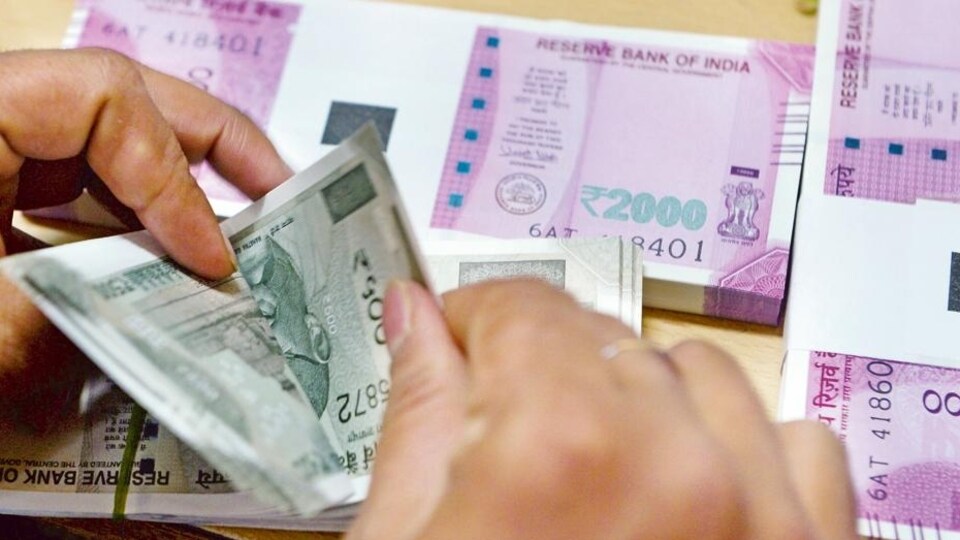
In the document, apart from the liabilities, the government also announces a slew of welfare schemes, necessitating significant expenditure. So, from where does the government get its money?
From where does Centre gets its money?
Government spending is balanced by its revenues and loans. Take a look at how the government got its money for expenditure, as mentioned in the Union budget document 2023-24.
The Budget draws its major share from borrowings and liabilities, constituting the largest chunk of 34 per cent. GST contributes 17 per cent, with Income Tax and Corporation Tax each making up 15 per cent. Union Excise Duties and Non-tax revenue contribute 7 per cent and 6 per cent, respectively.
Also read- Budget 2024: How Union budget is prepared? Explained in 7 points
Where does the money go?
Now that it's clear from where the government fills its coffers, you must ask where does it spend the money. Here is what the Union budget 2023-24 document says:
The government allocates 20 per cent of its budget to interest payments. The State's share of taxes and duties, along with the Central sector scheme, dominates spending, with the former at 18 per cent and the latter at 17 per cent. Centrally sponsored schemes claim 9 per cent, while Defence receives 8 per cent. Devolution to states as per Finance Commission and other transfers needs about 9 per cent.
Also read- Budget 2024: 10 things to know about Modi government's 'interim budget'
What is the importance of the Budget?
The Indian budget is closely watched by businesses, investors, and the general public as it provides insight into the government’s economic policies and priorities and can have a significant impact on the economy and people’s lives.


