
 E-Paper



‘Up to Tesla to lay down EV investment plans in India’: Industry secretary
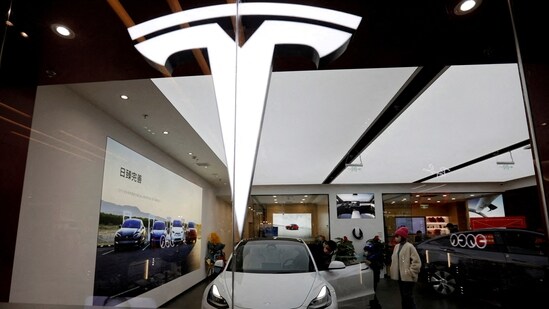
Tesla is set to deploy a team to explore potential locations in the country for a proposed electric car plant.


The industry secretary of India, Rajesh Kumar Singh, on Thursday, said that Tesla Inc. now has the responsibility to outline its investment strategies for the country following the government's decision to cut import duties on electric vehicles. Last month, the industry department also introduced a detailed policy to enhance EV manufacturing in the country.
“We will help them out in terms of giving them the contacts at state level,” secretary of department for promotion of industry and internal trade, Rajesh Kumar Singh told Bloomberg. “There have been contacts made at that level with state governments and the central government. VinFast has already announced and we expect a few others,” he added.
VinFast, a Vietnamese automaker, recently initiated the construction of an electric vehicle manufacturing facility in the southern Indian state of Tamil Nadu.
READ | Tesla to start searching site in India for $2 bn-$3 bn electric car plant: Report
According to reports from the Financial Times earlier this week, Tesla is set to deploy a team to explore potential locations in the country for a proposed electric car plant valued at $2 billion to $3 billion. Additionally, Tesla aims to increase its procurement of auto parts from India to approximately $15 billion.
Tesla, led by Elon Musk, has persistently advocated for reductions in import taxes as a prerequisite for committing to significant investments in one of the world's largest automobile markets.
As per the government's announcement in March, companies seeking tax concessions must invest a minimum of 41.5 billion rupees ($500 million) and commence electric vehicle production from a local plant within three years.
Singh emphasized on Thursday that this policy is expected to stimulate the growth of electric vehicles in the country.
READ | Tesla’s Berlin factory kicks off production for Indian market
“We expect it to lead to a penetration of four-wheeler electric vehicles to at least 10% by 2030,” he said. “My view is that if we have these manufacturing units up and running, along with the battery infrastructure that is now going up, it should be closer to 15% by 2030, after which it will just snowball.”
Based on estimates from BloombergNEF, approximately 96,000 passenger electric vehicles were sold in India in 2023, nearly doubling from the previous year, with a potential increase of another 40% projected for 2024.
However, it's worth noting that India's electric passenger vehicle market has primarily been dominated by electric scooters due to their lower cost. Additionally, the country currently lacks a robust electric vehicle charging infrastructure, and the available electric vehicles are predominantly higher-priced models.
(With inputs from Bloomberg)


