E-Paper



NHAI tests real-time alerts to warn highway users of stray cattle
NHAI has begun a pilot on two highway stretches using real-time telecom alerts to warn drivers of stray cattle, aiming to reduce accident risk.

 Prefer HTon Google


The National Highways Authority of India has launched a pilot project that uses real-time telecom alerts to warn motorists about the presence of stray cattle on national highways, in an effort to reduce accidents caused by sudden animal movement.
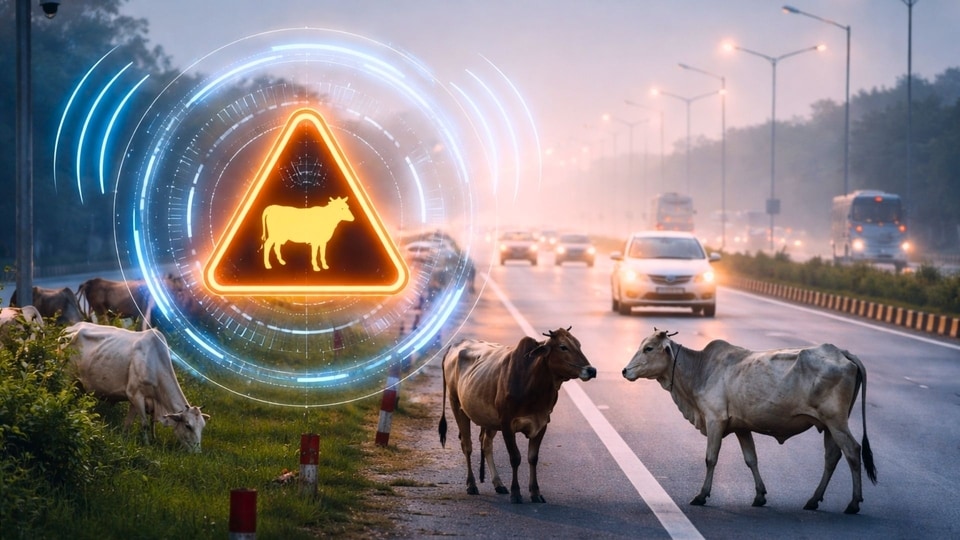
The pilot is currently operational on two highway corridors, Jaipur–Agra and Jaipur–Rewari, which have been identified as cattle-prone stretches based on historical accident data and field-level assessments. The alerts are designed to support drivers, particularly during fog and other low-visibility conditions when the risk of collisions increases.
How the alert system works
Under the project, location-based warnings are issued to commuters around 10 km before they enter a high-risk zone, allowing adequate time to slow down and take precautionary measures. To ensure effective reach, safety advisories are delivered first through a Flash SMS, followed by a voice alert conveying the same message.
The Flash SMS is sent in Hindi and informs drivers that they are approaching a stray cattle–affected stretch, advising them to drive slowly and remain alert. To prevent excessive notifications, the system has been configured so that repeat alerts are not sent to the same user within a 30-minute window.
(Also Read: Centre pushes for ANPR checks, congestion curbs to tackle Delhi's air pollution)
The initiative follows a Memorandum of Understanding signed last month between NHAI and Reliance Jio, under which the telecom operator has upgraded its platform to enable nationwide delivery of these alerts across the National Highway network.
According to NHAI, the system relies on mapped cattle-sensitive zones identified through a combination of past accident data and on-ground inputs. The authority said it will assess the results of the pilot before deciding on a wider rollout across other National Highway sections with a high incidence of stray cattle, as part of its ongoing road safety efforts.