
 E-Paper



A look back on Gurbaksh Singh Preetlari and his hamlet of love
Speakers dwelled about the unique persona and vision of Gurbaksh (1895-1977), who started Preet Lari (chain of love) magazine to share his philosophy of life, based on a coming together of his eastern and western experiences, way back in 1933.


Gurbaksh Singh Preetlari, an engineer with prestigious degrees from India and the US who returned home and chose to be a writer-editor and motivator, was the focus of litterateurs from different places in Punjab and Chandigarh at a symposium organised by the Chandigarh Sahitya Akademi on Saturday to celebrate his 125th birth anniversary.
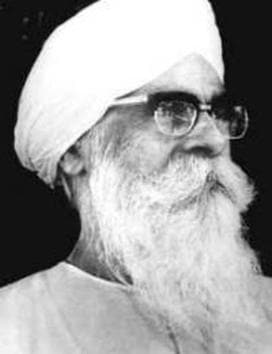
Speakers dwelled about the unique persona and vision of Gurbaksh (1895-1977), who started Preet Lari (chain of love) magazine to share his philosophy of life, based on a coming together of his eastern and western experiences, way back in 1933. “The magazine became so popular that its name was suffixed to the editor’s name as is the tradition in Punjab. It was something new to Punjab and Punjabis in which he combined romanticism with realism,” said Raghubir Singh Sirjana, who edits a Punjabi literary journal “Sirjana”. He added: “Gurbaksh considered nothing impossible and stood for empathy and equality for women, love, freedom and creativity. It was a great experiment and he set a tone of contemporary Punjabi prose.”
Gulzar Singh Sandhu (84), vice-president of the akademi said: “Gurbaksh nurtured two generations of Punjabi writers and I am one of them. We used to stand on terraces waiting for the postman on days the magazine was expected. When I look back, I feel that three greats influenced me. The first was Gurbaksh, who gave me my person, Jawaharlal Nehru, who gave me vision, and EMS Namboodiripad, who introduced me to the Left ideology.”
Much younger Surjit Singh (52), critic and head of Punjabi department at Patiala, said: “I was greatly influenced by his inspirational book ‘Pran Pustak’ which charts the road for goals to be achieved. His setting up of ‘Preet Nagar’ was a unique venture. Though it did not last, some of the values were transferred to Punjabi society like co-education because in the activity school there, people saw boys and girls playing together for the first time. The concept of a common kitchen irrespective of religion and caste was also something new.”
Indeed ‘Preet Nagar’ attracted the best talent of those times from Punjab. Among those who built their homes there were pioneering Punjabi novelist Nanak Singh, painter Sobha Singh and actor-writer Balraj Sahni. Their crumbling homes tell the story of a lost dream. Other prominent litterateurs and intellectuals associated with it were Faiz Ahmad Faiz, Teja Singh, Jodh Singh, Sahir Ludhianvi, Upendra Nath Ashq, Balwant Gargi, Kartar Singh Duggal, Mohan Singh and many others. Legends are still recounted that the first meeting of Sahir and Amrita Pritam there started the intense platonic romance of the two. The nipped-in-the-bud romance of Punjabi poet Shiv Kumar Batalvi and a daughter of Gurbaksh Singh is still whispered around.
Speaking about the downslide of the dream of Preet Nagar, Hriday Pal Singh, younger son of Gurbaksh Singh and editor of ‘Baal Sandesh’, a magazine his father started, said: “It was Partition that tore the dream apart. We were closer to Punjab’s cultural capital of Lahore and just a little further on the other side was Amritsar, the commercial capital. But after the divide, we became a remote border village.”
The second blow that came to the debris of the dream of Gurbaksh was the rise of fundamentalism and several killings, including that of Sumit Singh, who had succeeded his father Navtej Singh, by militants.
Preet Lari is now edited by brave Poonam Singh, widow of Sumit now married to his younger brother Ratikant Singh.
Among the notable people to visit ‘Preet Nagar’ was Jawaharlal Nehru who wrote in the visitors’ book that “it was a promise against conflict and harmony” in his 1942 visit. Irish actor Norah Richards visited it in 1941 and described the activity school as “an oasis in the desert in ways more than one”. The same year, Rabindranath Tagore sent Guru Dyal Mallik of Santiniketan there who said: “Preet Nagar is a sister of Santiniketan.”
It was heartening to see old boys of the Preet Nagar Activity School from the audience speak with joy of their childhood years there. A questioning note came from senior Punjabi poet Kashmir Kaur, who said in asides to the speakers: “All of you said everything but that he was the one who turned Batalvi into ‘Birah da Sultan (Poet of Pining)!” The allusion was to the thwarted romance of two young people there.


