
 E-Paper



Amid lockdown, caretakers at Snehalaya, Chandigarh, become fathers and mothers for destitute children
About 16 other caretakers, apart from Kumari, known as ‘housemothers’ and ‘housefathers,’ are now living in three out of the city’s four shelter homes, Snehalaya for boys in Maloya and Snehalaya and Aashiana (adoption home) for girls in Sector 15 for the entirety of the lockdown period.


Neelam Kumari, 39, last saw her teenaged children and husband at their home in Mauli Jagran 13 days ago before she moved 10 km away to a shelter home to be available round-the-clock for children living there after the coronavirus lockdown.
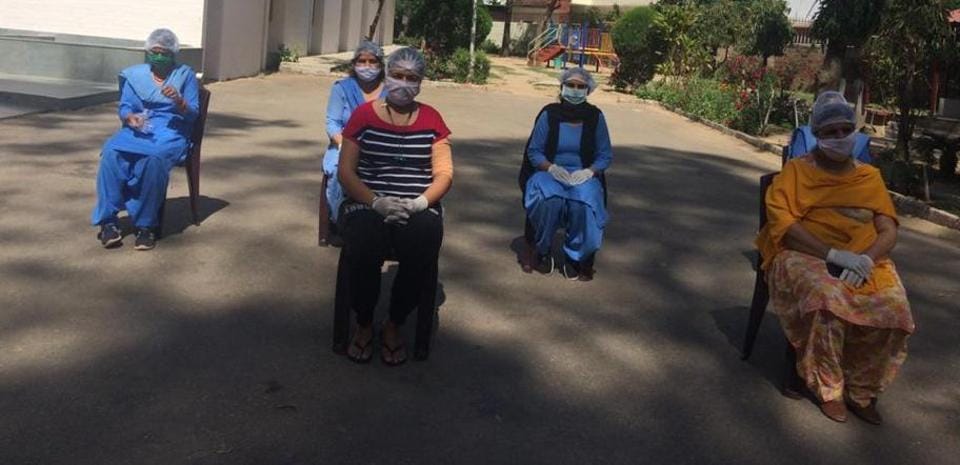
About 16 other caretakers, apart from Kumari, known as ‘housemothers’ and ‘housefathers,’ are now living in three out of the city’s four shelter homes, Snehalaya for boys in Maloya and Snehalaya and Aashiana (adoption home) for girls in Sector 15 for the entirety of the lockdown period.
For them, it means living apart from their families and extended work hours. “I have a 17-year-old daughter and 16-year-old son at home with my husband. No one knows how to cook so they struggle every day to make meals. However, they still support me because they know these destitute children need me more than they do,” says Kumari.
The four shelter homes have over 300 children. As the lockdown was announced to curb the spread of coronavirus the UT social welfare department requested the caretakers to start living in shelter homes and work for 12 hours instead of eight.
Caretakers camping in the shelter homes include nine out of 37 housemothers with three cooking staff at Snehalaya girls and Aashiana. Out of 25 caretakers, four housemothers and three housefathers stayed at Snehalaya boys from March 24 to March 31.
“We are like the children’s parents and take care of their bathing, bedding, feeding and school work,” says 40-year-old Naresh.
Pia, 15 (name changed), an orphan living in Snehalaya girls, says “I feel secure that the housemothers are living with us. I am happy that they don’t go out as this can be dangerous for them as well. Meri apni family nahi hai, jo hai bas yahi hai. (I don’t have my own family; they are all I have).”
Aishwarya, 17 (name changed), is grateful to the caretakers. “My housemother helps me with my studies, my clothes, my hair and my hobbies. She tells me to wash my hands regularly and to wear a mask. She also told informed me about coronavirus.”
About staying connected to her family, Praveen Kumari, 41, says, “My husband, son, mother and father-in-law are at home. We keep video calling each other through the day. My husband is very supportive. He is taking care of everyone at home.”
Yashpal Garg, secretary, social welfare, says looking after the children “is our responsibility. We are also emotionally connected with the kids. It is just like our extended family.”


