
 E-Paper



COVID-19: Punjab begins wheat procurement under shadows of pandemic today
STAGGERED PROCESS: 50,000 litre sanitiser, 1 lakh masks and gloves dispatched to grain markets, purchase centres; nearly 7,000 passes issued to farmers to enter mandis on Day 1

 Prefer HTon Google


With Punjab set to start wheat procurement on Wednesday under the shadows of Covid-19, the state food and civil supplies, and agriculture departments have dispatched hundreds of gallons of sanitisers and thousands of gloves and masks to all 1,864 grain markets (mandis) and purchase centres besides rice shelling mills temporarily designated as procurement stations.
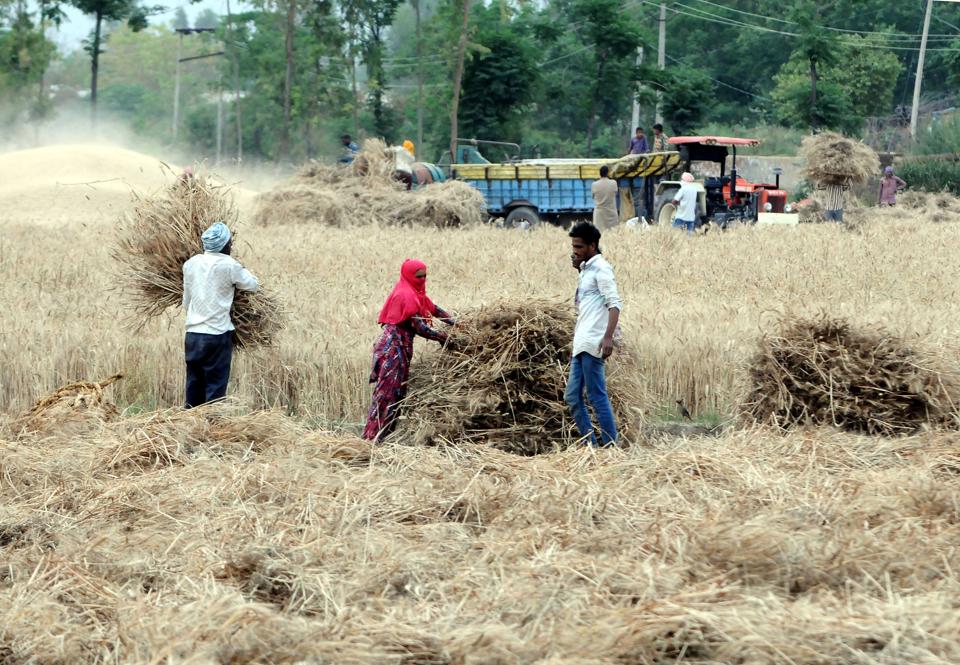
With a bumper crop likely this time, the total wheat arrival is n expected to surpass the targeted 135 lakh tonnes. Due to rainfall and fall in temperatures at the maturing stage of the crop, both harvesting and procurement were postponed by a fortnight. To maintain social distancing to avoid the spread of coronavirus, procurement will be made in a staggered manner as farmers will enter the mandis with passes issued to them.
For day 1, the Punjab Mandi Board, a subsidiary of the agriculture department that runs procurement centres and mandis, has issued 7,000 passes to the farmers to bring their produce.
Early wheat arrival is expected in the mandis of Patiala, Sangrur, Mansa, Fatehgarh Sahib, Ludhiana and Khanna districts. Passes are being issued 72 hours in advance.
“The Covid-19 hotspots pose a challenge to us. Seventeen such areas have been identified in Punjab and we will have to ensure the procurement does not get impacted. We have authorised the deputy commissioners to take call in their areas accordingly keeping in view the situation,” said additional chief secretary (development) Viswajeet Khanna, who heads a state-level committee on harvest and procurement.
The harvesting is going to be smooth but we are concerned about lifting and transportation of produce to the storage points, he said.
As of now, three mandis at Manalgaglan, Pathlana, and Uchalad in SBS Nagar’s Banga area besides another in Mohali’s Derabassi have been closed, Khanna added. These fall in pandemic hotspots.
“Based on the information collected by the agriculture department, the wheat production in the state could touch 185-190 lakh tones, of which 137-140 lakh tonne is expected to arrive for procurement.
“We have sufficient funds for purchase even if the arrivals go beyond our target of 135 lakh tonne. The government has made arrangement of a cash credit limit for Rs 26,000 crore and we may get more,” he added.
On the precautionary measures being taken for the safety of farmers, commission agents and the procurement staff, state food and civil supplies minister Bharat Bhushan Ashu said at least 50,000 litres of sanitiser and over 1 lakh masks and gloves have been made available in the mandis.
“The department is also arranging N-95 masks for 7,000 procurement staff members deputed on the ground. All mandis will also have indigenously developed handwash stations.
About arrangements in the mandis, food and supplies director Anandita Mitra said 30X30 square grids have been marked in the mandis for receiving the produce, and each square is sufficient to unload 150 quintals of produce and parking a tractor-trailer. A truck driven by the same driver will be allowed for movement of grain between a mandi and the storage point, she added.
State divides quota of procurement agencies
The state food and civil supplies department has divided the quota among four procurement agencies and centre’s food corporation of India.
Minister Bharat Bhushan Ashu said keeping in view the expected arrival of 135 lakh tonnes of wheat, Pungrain has been given 26% (35.10 lakh tonnes), Markfed 23.5% (31.72 lakh tonnes), Punsup 21.5% (29 lakh tonnes), State Warehouse Hosing Corporation 14% (18.9 lakh tonnes) and the central agency Food Corporation of India (FCI) 15% (20.25 lakh tonnes) at an MSP of Rs 1,925.


