
 E-Paper



Experts foresee acute labour shortage in post-lockdown Chandigarh
After remaining shut for nearly 45 days, industrial units are opening up to stock-taking, maintenance activity, cleaning and sanitisation, rather than manufacturing


As more migrant workers in the city are queuing up to move back to their home states, the local industry and businesses foresee acute labour shortages in the coming months.
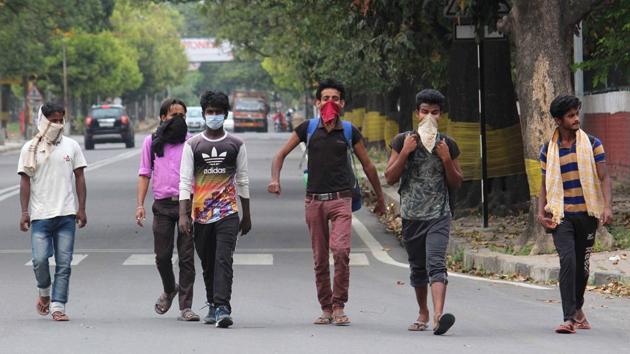
With only partial reopening of private offices and industry in the city, the demand for workers is low for now, but severe shortages can be expected of semi-skilled and unskilled workers when businesses finally pick up, say experts.
After the UT administration revoked the 41-day curfew on May 4, the shops were allowed to open based on the odd-even formula. A maximum of 33% staff was allowed to resume work in private sector offices. Industrial activity, too, resumed operations as per the guidelines of the Union home ministry on May 1.
SO FAR, SO GOOD
Charanjiv Singh, chairman of the Chandigarh Beopar Mandal, said, “Only 30% of total shops in the city are open on any given day. The buyer footfall is still relatively low and there are concerns about personal safety. Consequently, the demand for migrant workforce is low for now.”
In the city’s industrial areas, too, manufacturing activity is yet to pick up, but labour issues have already started to crop up. “Around 25% of the labour is turning up in factories. And 30% of the total workforce is headed home. Another 20% who used to come from Panchkula and Mohali districts are stuck in containment zones,” said Siddharth Gupta of the Industrial Association of Chandigarh.
After remaining shut for 45 days, industrial units are opening up with stock-taking, maintenance activity, cleaning and sanitisation, rather than manufacturing. Many segments, like screw manufacturing where adhering strictly to social distancing norms is difficult owing to the nature of the machinery operation and setup, are yet to open.
MAJOR CRUNCH PREDICTED
“Ancillary units with large manufacturing orders with strict deadlines and export-oriented industries have most to lose in the coming days as the pressure to deliver products will step up,” said Harjit Singh, general secretary of the Furniture Market, Chandigarh.
As for the smaller units, while labour crunch will not be a major problem, a paucity of skilled craftsmen will be. “In the furniture manufacturing units, work orders can be managed with a small workforce. Overtime or work on holidays can be opted for. But a lack of skilled workers like polishers or designers is posing a problem already. With no work coming in, many of them left early. If the business activity does not pick up quickly, most will leave in the coming days and months,” added Singh.
In addition to fears of reverse migration among labour, businesses are also complaining of labour shortages because of cross-border restrictions within the tricity. “Nearly 30% of the workers in the city reside in cheaper locations like Zirakpur, Naygaon in Mohali and Panchkula villages. Because of the restrictions, the labour movement has been severely impeded. If not sorted soon, it will cause major problems for the industry,” said Gupta.


