
Sign in

Most consumer grievances in Chandigarh linked to housing, pendency of cases up

Number of consumer complaints may have gone down in Chandigarh in 2018 but pending cases of housing and insurance sectors have gone up.

Published on: Jan 17, 2019, 17:37:43 IST
Hindustan Times, Chandigarh | By
Share
Share via
  • facebook
  • twitter
  • linkedin
  • whatsapp
Copy link
  • copy link

The District Consumer Disputes Redressal Commission in Chandigarh got fewer cases but pendency went up last year. Most of the complaints are related to the housing sector.
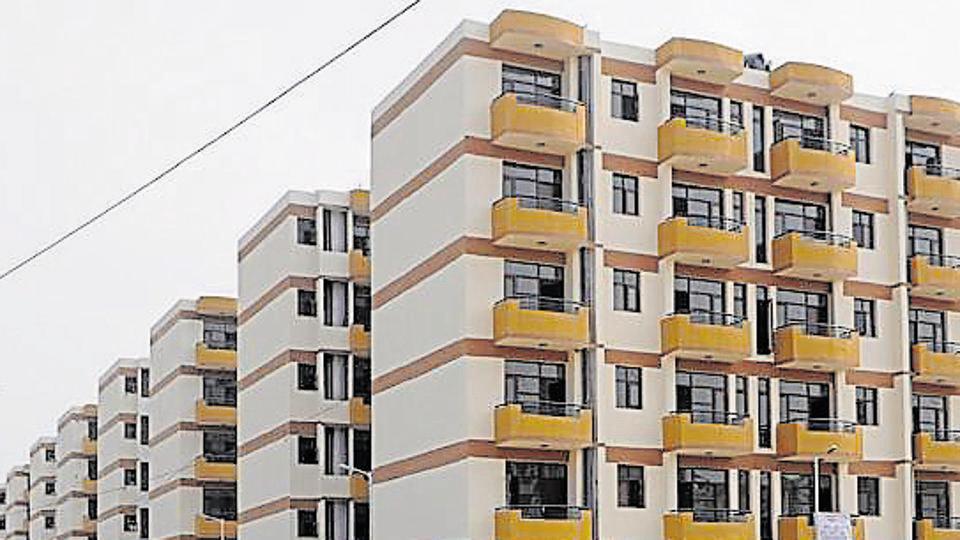
A total of 7,555 cases were filed in the housing category against a pendency of more than 500 cases before the District Consumer Disputes Redressal Commission, Chandigarh. (Picture for representation)

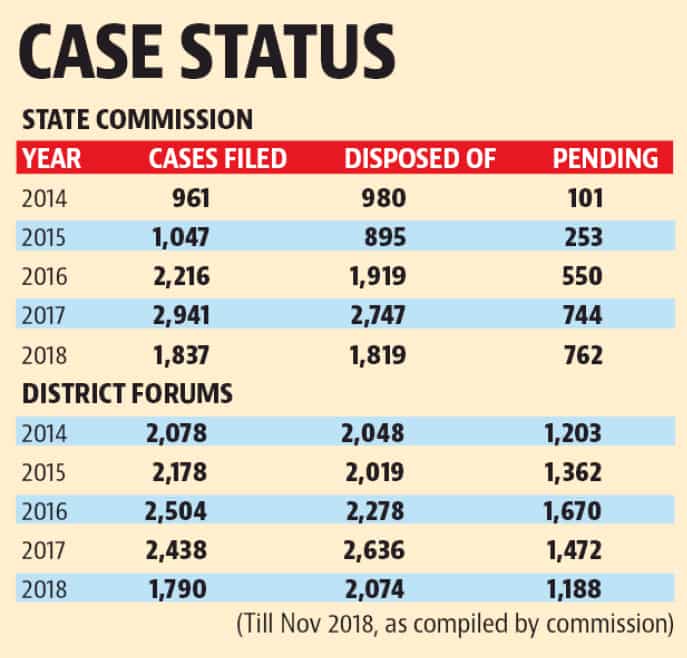
A total of 1,837 cases were filed in 2018 as against 2,941 in 2017 but the pendency increased from 744 to 762 in one year. The pendency in the two district consumer forums in Chandigarh, however, showed improvement from 1,472 cases in 2017 to 1,188 in 2018.

The forums got fewer cases, too, with 1,790 cases in 2018 as against 2,438 the previous year.

Lowest pendency in railways, airlines cases

The number of cases filed since the commission’s inception and subsequent pendency has been the highest in the housing category, while in the forums insurance-related complaints top the chart.

A total of 7,555 cases were filed in the housing category against a pendency of more than 500 cases before the commission, while the railway category showed the least number of complaints with zero pendency.

A total of 5,506 insurance-related cases were filed since the inception of the district forums of which 5,220 were disposed of till last year, leaving a pendency of 286 cases. The least pendency rate is in the airlines category before the consumer forums.
Article image

Defaulters and why

District attorney Manu Kakkar says, “Pendency in the housing category is mostly due to the failure of builders to deliver projects in time. In the insurance sector, the main reason for litigation is hidden rules that the companies don’t disclose at the time of issuing the policy.”

Advocate Pankaj Chankotia says, “Housing complaints come before the state commission as the value is almost always more than 20 lakh. Since filing is high, so is the pendency.”

He says insurance complaints are wide ranging from car insurance to health, life, general insurance and unit linked insurance plans (ULIPs). “Moreover, the first attempt of an insurance company is to deny a claim even if it is done on flimsy grounds,” he says.

“The privatisation of the industry has compounded the problem with increase in selling of products on false promises. This has led to a higher number of complaints. Still many go are not filed. The increasing awareness among people about insurance companies is also a factor,” Chankotia says.

Despite the pendency, the proposal to create a third consumer forum in Chandigarh by the state commission is yet to see the light of day. The commission had written to the Union Territory administration three years ago, but the matter is still pending with the central government, says commission secretary Rakesh Rawat.

The Consumer Protection Bill passed in the Lok Sabha recently may have widened the ambit of the law and brought in transparency but it remains to be seen if it will expedite the redressal of grievances of consumers.

Comparison of the Consumer Protection Act, 1986 with the Consumer Protection Bill, 2018
Provision 1986 Act 2018 Bill
Ambit of law All goods and services for consideration.

Free and personal services are excluded.
All goods and services, including telecom and housing construction, and all modes of transactions (online, teleshopping, etc.) for consideration.

Free and personal services are excluded.

Unfair trade practices* Includes six types of such practices, like false representation, misleading advertisements. Adds three types of practices to the list, namely: (i) failure to issue a bill or receipt; (ii) refusal to accept a good returned within 30 days; and (iii) disclosure of personal information given in confidence, unless required by law or in public interest.

Contests/ lotteries may be notified as not falling under the ambit of unfair trade practices.

Product liability No provision.

Claim for product liability can be made against manufacturer, service provider, and seller.

Compensation can be obtained by proving one of the several specified conditions in the Bill.

Unfair contracts No provision. Defined as contracts that cause significant change in consumer rights.

Lists six contract terms which may be held as unfair.
Central Protection Councils (CPCs) CPCs promote and protect the rights of consumers.

CPCs established at the district, state, and national level.
Makes CPCs advisory bodies for promotion and protection of consumer rights.

Establishes CPCs at the district, state and national level.
Regulator No provision. Establishes the Central Consumer Protection Authority (CCPA) to promote, protect, and enforce the rights of consumers as a class.

CCPA may: (i) issue safety notices; (ii) pass orders to recall goods, prevent unfair practices, and reimburse purchase price paid; and (iii) impose penalties for false and misleading advertisements.
Pecuniary jurisdiction of Commissions District: Up to 20 lakh.

State: Between 20 lakh and up to one crore.

National: Above one crore.
District: Up to one crore.

State: Between one crore and up to 10 crore.

National: Above 10 crore.
Composition of Commissions District: Headed by current or former District Judge and two members.

State: Headed by a current or former High Court Judge and at least two members.

National: Headed by a current or former Supreme Court Judge and at least four members.
District: Headed by a President and at least two members.

State: Headed by a President and at least four members.

National: Headed by a President and at least four members.
Appointment Selection Committee (comprising a judicial member and other officials) will recommend members on the Commissions. No provision for Selection Committee. Central government will appoint through notification.
Alternate dispute redressal mechanism No provision. Mediation cells will be attached to the District, State, and National Commissions.
Penalties If a person does not comply with orders of the Commissions, he may face imprisonment between one month and three years or fine between 2,000 to 10,000, or both. If a person does not comply with orders of the Commissions, he may face imprisonment up to three years, or a fine not less than 25,000 extendable to one lakh, or both.
E-commerce No provision. Defines direct selling, e-commerce and electronic service provider.

The central government may prescribe rules for preventing unfair trade practices in e-commerce and direct selling.
Source: PRS Legislative Research (independent research institute)
  • Aneesha Bedi
    ABOUT THE AUTHOR
    Aneesha Bedi

    Aneesha Bedi is a correspondent at Chandigarh, and covers district courts.