
 E-Paper



A century and a half of weather forecasting
Each monsoon, the burden of a billion hopes in our still largely agricultural and rain-dependent economy falls on the hapless shoulders of the Indian Meteorological Department (IMD), which had its origins in a treatise on the Indian summer monsoon published by English astronomer Edmond Halley (yup, he who discovered the famous comet) as far back as 1686.


We’ve been having an extended run of wet, grey days in the city, and the citizenry’s patience, as it scans the unchanging weather forecast, is wearing thin. Never mind that we’re well-insulated from the pralaya-like conditions in Mumbai and Ahmedabad and the freak 40-degree C temperatures across Europe and China – as everyone knows, you aren’t truly Bengalurean unless you dial up the whinge when the weather is anything but perfect.
Each monsoon, the burden of a billion hopes in our still largely agricultural and rain-dependent economy falls on the hapless shoulders of the Indian Meteorological Department (IMD), which had its origins in a treatise on the Indian summer monsoon published by English astronomer Edmond Halley (yup, he who discovered the famous comet) as far back as 1686. Needless to say, sailors, scholars and poets in these parts had known of and tracked the monsoon winds for millennia and leveraged it for both commerce and romance, but Halley’s treatise was the first formal, scientific explanation of it to the Europeans. The barometer had been invented a few decades earlier, in 1643, by Evangelista Torricelli, but it was only once the mercury thermometer was invented in 1714 by Gabriel Fahrenheit that weather observatories were good to go.
In 1784, the British East India Company set up the Asiatic Society in Calcutta to further the cause of ‘oriental research’. As one of its first activities, the Society established the Calcutta Observatory in 1785. In 1789, Madras-based amateur astronomer William Petrie gifted his measuring instruments to the government, enabling them to set up the Madras Observatory in 1792. The Colaba Observatory in Bombay would follow in 1826. Four more decades passed before our landlocked town at the centre of the southern peninsula saw similar action.
The Central Observatory, Bangalore, began operations on November 1, 1867. Belying its grandiose name, its offices were housed in a thatched shed on the grounds of the Bowring Hospital in today’s Shivajinagar and boasted nothing more than a few thermometers to record the daily temperature. Starting July 14 1868, exactly 154 years ago this week, the city’s temperature was faithfully recorded three times a day, at 1000, 1600 and 2200 hours. In 1875, following a devastating cyclone in Calcutta in 1864 and terrible famines in 1866 and 1871 due to the failure of the monsoons, the British government decided to combine all the regional met offices into one, and established the IMD.
In the same year that the IMD was established in Calcutta, Bangalore’s premier institution of higher education (which then had a grand total of 43 students) changed its name from Central High School to Central College and became the nucleus of what is today the Bangalore University. In 1882, the college got one of its most celebrated principals, Dr John Cook. Apart from introducing mathematics into the curriculum (his own subject was physics), Dr Cook was deeply interested in the activities of the Central Observatory. By 1892, not only had the Observatory moved to the grounds of Central College, but it also had John Cook as its first official Director. In 1893, Dr Cook even succeeded in persuading the Mysore government to build an exclusive observatory building on the campus.
In 1894, the observatories at Bangalore, Mysore, Hassan and Chitradurga were merged to form the Mysore State Met Department, with Dr Cook at its helm, as the first meteorologist to the government of Mysore. Today, as an integral part of the IMD, Bengaluru’s state-of-the-art Meteorological Centre continues to function out of the historic Central College campus on Palace Road, aided by a new outpost at the Kempegowda International Airport.
Right, back to whining about the weather now!
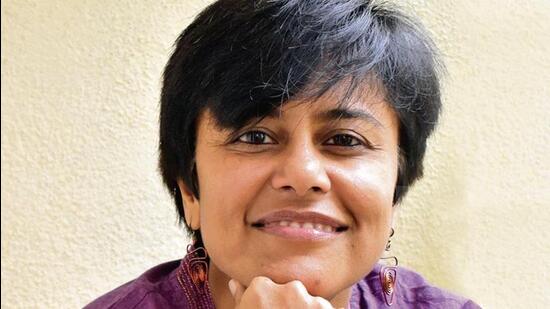
(Roopa Pai is a writer who has carried on a longtime love affair with her hometown Bengaluru)
Stay updated Bengaluru Weather Live and with all the Breaking News and Latest News from Bengaluru. Click here for comprehensive coverage of top cities including Delhi, Mumbai, Hyderabad, and more across India . Stay informed on the latest happenings in World News.


