
 E-Paper



Bengaluru has turned into a heat trap as concrete swallows the city: Report
Bengaluru's urbanization has led to 87.6 per cent concrete coverage, drastically reducing green spaces to just 12 per cent, a new study by the IISc revealed.

 Prefer HTon Google


Bengaluru’s rapid urbanisation has left little room for nature, with built-up areas now occupying a staggering 87.6 per cent of the city. Over the last ten years alone, concrete coverage has jumped by 10 per cent, reshaping the city’s climate and quality of life in the process, The New Indian Express reported.
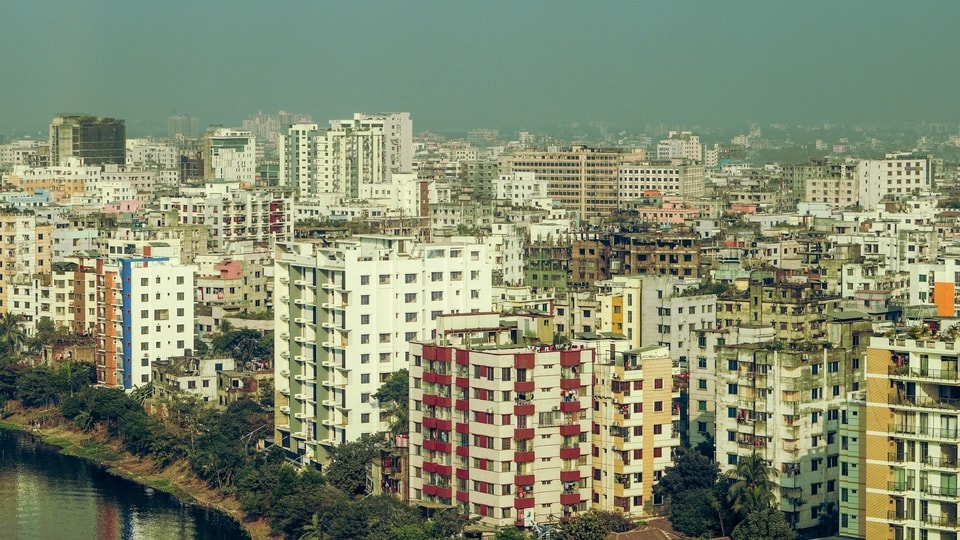
A new study titled Urban Heat Island Linkages with the Landscape Morphology, conducted by the Centre for Ecological Sciences at the Indian Institute of Science (IISc), has painted a worrying picture. The city’s dwindling green and blue spaces - trees and lakes - now account for just 12 per cent of its surface, triggering a domino effect: rising local temperatures, more greenhouse gas emissions, and a sharp increase in health problems such as cardiovascular diseases and lifestyle disorders, the report stated.
Professor T V Ramachandra, co-author of the study, noted that shrinking natural "lung spaces" directly correlates with worsening health indicators. The requirement for 30 per cent open setback space around buildings, essential for thermal comfort, is routinely ignored during construction approvals, he said, as per the report. These open spaces, he explained, help balance temperatures and reduce urban stress, but poor enforcement and widespread corruption have rendered this rule ineffective.
READ | Bengaluru braces for traffic disruptions as thousands protest at Freedom Park today
The study reveals that the unchecked sprawl has given rise to ‘urban heat archipelagos’ - clusters of heat islands that amplify each other, creating widespread hot zones across the city. Iconic green enclaves like IISc, GKVK and Jnanabharathi, once bastions of biodiversity and cooler microclimates, are now under threat from the expanding urban jungle, the report added.
Using satellite data spanning from 1973 to 2025 and advanced classification methods, researchers traced Bengaluru's transformation from a city with just 7.97 per cent built-up land in the '70s to one dominated by concrete today. Since the formation of the Bruhat Bengaluru Mahanagara Palike (BBMP) - the civic administrative body governing the city - in the early 2000s, the city has seen a 1,078 per cent explosion in built-up areas, accompanied by an 88 per cent loss of vegetation and a 79 per cent reduction in water bodies.
According to Ramachandra, Bengaluru has reached a critical threshold, and residents are seeing a transition from porous, ecologically supportive land to impermeable concrete surfaces. This shift is disrupting the city’s hydrology, ecology, and even its economy.
As of 2025, the city’s urban expansion has hit 90 per cent and shows no signs of slowing. Driven largely by unplanned growth, the conversion of green fields and lakes into real estate has pushed the city beyond its environmental carrying capacity. The analysis also found that the entire city now falls within high-temperature zones, with surface temperatures regularly exceeding 44 degrees Celsius. Cooler zones that once existed in the '90s have all but vanished.
In short, Bengaluru is overheating, and without urgent intervention to restore its ecological balance, the future could be hotter and even more hazardous.


