
 E-Paper



Bengaluru Metro becomes lifeline: Liver transported via Namma Metro for transplant in landmark operation
Namma Metro sets precedent for urban medical emergencies by successfully transporting liver for transplant.

 Prefer HTon Google


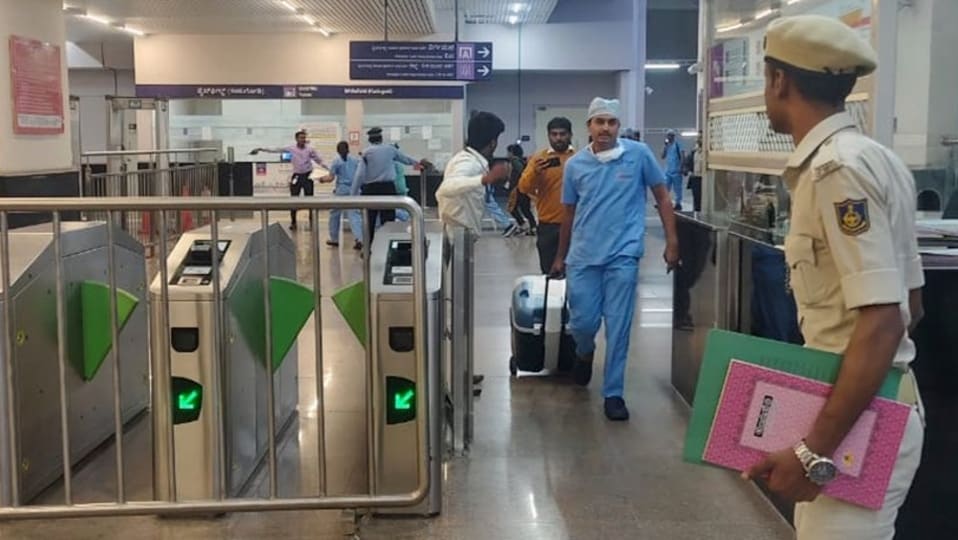
In a groundbreaking move, Bengaluru's Namma Metro was used to transport a human liver for transplant, significantly reducing travel time and setting a precedent for urban medical emergencies. The Bengaluru Metro Rail Corporation Limited (BMRCL) executed the operation in coordination with medical personnel and security teams, making the city only the second in India after Hyderabad, to utilise metro services for organ transport.
Also Read - Accused's digital skills baffle Bengaluru police in 13-year-old boy's kidnap-murder case: Report
How Namma Metro facilitated the organ transportation?
The liver, retrieved from a donor at Vydehi Hospital in Whitefield, began its journey at 8:38 pm on Friday. It was first taken by ambulance to the nearby Whitefield metro station. There, a team consisting of a doctor and seven support staff coordinated closely with BMRCL officials. An Assistant Security Officer (ASO) facilitated documentation and ensured all safety protocols were in place.
At 8:42 pm, the liver was placed aboard a regular metro train bound for Rajarajeshwarinagar station, a ride spanning nearly the entire east-west corridor of the city. Covering a distance of 32 km, the organ reached its destination at 9:48 pm, just over an hour later. On arrival, another ASO and metro staff swiftly handed over the organ to a waiting ambulance, which then rushed it to Sparsh Hospital for a time-sensitive transplant procedure.
Also Read - Bengaluru police open fire on suspects linked to kidnap-murder of 13-year-old boy, arrest them: Report
What would normally take around 90 minutes by road depending on traffic, was streamlined through metro travel. BMRCL said the operation was carried out in strict adherence to the Joint Procedure Order (JPO) and the Ministry of Housing and Urban Affairs (MoHUA) guidelines, ensuring minimal disruption to regular services while prioritising the medical emergency.
This marks the first time Namma Metro has been used for such a critical mission, showcasing its potential to assist in life-saving interventions during peak traffic hours. The only other example of metro-based organ transport in India was in 2021, when Hyderabad Metro helped move a donated heart 21 km in under 30 minutes.


