E-Paper



Bengaluru metro fare hike: 5 things to know about the massive row and political blame game
With the recent hike, Bengaluru Metro has become the most expensive public transport system in India, surpassing those in Mumbai and Delhi.

 Prefer HTon Google


Bengaluru residents and the Opposition are up in arms after the Bengaluru Metro Rail Corporation Limited (BMRCL) recently revised its fare structure, increasing ticket prices by up to 50 per cent.
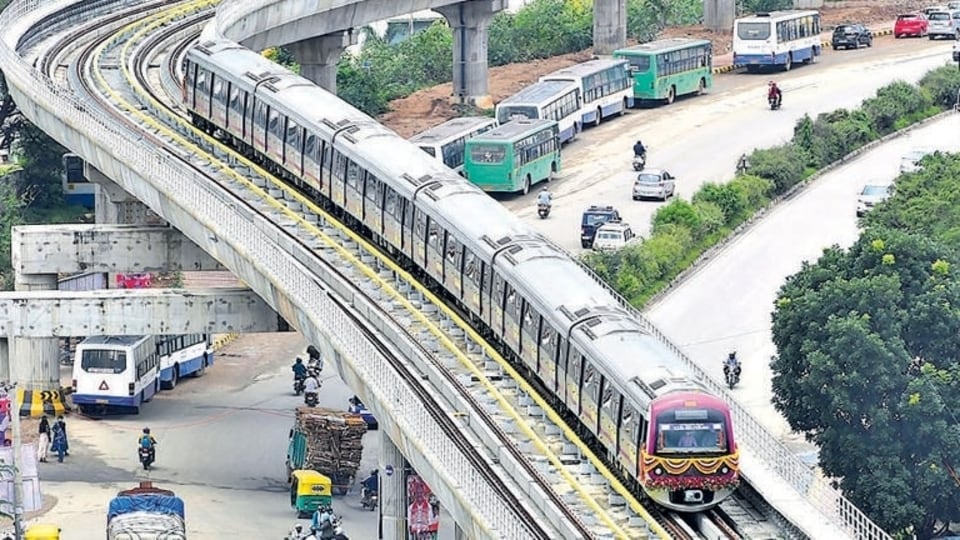
With this hike, Bengaluru Metro has become the most expensive public transport system in India, surpassing those in Mumbai and Delhi. Here’s a breakdown of the controversy.
Latest developments
The new fares, which came into effect on February 9, were implemented based on recommendations from the Fare Fixation Committee (FFC). On Thursday, Karnataka Chief Minister Siddaramaiah urged the Bangalore Metro Rail Corporation Limited (BMRCL) to address discrepancies in the recent metro fare revision.
“The way Bangalore Metro Rail Corporation Limited (BMRCL) has implemented the Bengaluru Metro fare revision has led to anomalies, with fares more than doubling in certain sections. I have asked the MD of BMRCL to urgently address these issues and reduce fares where increases are abnormal. Commuters' interests must be safeguarded”, he wrote.
The metro fare hike comes close on the heels of the state transport department increasing bus fare by 15 per cent across all categories.
(Also Read: Bengaluru metro fare hike: Siddaramaiah asks BMRCL to reduce 'abnormal' hikes amid outrage)
Opposition’s stand
The opposition parties, particularly the BJP, have strongly criticized the fare hike, calling it an unjust burden on commuters. Bengaluru South MP Tejasvi Surya voiced strong opposition during the Zero Hour in Parliament on Monday, highlighting its impact on the middle class. “I urge authorities to reconsider the fare structure and introduce a more reasonable pricing system to ensure accessibility for the common man,” Surya said. Additionally, he also met with the Union Minister for Housing and Urban Affairs (MoHUA) to discuss the issue, apprising him of the concerns surrounding the fare fixation by the Bengaluru Metro Rail Corporation Limited (BMRCL).
On February 10, BJP workers staged protests at major Metro stations, accusing the Congress-led state government of burdening commuters.
State government's stand
On the other hand, Siddaramaiah on Wednesday accused the BJP of "hypocrisy" for blaming the state government over the recent metro fare hike while taking credit for its construction. "BJP leaders claim the metro is a central government achievement, but when fares are revised, they blame the state. This is hypocrisy," he said in a statement.
He clarified that BMRCL operates as a 50:50 joint venture between the state and Centre. He pointed out that BMRCL's board is chaired by Srinivas Katikithala, Secretary of the Ministry of Housing and Urban Affairs, reinforcing that it is not solely under state control.
(Also Read: Bengaluru woman caught working on laptop while driving; police say, 'Work from home, not from car')
Public response
Bengaluru residents have taken to social media to voice their anger over the recent metro fare hike, with many urging a boycott of Namma Metro in protest.
Social media users have reported noticeably thinner crowds on metro trains, especially during peak hours, with some pointing out that many school students—who previously relied on the metro—seem to be missing.
Amid growing discontent, calls for a boycott are gaining momentum. "Avoid the metro for a few days—if revenues drop, BMRCL will be forced to reconsider this unfair hike," one commuter urged online.
Fare revision
According to the BMRCL's press release, it has also introduced separate tariffs for peak and non-peak hours just like the hail taxi riders - Ola and Uber.
The maximum fare has been enhanced from ₹60 to ₹90 and the minimum balance has been increased from ₹50 to ₹90.
The fare for a travel between 0-2 kilometres will be ₹10, 2 km to 4 km - ₹20, 4 km to 6 km - ₹30, 6 km to 8 km - ₹40, 8 km to 10 km - ₹50, 10 km to 12 km - ₹60, 15 km to 20 km - ₹70, 20 km to 25 km - ₹80, 25 km to 30 km and above would be ₹90.
(With PTI inputs)