
 E-Paper



Bengaluru to Chennai in 30 minutes? IIT Madras develops India's first hyper loop test track
The hyperloop system, designed for speeds over 1,000 km/h, utilizes low-pressure tubes for efficient travel, with plans for commercial rollout after testing.

 Prefer HTon Google


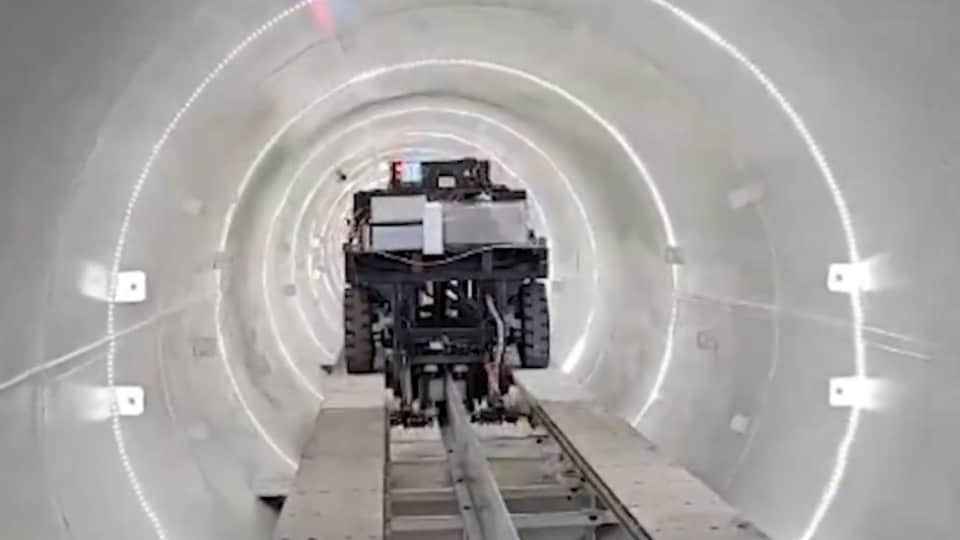
IIT Madras, in collaboration with the Indian Railways, has developed India’s first hyperloop test track, a technology that could significantly reduce travel time between Bengaluru and Chennai to just 30 minutes. Unlike expressways, high-speed trains like Vande Bharat, or even flights, this cutting-edge system envisions a future where passengers travel in pods through low-pressure tubes at speeds exceeding 1,000 km/h.
Also Read - Borewell digging banned in Bengaluru due to low ground water levels ahead of summer: Report
Take a look at the post
Railway Minister Ashwini Vaishnaw highlighted the importance of government-academia partnerships in advancing futuristic transport solutions. Sharing the development on X, he said, “Collaboration is driving innovation in the transportation sector.”
The test track, spanning 422 meters, has been built on the IIT Madras campus with financial backing from the Ministry of Railways. Vaishnaw further announced that, following two previous grants of $1 million each, a third grant of the same amount would be allocated to IIT Madras for further research and development of the hyperloop technology.
Indian Railways plans to launch a commercial hyperloop project once the system undergoes extensive testing and proves viable. “We will identify a suitable location where this technology can be commercially used, covering a distance of around 40-50 kilometers,” Vaishnaw added.
Hyperloop is an advanced transportation system designed for rapid, long-distance travel. It operates by using electromagnetically levitating pods inside vacuum tubes, eliminating air resistance and friction, which allows the pods to reach speeds of up to Mach 1 (approximately 1,225 km/h at sea level).
Also Read - Karnataka DCM DK Shivakumar to attend Mahashivaratri celebrations in Coibatore's Isha Foundation
An official involved in the project told Deccan Herald that hyperloop travel could achieve speed twice that of an aircraft while consuming less energy. Additionally, the system is designed to operate continuously with built-in energy storage for round-the-clock functionality. The hyper loop technology is already integrated in many developed nations across the globe


