
 E-Paper



Bengaluru’s Namma Metro phase 3A: Underground stations shortened by 40 metres after ₹2,920-crore budget cut
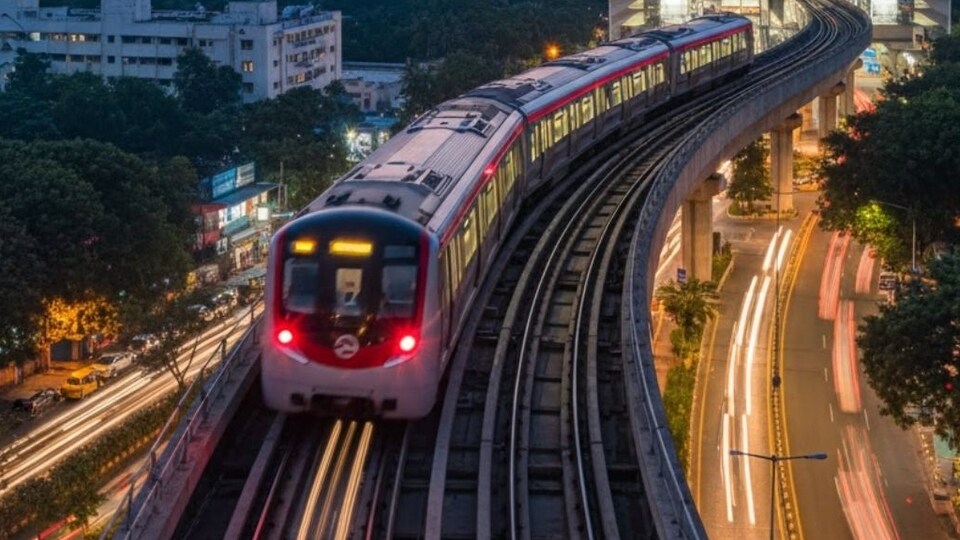
Namma Metro: The Red Line, a 36.59-kilometre corridor, will connect Sarjapur in the southeast to Hebbal in the north.

 Prefer HTon Google


The upcoming Phase 3A of Bengaluru’s Namma Metro will now have underground stations that are 40 metres shorter than initially planned. The decision comes after project authorities reduced the total estimated cost by ₹2,920 crore.
Also known as the Red Line, the 36.59-kilometre corridor will connect Sarjapur in the southeast to Hebbal in the north, passing through the city’s Central Business District (CBD). The project is expected to be completed by 2031, as per a report by Deccan Herald.
Also read: Karnataka high court quashes rape case against man who met woman on Bumble dating app
In December 2024, the Karnataka Cabinet approved the Detailed Project Report (DPR) for Phase 3A, which estimated the cost at ₹28,405 crore, or ₹776 crore per kilometre, the most expensive metro phase so far. However, the Ministry of Housing and Urban Affairs (MoHUA) found the figures “significantly higher” than standard benchmarks and asked the Bangalore Metro Rail Corporation Limited (BMRCL) to review the cost estimates.
Following the ministry’s direction, BMRCL appointed French consultancy firm Systra to reassess the project costs. The firm’s draft report, which is now under review by the ministry, suggested several cost optimisations.
Reportedly, the main cost differences were in tunnelling, station length, and electrical and mechanical (E&M) works. While tunnelling and station design accounted for most of the variation, E&M costs were only slightly higher.
Also read: Bengaluru airport quieter than usual as people fly home for Chhath Puja, traveller shares his shock
The original estimate pegged tunnelling costs at ₹300 crore per kilometre, based on the 2024 Last Accepted Rate (LAR). In contrast, the ministry’s benchmark cost stood at Rs159 crore per kilometre for 2024. BMRCL officials argued that Bengaluru’s complex soil composition, which changes every 25–30 metres, makes uniform benchmarks across cities unrealistic.
To optimise costs, Systra proposed reducing the underground station length from 210 metres to 170 metres. This was achieved by reconfiguring operational rooms without affecting the 135-metre platform length required for six-coach trains. Some existing underground stations in Bengaluru are already around 190 metres long.
With these modifications, the tunnelling cost has been revised to ₹210 crore per kilometre, leading to a reduction in total land and infrastructure expenses. Officials clarified that there will be no change in route alignment or other systems.
The ministry is currently reviewing Systra’s recommendations before giving final approval. Once clearance is received, construction for Phase 3A will commence. Meanwhile, BMRCL has initiated preliminary groundwork, including geotechnical investigations.
In October, tenders worth ₹6.86 crore were floated for soil testing across four packages, with 3 November as the submission deadline. Contractors will have 150 days to complete the studies once awarded.
These investigations, a crucial step before construction, will help determine soil conditions and guide the design of tunnels, foundations, and the type of Tunnel Boring Machines (TBMs) required.
Phase 3A will feature an underground stretch from Koramangala 2nd Block through the CBD, and a double-deck viaduct (metro-cum-road) between Sarjapur and Iblur (14 km) and Agara to Koramangala 3rd Block (2.45 km). Its alignment largely mirrors the proposed tunnel road project between Silk Board Junction and Hebbal, with necessary design adjustments made near Hebbal to avoid conflicts.


