
 E-Paper



Greater Bengaluru Authority: Who are the five IAS officers heading city’s new corporations
Deputy CM DK Shivakumar instructed the new commissioners to begin their day with on-ground inspections of roads and footpaths before reporting to office.

 Prefer HTon Google


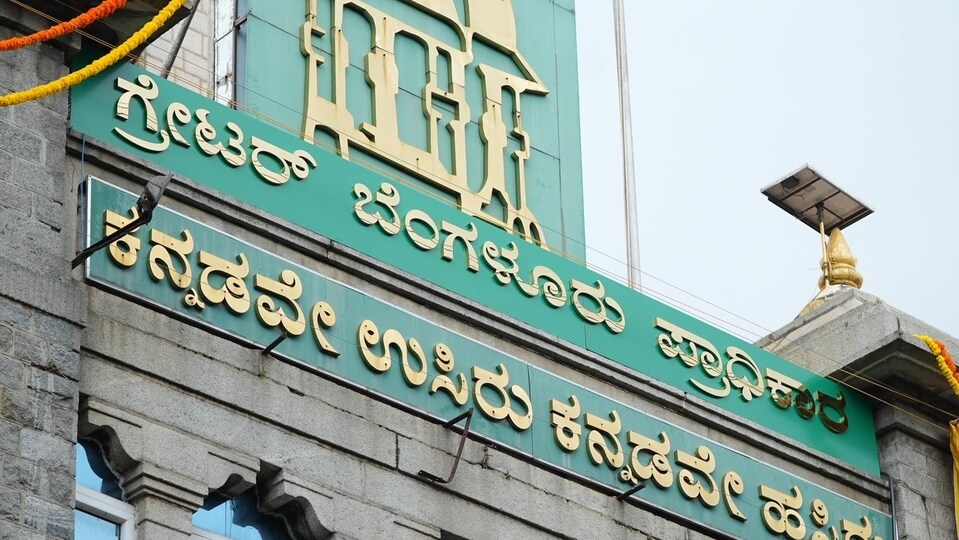
Bengaluru’s new municipal governance system formally came into effect on Wednesday as five IAS officers assumed charge as commissioners of the newly carved corporations under the Greater Bengaluru Authority (GBA).
The officers appointed are:
Rajendra Cholan P – Commissioner, Bengaluru Central City Corporation
Ramesh DS – Commissioner, Bengaluru East City Corporation
P Sunil Kumar – Commissioner, Bengaluru North City Corporation
Ramesh KN – Commissioner, Bengaluru South City Corporation
Dr Rajendra KV – Commissioner, Bengaluru West City Corporation
(Also Read: Bengaluru resident’s ₹10 MEMU train ride shows why city needs suburban rail)
The creation of these corporations is aimed at decentralising administration, but the commissioners will face daunting tasks, building governance systems from scratch, optimising revenue sources, and dividing responsibilities, even as the city battles monsoon-linked challenges such as flooding, potholes, dysfunctional streetlights, and tree pruning.
While the corporations will manage property tax and other local revenue streams, their budgets will primarily fund routine maintenance and staff salaries. Large infrastructure projects will remain under the GBA, supported by state government grants.
Preliminary estimates indicate that Bengaluru East City Corporation will generate the highest revenue at about ₹912 crore, supported by the presence of multinational companies along the Outer Ring Road. South Bengaluru is projected to collect ₹733 crore, followed by Central Bengaluru at ₹659 crore. Other corporations are expected to raise around ₹550 crore each.
Governance model
Deputy Chief Minister DK Shivakumar instructed the new commissioners to begin their day with on-ground inspections of roads and footpaths before reporting to office.
“All five corporate offices will follow a common architectural design, and we have announced a prize of ₹5 lakh for the best design. We have also invited logo designs for the GBA,” Shivakumar said.
He added that each corporation will be staffed with a commissioner, additional commissioner, joint commissioner, KAS officers, and a chief engineer. To improve local reach, the number of zonal offices has been increased from 27 to 50, while sub-zonal offices have doubled from 75 to 150.
Each corporation will have provisions for up to 150 wards. With an average of 100 wards per corporation, Bengaluru could see the election of 500 new leaders under the GBA framework. Importantly, 50% of these seats will be reserved for women, Shivakumar said.
(With PTI inputs)


