
 E-Paper



I-T notices to 50 MP businesspersons for ‘bogus’ donations to parties
An income tax official who spoke on condition of anonymity said the Financial Intelligence Unit discovered instances where businesspersons donated money to unrecognised parties and got the money back after deduction of commission.

 Prefer HTon Google


Bhopal: The Indore office of the Income Tax department has issued notices to about 50 businesspersons who claimed tax deductions for donations to registered unrecognised political parties (RUPPs), people aware of the matter said.
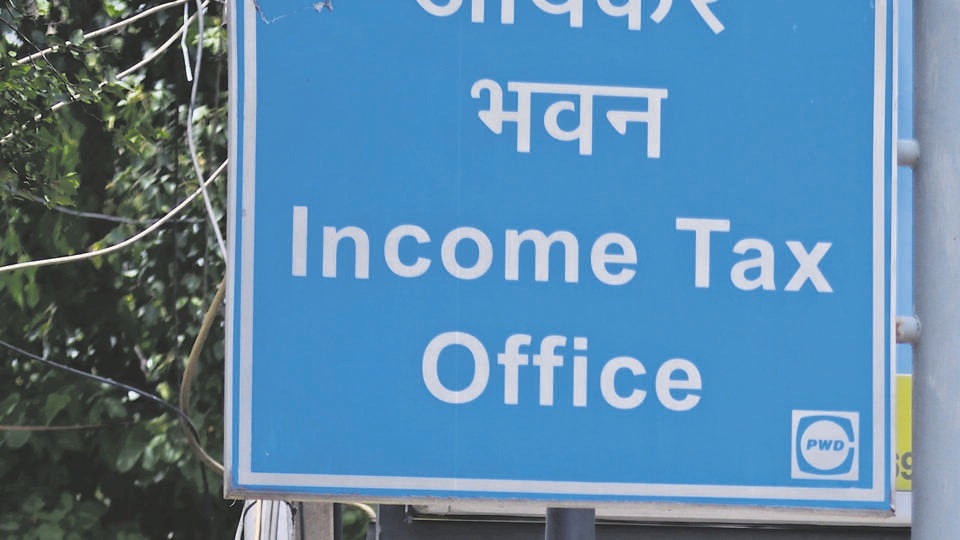
Income Tax principal commissioner, Indore region, SB Prasad, confirmed that notices were issued to 50 businesspersons spread across 16 districts covered by his office. “After receiving information of tax evasion from Financial Intelligence Unit under Section 80 GGC and 80GGB (which entitle taxpayers to deduction in income tax for donations to a political party), we served notices to more than 50 people,” Prasad told HT.
Prasad declined to indicate the amount involved. “We can’t say anything about the amount of money involved because FIU has information in this regard.”
An income tax official who spoke on condition of anonymity said the Financial Intelligence Unit discovered instances where businesspersons donated money to unrecognised parties and got the money back after deduction of commission.
The notices in Indore were issued over the past week and coincided with the Election Commission (EC) putting unrecognised political parties under the scanner over continuing concerns that such outfits were floated and used to evade taxes and launder money.
Last month, the election watchdog in Delhi initiated a fresh effort to get the 2,100 registered unrecognised parties to maintain financial discipline, public accountability and propriety, declaring that there was even “evidence of serious financial impropriety, wilful attempts for tax evasion and other illegal financial activities” against some parties.
A second tax official said most people issued the reassessment notices over the last week had donated between ₹11 lakh to ₹20 lakh each to such unrecognised parties.
A notice served to one Indore businessman said: “As per credible information available with the department, you have claimed bogus deduction under section 80 GGC/80GGB to the tune of ₹11 lakh (or more) during the financial year 2017-18 by making payments to All India Social Education Charitable Trust, Manavadhikar National Party, Kisan Adhikar Party, Kisan Party of India and received the said proceeds (paid through banking channel) back as cash/kind. A commission has also been paid to the facilitator (being anyone of the entity mentioned above) in this regard.”
“You hereby show cause as to why proceedings under section 148 of Income Tax, 1961 should not be initiated in your case for the claim of bogus deduction. You may submit your response along with supporting documentary evidence. In case of no response, it would be construed that you have nothing to say in this regard”.
The Election Commission has long struggled with a sharp increase in the number of registered unrecognised parties who, officials said, indulge in all activities but don’t contest elections.
The total number of political parties have gone up from 694 in 2001 to about 1,110 in 2010 and 2,796 as of September 2021, an increase of 300% in two decades. Only seven are recognised at the national level and 50 at the state level. A recognised party has to poll 6% of valid votes in four or more states and win at least four Lok Sabha seats.
According to EC records, more than 2,100 parties have not submitted contribution reports, 2,056 have not furnished annual audited accounts and 100 failed to even provide election expenditure statements. To be sure, EC does not have the powers to strip a political party of its recognition.



