E-Paper



MP HC approves trial run before final disposal of Union Carbide waste at Pithampur
The first phase of the trial run will take place on February 27 and the second and third phase on March 4 and March 10 respectively

 Prefer HTon Google


The Jabalpur bench of the Madhya Pradesh high court on Tuesday allowed the state government to carry out a three-phase trial run of the disposal of 40-year-old chemical waste from the Union Carbide factory in Bhopal in Pithampur area of Dhar district.
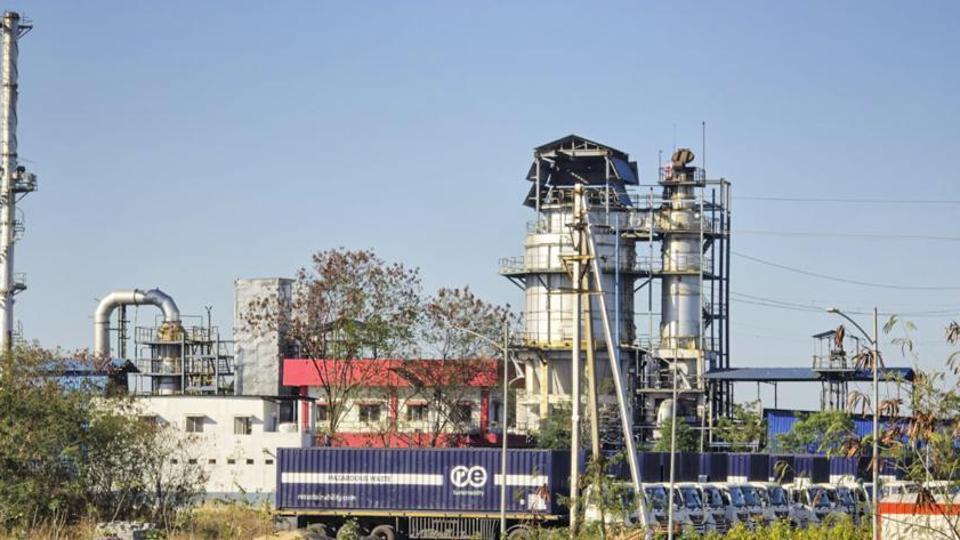
The MP state government submitted a compliance report on Tuesday and requested for trial in three phases before the high court, a day after Supreme Court admitted a petition filed against the disposal of toxic waste and sent notices to central and state governments.
The bench of chief justice Suresh Kumar Kait and Justice Vivek Jain approved the trial run for disposal of Union Carbide’s toxic waste, said Prashant Singh, advocate general.
The state government said the toxic waste will be incinerated at different temperatures in three phases and the report will be sent to the Central Pollution Control Board (CPCB) to analyse it and take decision on interval, temperature and quantity of disposal at a given time.
The incineration will be done at a speed of 135 kg waste per hour in the first phase, 180 kg per hour in the second phase and 270 kg waste per hour in the third phase, according to the plan.
Also Read: Toxic waste leaves Union Carbide site for disposal 40 years after tragedy
The first phase of the trial run will take place on February 27 and the second and third phase on March 4 and March 10 respectively. The final report as received from the CPCB will be presented before the High Court on March 27, said Prashant Singh, advocate general.
The 337 MT toxic waste of Union Carbide India Limited (UCIL) has started to get unloaded in Pithampur, Dhar district on February 13 which is 42 days after transfer of waste from Bhopal for incineration.
During the hearing on January 6, MP high court had given the state six weeks to dispose the toxic factory waste from the erstwhile Union Carbide factory, ensuring that all safety guidelines were met, and the public taken into confidence as people in Pithampur were staging protests.
The court had also said that the state government was free to take a decision to unload vehicles according to the order given on December 3, 2024, that disposal should be taken place swiftly.
The toxic waste has been lying abandoned for the past 40 years after leakage of about 40 MT Methyl Isocyanate (MIC) at UCIL on the intervening night of December 2 and 3, 1984 that claimed 3,928 lives, according to official data submitted to the Supreme Court, and left impact on health of at least four generations of people who were exposed to the gas.