E-Paper



Villagers in MP oppose cremation of Covid-19 victims fearing for their own lives
Bagli town inspector Jayram Chauhan said they assured the villagers that Kuntibai’s cremation in the local crematorium will not lead to Covid-19 infection spreading in the areas, as feared by the locals.

 Prefer HTon Google


A 65-year-old Kuntibai died in a private hospital of Madhya Pradesh’s Dewas district on Monday. She was Covid 19 suspect. When her daughter-in-law Babita brought her body for cremation to their home in Chapda village, the villagers asked her to cremate the body 40 km away at her mother-in-law’s native village of Matmor. However, villagers at Matmor also prevented her from performing Kuntibai’s last rites. After a five hour long struggle, Babita approached Bagli police station. With their help, the body was cremated in a nearby crematorium, but not without opposition from the locals.
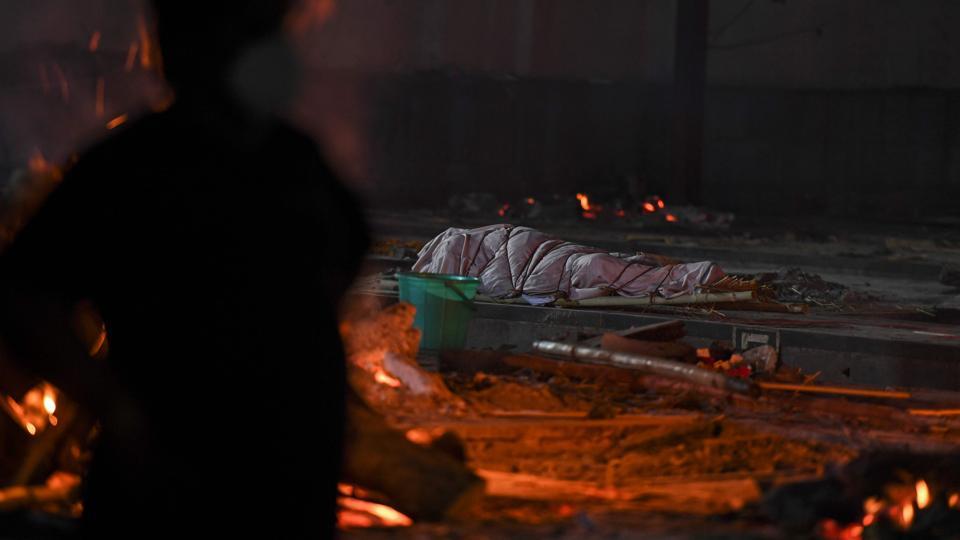
Bagli town inspector Jayram Chauhan said they assured the villagers that Kuntibai’s cremation in the local crematorium will not lead to Covid-19 infection spreading in the areas, as feared by the locals.
This is just one example of many cases when villagers across Madhya Pradesh have prevented cremation of Covid 19 infected people fearing it may infect them.
Last Friday, in Niwari district, an employee of district court, Sandhya Vyas, 45, died of Covid 19. His father Kamal Mishra and son Shivam Vyas were not allowed to cremate him at Chirpura village in Niwari district.
“The villagers locked themselves in their houses and hid the wood required for cremation. Later, Niwari, superintendent of police (SP), Alok Kumar Singh and other district officials reached the crematorium and threatened to take legal action against the villagers. The cremation took place after 14 hours,” said Shivam Vyas, son of the deceased.
A local villager Umesh Mishra said, “Our purpose is not to hurt anyone but to save our families from Covid-19. Unlike cities, the crematorium grounds in villages are not too far from our houses. If the infection spreads, what will we do?”
In Dhar too, members of two village panchayats opposed the cremation of outsiders. Even, the SDM put a ban on the cremation of outsiders and deployed teachers to check the Aadhaar cards of those approaching local crematorium. The order was cancelled on Monday.
The state government spokesperson and medical education minister Vishwas Sarang said, “The collectors have been asked to create awareness among villagers about Covid-19. They have also been asked to ensure respectful cremation of the infected people.”
A local activist of Bundelkhand Manvendra Singh said, “Villagers are really afraid of getting infected in the second wave. They have stopped entry of people into the villages. The government should make necessary safety arrangement at the crematorium grounds.”
As of Monday evening Madhya Pradesh’s Covid-19 caseload had crossed the six lakh-mark while the death toll stood at 5,905. 12,062 fresh infections and 93 deaths due to the disease were recorded in the 24 hour period up to the release of data.