
 E-Paper



Capital catching up to handle inevitable spike of coronavirus cases
Delhi is not testing enough people to have a full sense of the spread of the disease. It is also suffering from a shortage of personal protective equipment (PPEs), which has directly put health care workers in the line of danger.

 Prefer HTon Google


Across ministries in the Delhi government, in hospitals treating Covid-19 patients, and among health experts closely tracking the pandemic and its spread, there is a degree of unanimity — Delhi is about to see a rise in cases.
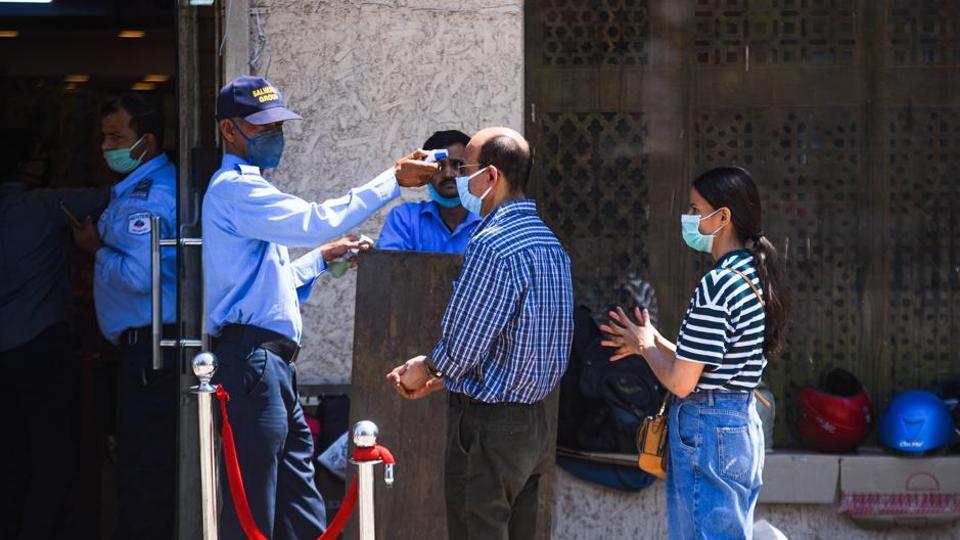
But if this is the hypothesis, is Delhi ready?
Interviews with five key officials across the city government and in hospitals presents a mixed picture.
Delhi is not testing enough people to have a full sense of the spread of the disease. It is also suffering from a shortage of personal protective equipment (PPEs), which has directly put health care workers in the line of danger.
But it is ramping up with its hospital infrastructure to treat Covid-19 patients, putting in place isolation facilities, and maintaining a reserve of ventilators for severe cases. This means, experts advising the government suggest, that if there are 100 new cases every day, Delhi will be able to handle it.
The numbers
As of Thursday evening, 219 people have tested positive in the city and four have died — a 68-year-old woman from Janakpuri and a 62-year-old Yemeni man. A 73-year-old resident of Nizamuddin and another 30-year-old man from the Markaz complex have also died.
Click here for the complete coverage of the Covid-19 pandemic
Of the 219, 108 cases are among people from the Nizamuddin Markaz. The numbers are likely to rise further, with reports of most of the 536 people in hospital isolation yet to come back.
The number of infected cases could also rise because all those who have flown in from international destinations are not yet out of the danger zone. It could rise because of the huge congregations of migrant workers Delhi saw in the aftermath of the announcement of the lockdown. It could rise because those who are at the forefront of battling the disease — the health workers — themselves are getting infected. It could rise because one person — any one person — may emerge as a “super spreader”. Or it could rise just because India may be at the stage of community transmission — where the source of the infection cannot be located — despite the government emphasising that this is not yet the case.
The government believes it is ready to deal with this spike — but up to a point.
S K Sarin, director of the Institute of Liberty and Biliary Science, is the head of a medical committee which is advising chief minister Arvind Kejriwal on Covid-19. In its report, the committee has said that Delhi is prepared to deal with 100 cases daily.
Also Read: In 4 years, India put 4,200 foreigners on visa blacklist for Tablighi activities
“The committee will reassess the needs again and prepare a blueprint of what we have and what is needed in the next three to four days. The committee is working closely with government in preparing for an increase in the number of cases,” said Sarin.
The PPE challenge
At the moment, Delhi’s biggest challenge is a shortage of PPEs, which are essential to prevent infection among the medical staff who interact with Covid-19 patients. Eight doctors in the city have already got infected with the virus, and there are reports of medical staff in hospitals contemplating resignations.
When cases surge, the shortage will create a deeper crisis. “We are ensuring that the PPE get used rationally — everybody who enters the ward, including the sanitation staff, has to put on the protective gear. We have enough at the moment, but there can be a scarcity in the future as we are expecting the number of Covid-19 cases to rise,” said a doctor from the All India Institute of Medical Sciences (AIIMS).
The Delhi CM on Wednesday appealed to the Centre to ensure the availability of more PPEs, which are in short supply across the country.
“I want to assure the doctors that the government is with you. I am personally pursuing the supply of sufficient PPE for the doctors. I am in touch with suppliers, manufacturers. I have also requested industrialists to donate PPEs for the doctors, instead of the donation in the CM relief fund,” Kejriwal said.
Sarin — the head of the medical committee — suggested that people with businesses overseas should donate PPE kits to manage the disease. “Many people are donating food to the poor, but the government is already making arrangements for that. What we really need are PPE kits and I would suggest all those who have businesses overseas buy the kits there and ship it to government here as a goodwill gesture,” said Sarin.
Hospital infrastructure
On the positive side of planning, however, the Delhi government has ramped up its health infrastructure dedicated to Covid-19 cases.
It has declared five of its tertiary care hospitals — Lok Nayak hospital, Rajiv Gandhi Superspeciality hospital, Baba Saheb Ambedkar hospital, Deen Dayal Upadhyay hospital, and Guru Teg Bahadur Hospital — as dedicated Covid-19 facilities. This will earmark at least 5,850 beds for the management of Covid-19 patients in Delhi, officials said. These hospitals are working on moving their non-Covid-19 patients to secluded building or other facilities. The AIIMS trauma centre, with 250 beds and around 100 ventilators, has also been dedicated for the treatment of Covid-19 patients. All the trauma cases are now being redirected to the main AIIMS campus.
The Rajiv Gandhi Super Speciality hospital in Tahirpur already has 400 beds for Covid-19 patients and is adding another 100 in the next few days. There are 25 ventilators in the hospital. “We had stopped our elective procedure and started discharging people who were getting better. Now, we have very few non-Covid-19 cases in the hospital and they will be discharged soon too,” said an official from the hospital administration.
The Lok Nayak hospital has shifted its out-patient clinics to a separate orthopaedics block, the medical emergency facilities to a separate new emergency block, and surgical emergency facilities to its Sushruta Trauma Centre in Civil Lines.
“The hospital has dedicated 35 ventilators for Covid-19 patients currently; we need ventilators for our emergency cases too. There are about 88 ventilators at GB Pant hospital that can also be used later on when the numbers go up,” said Dr JC Passey, medical director of the Lok Nayak campus.
Countries across the world, where cases have spiked, have struggled with providing ventilators for those with severe symptoms. But the medical committee advising the government believes that there are enough ventilators in the city for now.
“We had estimated that around 32 ventilators will be needed when Delhi starts getting 100 cases a day. Right now, Delhi has over 100 cases but only two people are on ventilators. There are 306 ventilators in government facilities and 800 in private facilities, even if some are reserved for routine and emergency procedures, we have enough,” said Sarin.
In terms of personnel, hospitals have made arrangements for the stay of their Covid-19 staff, with healthcare workers from Lok Nayak getting accommodation at Lalit hotel and staff of GTB hospital at Leela hotel. For effective utilisation of staff and PPEs, the government has started a 14-day shift system — healthcare staff will work for 10 and 14-hour shifts for 14 days before quarantining in the hospital allocated isolation facilities.
Testing capability
But even if the infrastructure for a limited number of cases is slowly being put in place, there remains uncertainty over how many people in the city actually have the infection — and that is because of the low rates of testing.
Kejriwal has requested the central government for more test kits. The Centre, for its part, has maintained that only 36% of its testing capabilities are being used currently.
There is also a lag of two to three days in receiving reports. In Delhi, where authorities began screening people from Nizamuddin Markaz around March 26, the first six cases were officially reported on March 29. The next 18 tested positive a day later. According to Delhi government’s health bulletin, the reports of 441 samples were pending on March 28, 369 on March 29, and 332 on March 30. On Thursday, reports of 375 samples were awaited, many of which were from the symptomatic people taken out of the Markaz.
“Right now we are testing about 4,000 to 5,000 people a day across the country. This is a very small number. My feeling is that Delhi alone should test about 3,000 people a day. Now that we have kits that can be manufactured indigenously, we should be more liberal with testing,” said S K Sarin.
He added, somewhat ominously, “I think, by nature’s design, community transmission must have started — I would be very surprised if it hasn’t. The number of cases are likely to surge by next week.” Delhi and its citizens will be on test.


