
 E-Paper



Fear of outbreak in low-lying areas near Buddha Nullah
As manholes and road gullies in the areas are flowing in reverse direction, the residents fear an outbreak of vector-borne diseases.With the level of Buddha Nullah remaining to be at an alarming level for the third consecutive day, sanitation in the low-lying areas has been severely hit.


With the level of Buddha Nullah remaining to be at an alarming level for the third consecutive day, sanitation in the low-lying areas has been severely hit. Sewage mixed rain water has accumulated on the streets and roads.
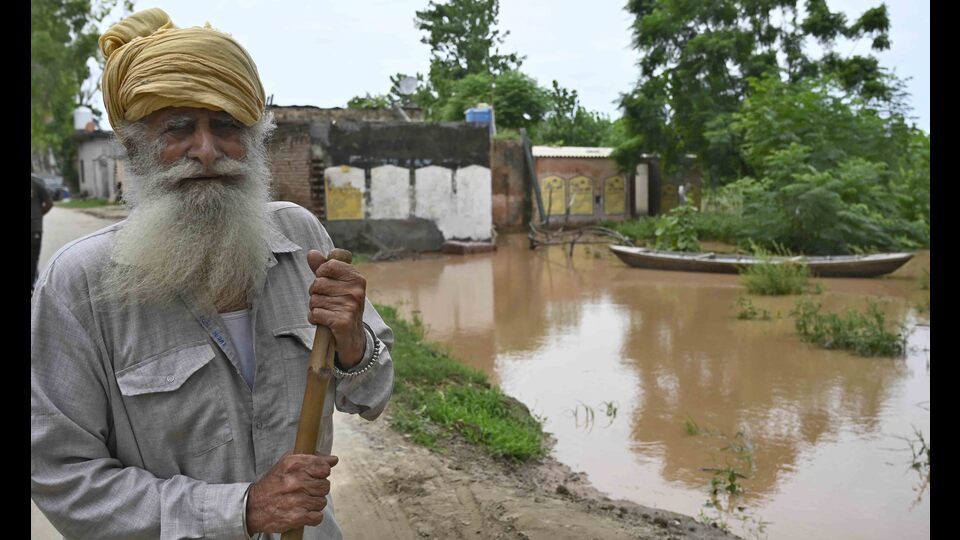
As manholes and road gullies in the areas are flowing in reverse direction, the residents fear an outbreak of vector-borne diseases.
The areas which have been severely affected due to water overflowing from the Nullah include Dhoka Mohalla, New Deep Nagar, Sunder Gaushala road, Madhopuri Chander Nagar, Kundanpuri, Vivek Nagar, Shivaji Nagar, Ranjit Singh Park and New Kundanpuri.
Even as the civic body has started the work on fortifying the banks of Nullah, clearing wild grass from the bridges and clearing the water out of waterlogged areas using pumps, the condition remains far from normal.
Manvi Jain, a resident of Dhoka Mohalla, said that in the last few days, mosquitoes and insects have increased in number. She added that as sewer water has mixed with regular supply pipes, the tap water at her home had a foul smell.
A number of residents also complained of fever and rashes on various body parts as they had to steer through the water accumulated outside their homes.
MC sanitation officer, Vipal Malhotra, said that efforts are underway to clear the water and cleaning drives are being conducted to keep the outbreak of diseases in check.
Hatinder Kaur, civil surgeon, said that rapid response teams have been created to respond to any kind of emergency. She further added, “A meeting in this regard was held with higher authorities and field visits are being conducted by the health department staff.”
STPs overflow
Due to excessive flow into the Buddha Nullah, the sewage treatment plants (STP) installed at various sites including Bhattian and Balloke have started reverse flowing.
DC orders closure of dyeing, printing units
In the wake of excessive flow into the Buddha Nullah causing overflow in the sewage treatment plant (STP) in Bhattian, deputy commissioner (DC) Surabhi Malik on Monday ordered the closure of dyeing and printing clusters in the city temporarily.
The additional commissioner of the Municipal Corporation, Ludhiana, had requested the DC to issue these orders as a precautionary measure. The MC officials had conveyed to the authorities that the Bhattian STP had started flowing reverse which can cause waterlogging in nearby areas.
The DC issued orders under Section 34 of the Disaster Management Act, 2005. The DC has ordered the municipal commissioner and superintending engineer of the PPCB to ensure the implementation of the orders.


