
 E-Paper



Ambala traders look forward to a glittering Diwali as pandemic abates
With Ambala being home to one of the largest cloth markets in Asia, traders are expecting business to recover during the Diwali season


Diwali, this year, has brought festive cheer to coronavirus- beleaguered businesses, with residents finally being able to shop to their hearts’ content.
Ravi Kakkar, 45, who owns a jewellery store in the heart of Ambala City near Jagadhri Gate, says, “Our business depends on large gatherings and so our shop remained closed most of last year due to Covid-induced restrictions. Marriages remained low-key affairs, and business only picked up a little bit around Diwali last year,” he said.
It was not just a difficult year for Kakkar workwise, but also on the personal front as he lost his father to age-related ailments and his brother-in-law to Covid.
“At least customers are fearlessly wandering around markets this year, which will translate in more sale this dhanteras,” he said.
With Ambala being home to one of the largest cloth markets in Asia, with at least 1,000 outlets at Old Cloth Market, Maharaja Agrasen Chowk and Kalka Chowk drawing customers from Punjab, Himachal Pradesh, Haryana and even Western Uttar Pradesh, retailers and wholesalers expect the cash counters to keep ringing.
Dharamveer Aggarwal, who owns Kala Niketan at the Cantonment’s Sadar Bazar, says, “Sale had picked up around this time last year too as Diwali had coincided with the marriage season. We also deal in women’s designer clothing, which will also pick-up a day before the tikka festival,” he said.
Several markets in the city that deal with decoration items, gifts, and artificial jewellery are also recording a huge footfall, especially in the evening.
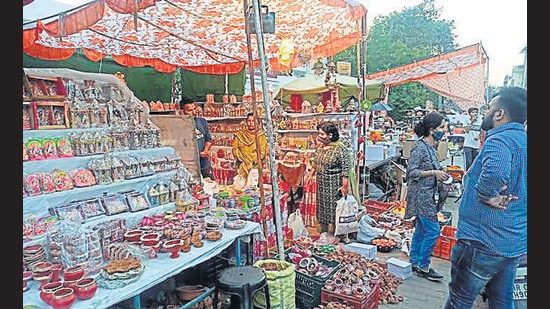
Meanwhile, cops are seen struggling to manage traffic and pedestrian movement. In a different corner of the city, traditional potters at Kumhaar Colony are elated with the increased sales at their makeshift stalls near Ram Bagh Road.
Sixty-five-year-old Raj Rani, who buys gilli mitti products from his neighbours, has put-up a stall with her daughters for the second time.
“We are requesting locals to buys our products over Chinese lighting sold at showrooms. They are selling the products to drive up their profits, while we need to make a living,” she says, adding that the sales had been dismal last year.
Sitting across her stall, Yograj, 74, who has been selling hand-made diyas for decades with his son, believes that sales will be down this year too. “How will devotees use ₹200 per litre mustard oil to light diyas? Rise in fuel prices will also impact sale,” he predicted.


