
 E-Paper



AQI plummets as smoke chokes Ludhiana on Diwali
Despite strict guidelines from the authorities to control pollution and limit the timing of bursting of crackers, the AQI in Ludhiana remained on the higher side on Diwali as compared to last year

 Prefer HTon Google


The bursting of crackers turned the city into a gas chamber and did more damage than the stubble burning, indicates the air quality index (AQI) that turned from bad to worse on Diwali.
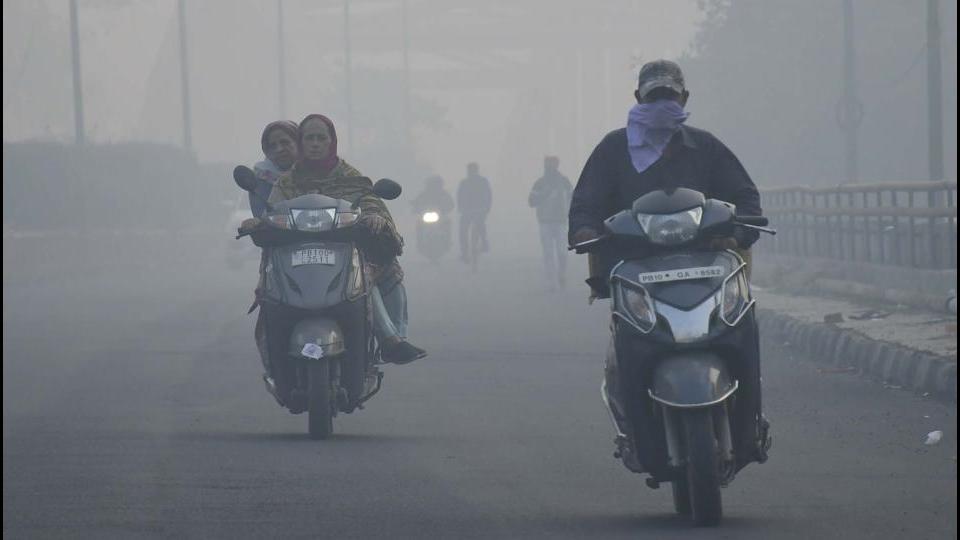
Despite strict guidelines from the authorities to control pollution and limit the timing of bursting of crackers, the pollution level remained on the higher side on Diwali as compared to last year.
In 2019 and 2020, Diwali saw the maximum AQI at 263 and 346 points, whereas this year the maximum AQI level crossed over 400 points, showed an air quality website, though the Central Pollution Control Board website showed the peak pollution level at 293 points.
The pollution level began to worsen from 3pm on Thursday when the AQI was recorded at 259 points. However, the density of particulate matter in the air reached 280 points at 8pm.
The air quality deteriorated further and crossed over 300 points as the clock struck 10 and reached an alarming level at the midnight.
Senior citizens and those suffering from allergies experienced \runny nose and watery eyes while many complained of breathing discomfort.
While AQI level was 300 at 10am on Friday, the pollution level improved marginally and was logged at 295 at 1pm.
On October 28, 2019, the AQI was 306 points at 7am. However, the AQI was recorded at 346 on the day of Diwali last year.
According Dr Prabhjyot Kaur Sidhu, head of department of climate change and agricultural metrology at Punjab Agricultural University (PAU), they were now waiting for some western disturbance or strong wind speed, otherwise suspended particulate matter will keep hanging in the air.
“We now need to wait for any western disturbance that could bring rain and settle the suspended particulate matter,” she said.
Gagnish Singh Khurana, an RTI activist based in the city, claimed that Continuous Ambient Air Quality Monitoring System (CAAQMS) installed at PAU, Ludhiana, showed varying readings throughout the night of Diwali.
“It is pertinent to mention here that there are three available methods of observing AQI. First being PAU website, then CPCB website and third one is Purple Air, where one can select Ludhiana and PAU monitoring stations and easily observe the AQI prevalent in Ludhiana at a given time,” he added.
Khurana claimed that the data were being displayed differently at the websites mentioned above.
As pert the AQI standards, the air quality between 0-50 is considered ‘good’, 51-100 ‘satisfactory’, 101-200 ‘moderate’, 201-300 ‘poor’, 301-400 ‘very poor’, and 401-500 ‘severe’.


