
 E-Paper



As Chandigarh admn presses the pedal on electric vehicles, infra remains in back seat
Chandigarh admn plans to gradually stop registration of fuel-run vehicles to encourage adoption of electric vehicles, but has failed to put public charging infra in place


Amid its vigorous push to promote electric vehicles in the city, Chandigarh administration has little to show when it comes to public charging infrastructure to make their adoption viable.
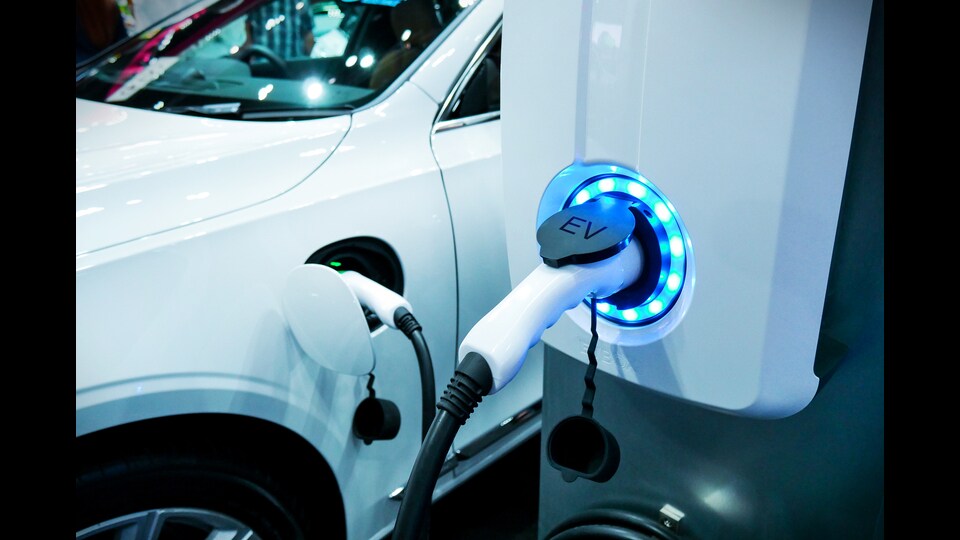
To dissuade people from buying vehicles that cause pollution, UT plans to gradually stop registering fuel-run vehicles through its Electric Vehicle (EV) Policy that was rolled out in September 2022 and is applicable for five years.
This year, the administration plans to cease registration of non-electric two-wheelers from the first week of October and even non-electric four-wheelers by December, as the number of such vehicles permitted in 2023, as per the EV policy, is expected to be met by then.
But when it comes to public charging infrastructure, a key enabler for large-scale EV adoption, not a single charging station in the city is currently functional.
48 charging points being upgraded, 23 still non-functional
Public charging stations were first set up in Chandigarh in 2018 under Centre’s Faster Adoption and Manufacturing of Hybrid and Electric Vehicles (FAME) scheme, albeit quite slow in charging.
A total of ₹48 lakh were spent on installing eight charging stations, comprising 48 charging points, under Phase 1 of the scheme.
They would take up to eight hours to charge an electric four-wheeler and three hours for a two-wheeler. Apart from long charging time, UT’s failure to promote the stations also caused them to fall into disuse.
UT is now in the process of upgrading the stations to lower the charging time, by spending ₹40 lakh per station, translating into ₹3.2 crore for all eight.
Following the upgrade, an electric car will be fully charged in around 1 hour and a two-wheeler in 18 minutes.
While this upgrade is expected to not complete before year end, UT has also failed to get another set of 23 charging stations, installed in November 2022, up and running.
Meanwhile, owners of over 4,000 electric vehicles, registered in the city over the past five years, are forced to rely on home electricity before heading out on their commute.
No power connection
As per Arulrajan P, chief executive officer of Chandigarh Renewable Energy and Science and Technology Promotion Society (CREST), the executing agency for city’s renewable energy projects, there is no power connection at the 23 charging stations, primarily due to delay by the UT engineering department in granting the no-objection certificate.
Under the UT policy, EV owners pay domestic power rates when charging their vehicles at home. Those using public stations are charged ₹8 per unit for slow or medium charging, ₹10 per unit for fast charging, and ₹11 per unit for battery swapping.
As per the policy, the first two years were supposed to witness the establishment of 100 public charging stations and all petrol pumps were required to include charging stations within six months. But that’s still far from being accomplished.
CREST has also yet to launch its mobile app providing real-time information about charging stations, time slots, load, location and tariff.
Ram Kumar Garg, finance secretary of the Federation of Automobile Dealers’ Association, Chandigarh, criticised UT’s decision to halt registrations despite not having public charging infrastructure in place. Worse, the move will affect automobile businesses established over five decades, said Garg, while noting that such caps on fuel-run vehicles were unprecedented in the country.
Only 0.90% EV penetration
With the city’s charging demand being met only by home charging, Chandigarh continues to trail in EV penetration. In the past five years, EVs accounted for less than 1% of all vehicles sold in the city, as shared by Union minister of state for heavy industries Krishan Pal Gurjar in the Lok Sabha in July.
Of the total 8,43,049 vehicles registered in Chandigarh since 2018, only 7,628 were EVs as of July 21, 2023, representing a mere 0.90%. Among UTs, Delhi leads with a 2.71% EV penetration rate, followed by Chandigarh, while the national average stands at 0.81%.
Incentives enough to boost EV adoption?
UT’s EV policy is aimed at making Chandigarh a “Model EV City” by achieving one of the highest penetrations of zero-emission vehicles within the policy period of five years.
To promote EVs, the administration has waived registration fee and road tax for five years, while owners of vehicles running on conventional fuels have to pay both.
Also an incentive ranging from ₹3,000 to ₹2 lakh is being offered for up to 42,000 vehicles of different categories, including 25,000 e-cycles, 10,000 e-bikes and 3,000 e-cars, purchased between September 20, 2022, and September 19, 2027.
The incentive is available for EVs bought anywhere across the country, but only permanent residents of Chandigarh are eligible for it.


