
 E-Paper



Border dispute: Himachal writes to Ladakh, J&K admns, presses for meet
State revenue minister Jagat Singh Negi had sent a proposal for a meeting with higher officials of both the union territories (UTs)

 Prefer HTon Google


: Himachal Pradesh has once again raised the issue of interstate boundaries with Jammu, Kashmir and Ladakh with the central government.
State revenue minister Jagat Singh Negi had sent a proposal for a meeting with higher officials of both the union territories (UTs).
“Ladakh and Chamba in Spiti have been illegally occupied by Jammu and Kashmir. The state government has been raising this issue with the Central government for several years but it has not yielded any result,” he added.
Now the state government has planned to discuss it again with both the UTs.
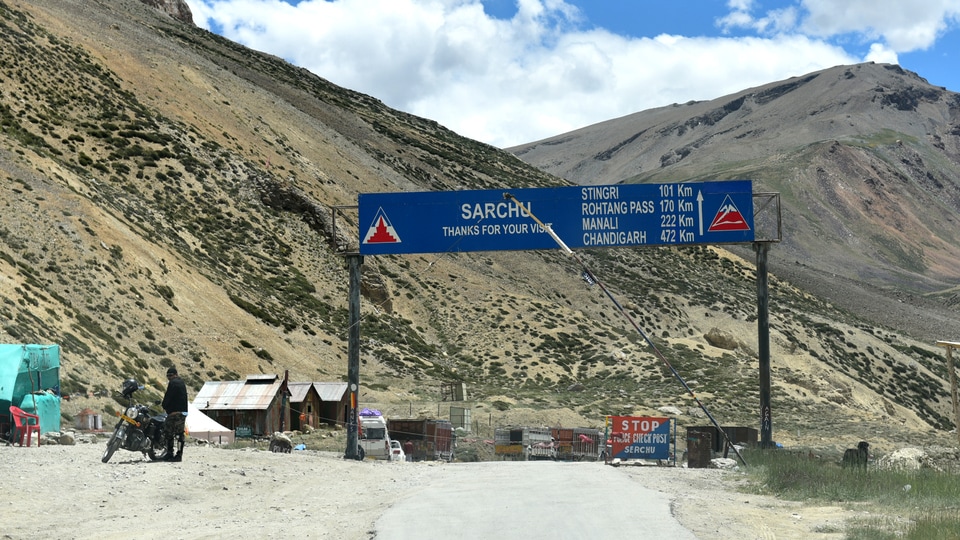
Jammu has been claiming its right over Churah in Chamba district while Ladakh claims 13 kms of the boundary along Sarchu in Spiti Valley. Jammu and Kashmir has constructed a 10 km road within the limits of the Chamba district of Himachal Pradesh. Even in the year 2021, Chamba and Doda administration have come face to face regarding the border areas of Himachal, and Jammu and Kashmir.
The union territory of Ladakh has raised fresh rows claiming grazing rights over the pastures in Shinkula. The border dispute at Sarchu in Lahaul-Spiti district and Leh, then a part of erstwhile Jammu and Kashmir state erupted in 2013 when people from Leh set up temporary sheds at Sarchu for commercial purposes.
Sarchu, at least 12-13 kms inside Himachal is the last station of the Lahaul-Spiti district on the Manali-Leh highway which attracts a large number of tourists.
The high-level meeting took place last January to settle the dispute, however, the Ladakh administration placed pre-independence revenue records to stake its claim over the disputed boundary at Sarchu and Sumdoh in tribal Lahaul and Spiti district. Himachal too placed old records to claim that the local shepherds have grazing rights in Shinkula.
“Both sides then agreed for demarcation in summer months, it’s the time when tourists rush the tribal regions,” deputy surveyor general of India said. The stand of HP throughout this dispute has been that boundary be demarcated according to the relevant maps prepared by the office of the Survey General of India.
After the dispute in 2013, deputy commissioner Lahaul and Spiti and deputy commissioner Leh carried out a joint spot visit during which Himachal Pradesh authorities presented revenue records and indexed sheets of Survey of India as evidence to buttress its claim on the territory. The records presented revealed that the boundary was 12-13 Kms ahead of the disputed point and both sides agreed on a demarcation.
There is also an unfinished gate structure at the site of the inter-state boundary along the highway. This location is also reflected in the Survey of India maps.
The boundary dispute issue was further agitated before the National Commission for Scheduled Tribes by Tanzin Sonam, Councilor Lugnak block, LAHDC Kargil. The NCST convened meetings in the year 2015 and 2016. The NCST gave directions that demarcation to be done by Survey of India at the spot.
A survey of India substantiated Himachal’s claim on the territory still no solution to the issue was found as the officials representing the then Jammu and Kashmir government rejected the validity of the maps presented by officials of Surveyor General of India.


