
 E-Paper



CAG report highlights debt burden, rising expenses
The report, presented in the Himachal Assembly during the winter session, highlights that the state’s total debt has surged from ₹73,534 crore in 2021-22 to ₹86,589 crore in 2022-23


Comptroller and Auditor General (CAG) report for the financial year 2022-23 has painted a grim picture of Himachal Pradesh’s economic health. The state, grappling with a burgeoning debt burden and escalating expenses, saw the government raising a staggering loan of over ₹13,000 crore in the last fiscal year.
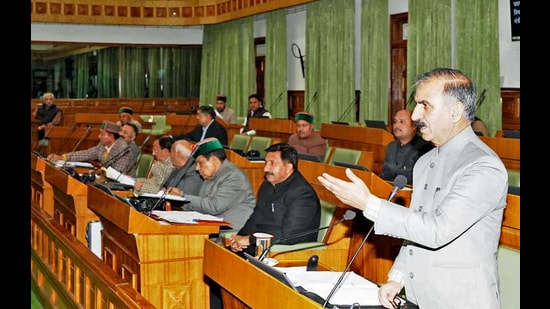
The report, presented in the Himachal Assembly during the winter session, highlights that the state’s total debt has surged from ₹73,534 crore in 2021-22 to ₹86,589 crore in 2022-23. The escalating debt has not only strained the economy but also forced the government to heavily rely on centrally sponsored schemes for development projects.
A significant revelation from the CAG report indicates that almost half of the government’s budget, amounting to ₹50,539 crore in the last financial year, was allocated to salaries and pensions. The implementation of the recommendations of the Sixth Punjab Pay Commission has further burdened the state’s treasury, with salaries witnessing an annual increase from ₹11,641 crore to ₹15,669 crore. Similarly, pension payments surged from ₹6,088 crore to over ₹9,283 crore.
The report underscores the growing challenge of interest payments due to continuous borrowing, with the government shelling out ₹4,828 crore in 2022-23 compared to ₹4,472 crore in the previous fiscal year. Additionally, populist announcements translated into increased subsidies, with expenditures rising from ₹1,240 crore in 2021-22 to ₹1,973 crore in 2022-23.
Furthermore, the CAG report raises concerns about the government’s failure to collect utility certificates, prompting the auditors to call for necessary steps to rectify this lapse.
As Himachal Pradesh grapples with a mounting debt crisis, questions are being raised about the state’s ability to fulfil its economic promises and adhere to the Fiscal Responsibility and Budget Management Act, which aimed at reducing non-productive expenses and resource mobilisation. The impact of these financial challenges on the state’s developmental initiatives remains a subject of widespread concern.


