
 E-Paper



Chandigarh: Metro plan to chug ahead as stakeholders give final nod
Punjab’s suggestion to extend Metro till Rajpura incorporated in plan; report to be sent to Union ministry of housing and urban affairs soon for final nod, says Chandigarh home secretary

 Prefer HTon Google


A month after Chandigarh, Haryana and Punjab accorded in-principle approval to the comprehensive mobility plan (CMP) for the tricity prepared by RITES, the stakeholders gave their final nod to the mass rapid transport system (MRTS) plan.
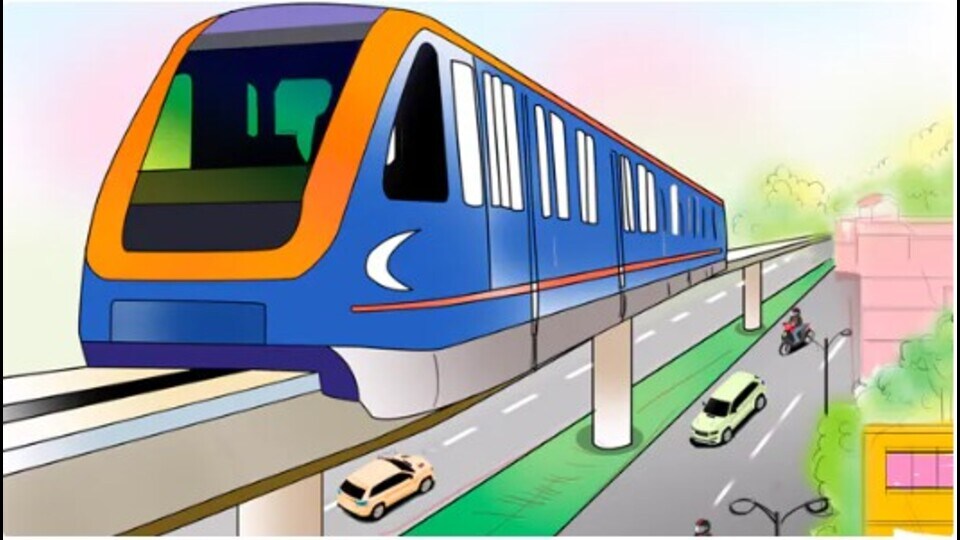
During a meeting on Wednesday, held under the chairmanship of UT adviser Dharam Pal and attended by senior officers of Punjab, Haryana and UT administration, some minor changes were suggested and incorporated, and the CMP was given the final approval.
UT home secretary Nitin Yadav said the plan will be sent to the Union ministry of housing and urban affairs for final nod within the next three-four days.
As suggested by Punjab principal secretary of housing and urban development Ajoy Kumar Sinha, under Phase 2 of the MRTS project, the Metro will also connect NH-64/PR-7 junction to Rajpura.
Also, the Paraul, New Chandigarh, to Sarangpur, Chandigarh, route has been moved up from Phase 2 to Phase 1, also on Punjab’s demand.
The director of Haryana Mass Rapid Transit Corporation (HMRTC) suggested that the corridor from Shaheed Udham Singh Chowk (Panchkula ISBT) to the Panchkula extension be included in Phase 1 instead of Phase 2, which was also incorporated in the plan.
Now, in the first phase, which will be developed between 2027 and 2037, the MRTS is proposed to run from Sarangpur to Panchkula ISBT; Panchkula ISBT to Panchkula extension; Rock Garden to Zirakpur ISBT via Mohali Industrial Area and airport; Grain Market Chowk, Sector 39, to Transport Nagar, Sector 26; and Paraul, New Chandigarh, to Sarangpur.
The second phase, to be developed after 2037, will cover three routes: Airport Chowk to Manakpur Kallar; Zirakpur ISBT to Pinjore ISBT; and NH-64/PR-7 junction to Rajpura.
The UT adviser directed RITES to start working on the alternatives analysis report and detailed project report for the MRTS.
With a population of over 12 lakh and 15 lakh registered vehicles, Chandigarh has the highest density of vehicles per household in the country, leading to acute traffic problems. Then, over 2 lakh vehicles moving on tricity and inter-state routes also cross the city daily, exacerbating the congestion.
The comprehensive mobility plan, allotted to RITES Limited in December 2021, is aimed at resolving this burgeoning problem. The mobility plan readied by RITES has been divided into short, medium and long-term transport improvement proposals, with focus on improving parking management, junctions, pedestrian infrastructure, road infrastructure, local bus system, intermodal interchanges and integrated freight complexes.
Seven bus corridors part of plan
In line with RITES proposal for a robust local bus network, to encourage more people to switch to public transport and ensure smooth flow of traffic, UT has also finalised seven straight bus corridors criss-crossing through the tricity.
RITES had found that these seven corridors — Sector 43 ISBT to New Chandigarh; Sector 17 ISBT to Mansa Devi Complex; Sector 43 ISBT to Panchkula ISBT; Sector 17 ISBT to Kharar ISBT; PGIMER/Dadumajra to Zirakpur ISBT; PGIMER to ISBT Panchkula; ISBT Kharar to ISBT Zirakpur — have the maximum traffic flow.
Metro plan rejected by central govt previously
Notably, RITES had also recommended Metro in its first report readied in 2009. But eight years later, the Union home ministry had rejected the project in 2017 and asked the UT administration to look for alternative models of transport. The ministry’s contention was that Metro was not viable in Chandigarh due to the city’s size. Also, its ₹14,000-crore cost was not found financially feasible.


