
 E-Paper



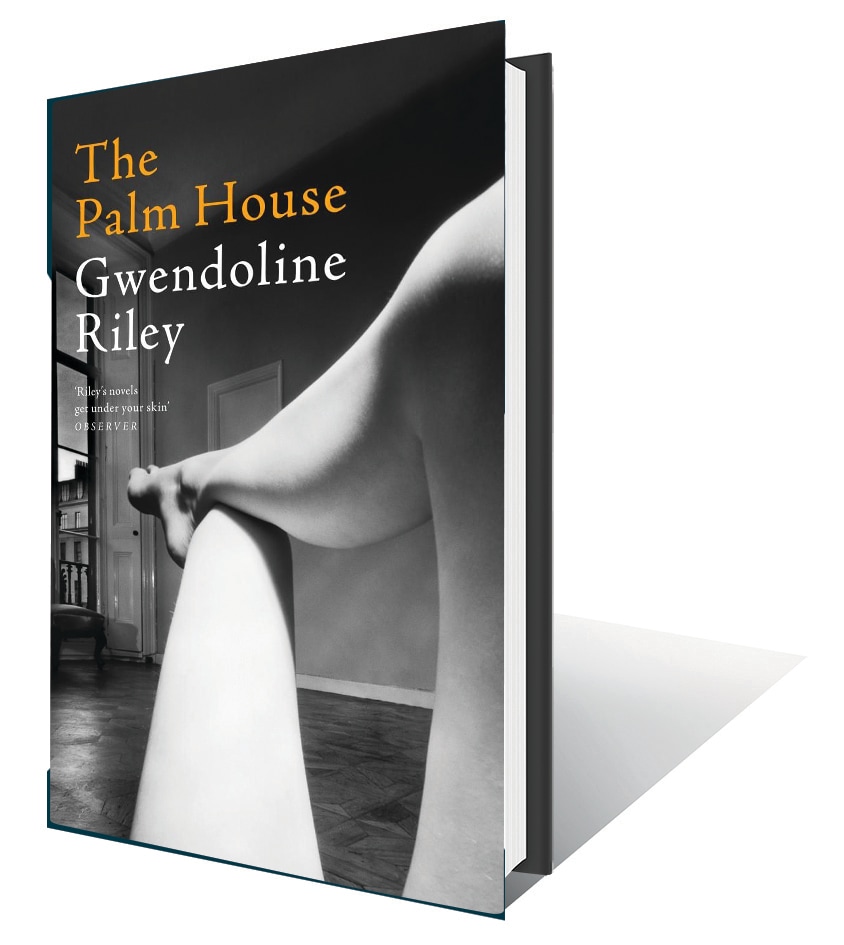
Review: The Palm House by Gwendoline Riley
The Booker longlisted novel, which follows two friends leaning on each other, is a story of love without romantic ideals or sexual tensions

 Prefer HTon Google


Gwendoline Riley’s The Palm House is a silent presence among some of the big novels on the 2026 Booker longlist. It does not set a trend, nor is it the latest Bookstagram sensation. Still, it emerges as an honest work that presents life’s everyday vagaries.
It begins with friends Edmund Putnam and Laura Miller enjoying a drink as sand from the Sahara and ashes from the forest fires in Spain and Portugal blow into England. While Laura, the narrator, is a freelance writer who once worked at a history magazine, Edmund has been at a popular London magazine for decades. Now, he too has decided to resign and become a freelancer. His decision stems from his dislikes of the magazine’s new editor, someone who intends to transform the publication into a sort of New Yorker-of-London. What follows is a story of two friends leaning on each other; a story of love without any romantic ideals or sexual tensions; a love defined by companionship.
Written in dialogues for the most part, The Palm House reminds the reader of Julian Barnes’s connected novels, Talking it Over (1991) and Love, etc (2000). The difference between the characters emerges through their dialogues and glimpses of their interiority. At one point Edmund says, “These are things that happen to most people, aren’t they?” to which Laura responds, “Well… yes and no. They’re happening to you now.”
For the first 50 pages, the reader gets to know Edmund through the picture Laura presents of his life as a middle-aged man: his job as a commissioning editor, his colleagues who are also her friends, his life as an unassuming young boy, and his sharp disapproval of the corporatisation of the magazine. While he is fleshed out neatly there is still some nebulousness that keeps the reader thinking of him. This, in turn, makes one curious about Laura: who is she? Where does she come from? Why are we listening to her talk about Edmund? It’s the perfect entry into the next part of the book where Laura is the subject. Here, the reader learns of her childhood, her coming of age, the time she spent in Croatia with her mother and grandmother, being a fan of a comedian. The chapter on the sexual assault, then, comes as a shock in the middle of a book where the reader is lulled into thinking that nothing shocking ever happens in these lives. This drives home the fact that assault itself is normalised and that it occurs in the most unsurprising moments. The descriptions bring out teenage discomfort, the unawareness of abuse, and the disgust that followed the event.

The Palm House reads like a late 20th century novel set in the present. This is a good thing. Avoiding showiness and experimentation, it effectively conveys the nuances of a 21st century friendship between two millennials. There are echoes of Rachel Cusk’s Saving Agnes (1993), a book that author wrote before she became mired in auto fictional accounts where the world of characters and plots stopped mattering. In Riley’s novel, the plot exists, though a little absently, and the characters have their specific quirks.
Written with old-style charm, The Palm House studies the intensity and solace of friendship without dramatic twists and turns. Laura and Edmund feel like the sort of people that one has known. At the same time, just as they begin to seem like the reader’s friends, there appears a layer to their friendship that may not have been apparent at all.
Rahul Singh is an academic and novelist. He is the author of Unfolding (Harper Collins India, 2026).


