
 E-Paper



Chandigarh heritage committee reduced to a bystander
As per the Chandigarh Heritage Conservation Committee’s mandate, laid down by the Union government, it should be on board when changes are made to the city’s heritage

 Prefer HTon Google


The municipal corporation’s recent move to unilaterally replace heritage manholes without taking the Chandigarh Heritage Conservation Committee (CHCC) on board, has added credence to the growing view that CHCC is being “ignored” on crucial heritage protection issues.
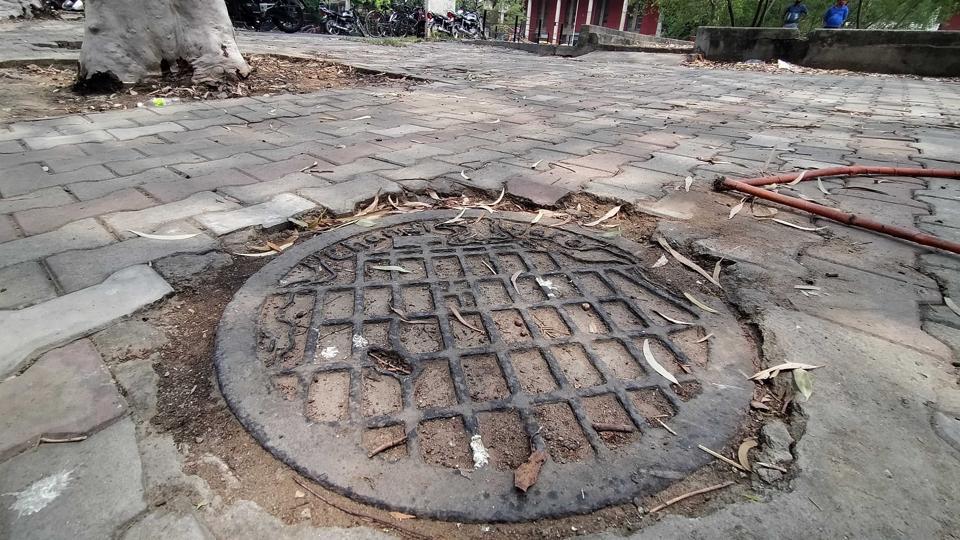
The MC recently floated tenders inviting firms to replace the more than 2,000 heritage manholes with ordinary manholes.
As per CHCC’s mandate laid down by the union government, it should be on board when changes are made to the city’s heritage. But, as MC chief engineer Shailender Singh conceded, the CHCC wasn’t consulted in this decision. Rather, it followed from a MC general House resolution passed in December 2019.
“Our immediate concern is to safeguard heritage manholes. There were number of instances when they were stolen. For the time being, these will be kept in a store,” said Singh.
But, this is not the first time when the city’s governing apparatus moved on with its plan, without even consulting the CHCC or taking its consent. The Tribune Flyover, the Sector 17/16 pedestrian underpass and the rejuvenation plan of Sector 17 are some instances wherein the CHCC has been largely reduced to as a bystander.
The committee’s role
The UT administrator constituted CHCC as per the ministry of home affairs’ decision on April 20, 2012. CHCC derives its mandate from the approved report of the Expert Heritage Committee and the letter-dated December 23, 2011, conveying approval of the Union ministry of home affairs. This report was incorporated in Chandigarh Master Plan (CMP)-2031.
It’s defining function is the preservation, conservation and the maintenance of the city’s heritage. The mandate also includes taking requisite steps in a time-bound manner for completion of incomplete projects of the original plan and declaring heritage buildings and heritage zones to prepare a conservation management plan and frame conservation regulations
It is headed by UT adviser and comprises senior UT officials, representatives of Union government and subject-experts.
‘Heritage committees have no power’
Speaking at a seminar, a CHCC member had said, “There are heritage committees, no doubt, but these are unable to do anything and are helpless.”
Another member of the committee, requesting anonymity, said, “Generally, the administration takes the route of appointing a consultant to bypass the committee. This happened when some committee members objected to the construction of the Sector 17/16 pedestrian underpass.”
Similarly, the full details of the rejuvenation plan of Sector 17 hasn’t been shared with the committee. “It is a major heritage hub of the city. Major changes being made to it, like the city’s map being engraved on the plaza floor, should be under the purview of the committee,” said the member.
In the case of the Tribune Flyover, the administration had gone through with the project, even though CHCC hadn’t given approval. Only a sub-committee had given conditional consent.
SD Sharma, member of the CHCC and a chairman of the CHCC sub-panel, said, “The administration does seek the committee’s approval on major issues. But, sometimes it comes to know about changes only after they have already been made. For instance, the walls of a building in PGIMER were recently painted white. There should be law to penalise any damage done to a heritage building.”
Rajnish Wattas, former principal of the Chandigarh College of Architecture and member of the CHCC sub-committee, said, “Agenda and mandate can be streamlined. A city like Chandigarh cannot be replicated now and we need to preserve its character.”
Advocating that the CHCC should be headed by an expert, Shilpa Das, practising architect and secretary, Act! Chandigarh, said, “This will provide it necessary autonomy and not just make it a forum to serve UT officials.”


