
 E-Paper



Chandigarh: PGI doctor restore 79-yr-old’s heart rhythm with complex cryoablation procedure
Cryoablation precisely freezes the abnormal electrical pathways in the heart, minimising collateral tissue damage; this method offers several clinical advantages, particularly beneficial for patients with pre-existing implanted devices like pacemakers


The Post Graduate Institute of Medical Education and Research (PGIMER) has successfully performed a complex cardiac cryoablation procedure on a 79-year-old patient suffering from atrial fibrillation. This advanced treatment marks a significant step forward for cardiac care in the region.
Atrial fibrillation is a heart rhythm disorder characterised by an irregular heartbeat, often leading to breathing difficulties. The case at PGIMER was particularly challenging, as the patient not only had a rhythm disorder in the upper chamber of his heart but also a genetically thick lower chamber (Hypertrophic cardiomyopathy), resulting in repeated hospitalisations for heart failure. The patient had previously undergone pacemaker implantation.
Traditionally, access to advanced electrophysiology therapies has been largely confined to metropolitan cities. With its cardiology department now performing cryoablation procedures, PGIMER is enabling heart rhythm disorder patients to receive more precise and less time-consuming treatment at a comparable cost to traditional methods, which previously took four to five hours.
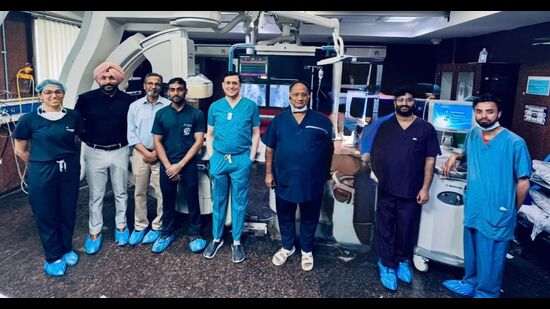
The procedure was carried out by a dedicated team of doctors led by Dr Saurabh Mehrotra, under the guidance of Dr Yash Paul Sharma, head of the cardiology department. Dr Mehrotra explained that cryoablation therapy uses cold energy to destroy the pulmonary veins responsible for the irregular rhythm. This cutting-edge technique effectively isolates the pulmonary veins and eliminates the source of atrial fibrillation. The procedure time has been significantly reduced to approximately one hour, a stark contrast to the four to five hours required for traditional therapies.
PGIMER’s cardiology department handles an estimated 20 to 30 atrial fibrillation cases each month, with the need for cryoablation depending on the patient’s condition severity. “This was a complex patient scenario where traditional rate control wasn’t sufficient,” noted Dr Mehrotra, professor of cardiology at PGIMER. “By targeting the root cause – AF – with cryoablation, we were able to restore rhythm, relieve symptoms, and significantly improve cardiac function.”
Cryoablation precisely freezes the abnormal electrical pathways in the heart, minimising collateral tissue damage. This method offers several clinical advantages, particularly beneficial for patients with pre-existing implanted devices like pacemakers. The benefits of cryoablation over traditional therapies include an improved safety profile, shorter procedure times, reduced hospital stays leading to faster recovery, and better long-term outcomes for selected atrial fibrillation patients.


