E-Paper



Chandigarh’s AQI continues to be ‘poor’ for 2nd straight day
While the fog began to dissipate by mid-morning, with visibility improving to 3,000m by 11.30 am, officials warn that this pattern is likely to repeat

 Prefer HTon Google


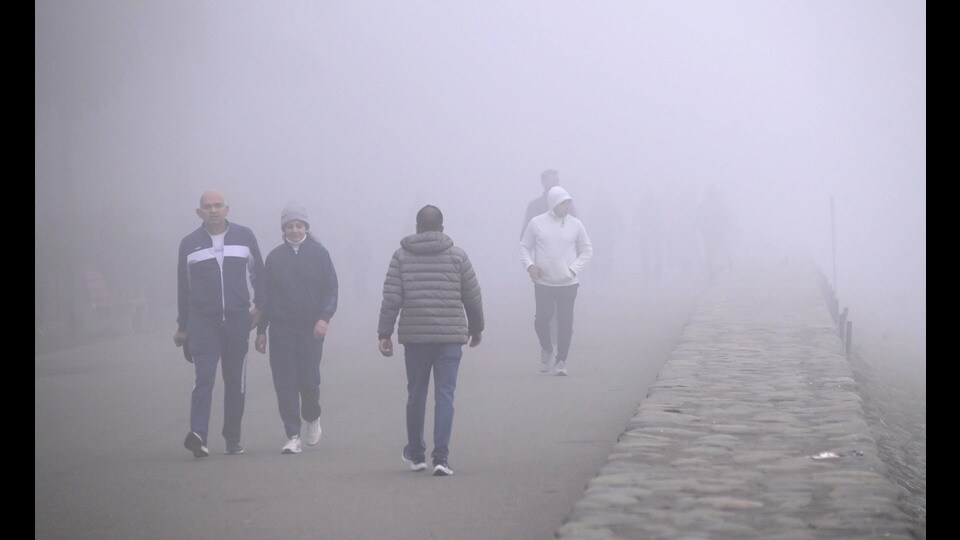
Residents of the tricity woke up to a thick blanket of fog for the second consecutive day on Thursday, as the region grapples with a dual challenge of plummeting visibility and deteriorating air quality. While Chandigarh’s Air Quality Index (AQI) showed a marginal improvement from the previous day, it remains firmly in the “poor” category, while neighbouring Panchkula has crossed the threshold into “very poor” territory.
According to the daily AQI bulletin released by the Central Pollution Control Board (CPCB), Chandigarh recorded an AQI of 266 on Thursday. This marks a slight dip from Wednesday’s reading of 275, though the air remains hazardous for sensitive groups.
In contrast, the situation in Panchkula has worsened. The city’s AQI rose to 346 on Thursday, up from 330 on Wednesday, placing it in the “very poor” bracket. Weather officials suggest that the current weather pattern is a significant contributor to the trapped pollutants.
Surender Paul, director of India Meteorological Department’s (IMD’s) Chandigarh centre, explained that the shift in wind patterns is largely responsible for the spike. “With foggy weather, AQI is also likely to go up as dry North Westerly winds are not blowing in the region anymore,” Paul stated. He noted that an ongoing Western Disturbance (WD) has disrupted the local wind system, replacing dry air with moisture-laden easterly winds. The combination of high humidity and low temperatures creates an ideal environment for dense fog to persist.
Visibility drops to 150m
Commuters faced significant hurdles as visibility dropped to 150m on Thursday morning, matching Wednesday’s low. IMD data shows that visibility was at 800m at 5.30 am on Tuesday but crashed to 150m by 8.30 am—a level officially classified as “dense fog”.
While the fog began to dissipate by mid-morning, with visibility improving to 3,000m by 11.30 am, officials warn that this pattern is likely to repeat. Director Paul added that while the fog is expected to return in the coming days, it is unlikely to linger throughout the day and should clear by the afternoon hours.
The heavy fog cover has had a direct impact on the region’s mercury levels. The maximum temperature saw a decline, falling from 23°C on Wednesday to 21.9°C on Thursday. Despite the drop, this remains 1.3 degrees above the seasonal normal. Conversely, the minimum temperature rose from 8.3°C on Wednesday to 9.9°C on Thursday, which is 2.2 degrees above normal.
Looking ahead, the IMD predicts that over the next three days, maximum temperatures will hover around 22°C, while minimums will stay near 9°C.
Orange alert issued
The IMD has issued an orange alert for dense fog on Friday, signalling that residents should exercise caution during early morning and late-night travel. However, there is a glimmer of hope for the weekend, as meteorologists expect the situation to see gradual improvement by Saturday and Sunday.
Meanwhile, maximum temperature fell because of the fog, going from 23°C on Wednesday to 21.9°C on Thursday, still 1.3 degrees above normal. Minimum temperature rose from 8.3°C on Wednesday to 9.9°C on Thursday, 2.2 degrees above normal. In the next three days, maximum temperature will remain around 22°C while minimum temperature will remain around 9°C.
Human rights body takes suo motu cognisance of air pollution
The commission noted that AQI levels crossed 400 in parts of the city, particularly around Sector 22, while several other areas recorded air quality in the ‘very poor’ category for prolonged hours. PSHRC observed that such levels of air pollution pose a serious threat to public health, especially to children, senior citizens, pregnant women and persons suffering from respiratory and cardiac ailments.
Taking a strong view, the commission observed that the Right to Life under Article 21 of the Constitution of India includes the right to live in a clean and pollution-free environment, and any prolonged exposure to hazardous air quality amounts to a violation of basic human rights.
The human rights body also took note of the fact that while extensive measures have been ordered and enforced in NCR Delhi, including vehicular restrictions, traffic regulation and the Graded Response Action Plan (GRAP) pursuant to directions of the Supreme Court of India, the absence of comparable visible action in Chandigarh raises serious concerns regarding administrative preparedness and response.
Accordingly, the commission has called for a detailed action taken report from the Chandigarh Pollution Control Committee (CPCC) regarding the steps taken to control air pollution, the existence and enforcement of any structured response mechanism, and measures adopted to protect vulnerable sections of society.
CPCC chairman has been directed to personally ensure effective monitoring and implementation of pollution control measures and to submit a comprehensive status and compliance report to the commission.
The matter is listed for further consideration on December 23.
10 flights cancelled due to fog
Of the cancelled flights, four were arrival services. These included IndiGo flights 6E7718 and 6E7516 from Jaipur, IndiGo flight 6E759 from Delhi, and Air India flight AI1743 from Delhi. Visibility remained below operational for several hours, forcing airlines to call off operations as a safety measure.
Six departure flights were also cancelled due to the foggy conditions. These included IndiGo flight 6E2315 to Delhi, 6E7719 to Jaipur, 6E760 to Delhi, 6E7517 to Jaipur, and 6E6254 to Hyderabad, along with Air India flight AI1862 to Delhi.
Airport authorities said no flight diversions were reported till 8 pm, despite the challenging weather conditions at the airport. Passengers were advised to check flight status with their respective airlines before heading to the airport, as fog-related disruptions are likely to continue during the winter season.