
 E-Paper



COP-16 int’l conference in Saudi Arabia: Haryana vows to combat desertification of Aravallis
Speaking at the United Nations Convention to Combat Desertification (UNCCD) - COP-16 at Riyadh in Saudi Arabia on Monday evening, state environment minister Rao Narbir Singh said the AGWP, which was launched in 2023, is a major initiative to green the 5 km buffer area around the Aravalli range in four states.


The Haryana government on Monday gave a commitment to combat desertification of Aravalli mountain ranges in collaboration with other states under the Aravalli Green Wall Project (AGWP).
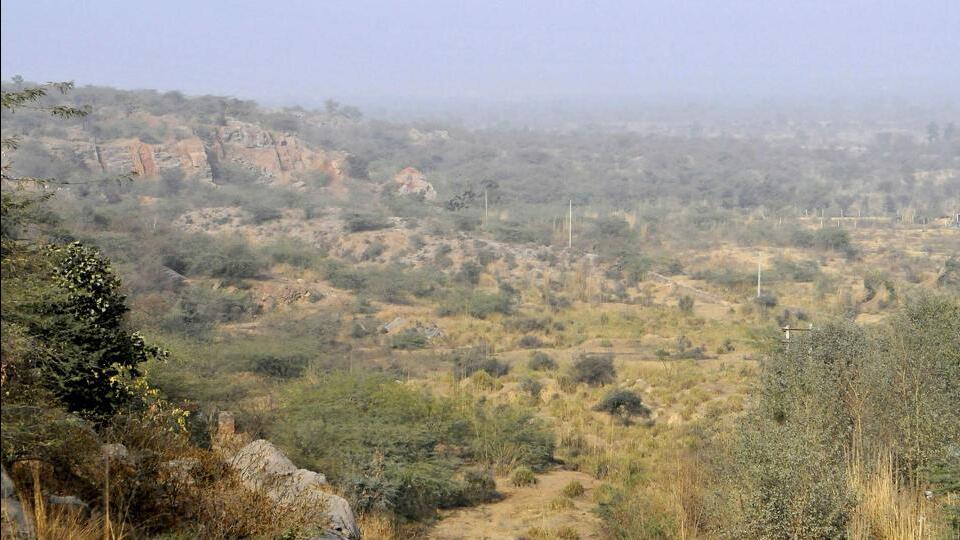
Speaking at the United Nations Convention to Combat Desertification (UNCCD) - COP-16 at Riyadh in Saudi Arabia on Monday evening, state environment minister Rao Narbir Singh said the AGWP, which was launched in 2023, is a major initiative to green the 5 km buffer area around the Aravalli range in four states. He said that AGWP stipulated innovative approaches for addressing threats and challenges, this included use of GIS-based monitoring tools and nature-based solutions to restore degraded landscapes, focus on afforestation with indigenous species, soil health improvement, and water body rejuvenation.
The project assures to restore 1.15 million hectares across four states- Haryana, Rajasthan, Gujarat, and Delhi, focus on afforestation with indigenous species, biodiversity conservation, improving soil health, and enhancing groundwater recharge.
Leading a state delegation, the minister in a statement said that the AGWP will have an impact on the Aravallis and beyond with significant benefits like combating desertification, enhancing biodiversity and ensuring groundwater recharge. It will also bring improvement in air quality and reduce urban heat islands in the national capital region.
Singh said there were numerous socio-economic benefits also like creation of green jobs and improved livelihoods in rural and urban communities. The project will also strengthen the resilience of local populations against climate-induced risks. The AGWP emphasises call to action through collaborative responsibility by stressing the importance of a collective effort involving governments, civil society, and international organisations to restore and protect the Aravallis. He said that the Aravalli Green Wall Project can be a replicable model for achieving the goals of the United Nations Convention to Combat Desertification, United Nations Framework Convention on Climate Change and sustainable development goals. Aravallis, one of the world’s oldest mountain ecosystems, are known as geological treasure, dating back to over 3.2 billion years. It has ecological and climatic importance in shaping the landscape and biodiversity of northwestern India.
Aravallis are considered lifeline for four states and the national capital region and works as a critical green buffer supporting biodiversity, groundwater recharge, and air purification, particularly for Gurugram and Faridabad in Haryana.


