
 E-Paper



Wildbuzz | Gyrfalcon of emperors, kings and presidents
Gyrfalcons were exchanged as gifts (and for diplomatic negotiation / ransoms) between royals across the world, with rich references from the Mughal era


Russian President V. Putin is quite the cynosure of the globe’s eyes, for reasons right and wrong. Putin recently visited a Gyrfalcon breeding centre in Russia where he sported the ‘fair & lovely’ raptor on his wrist. The Putin-Gyrfalcon photograph found global resonance and rejuvenated the bird’s historical associations with supreme royals and reaffirmed a continuing tryst with some rulers of the postmodern world.
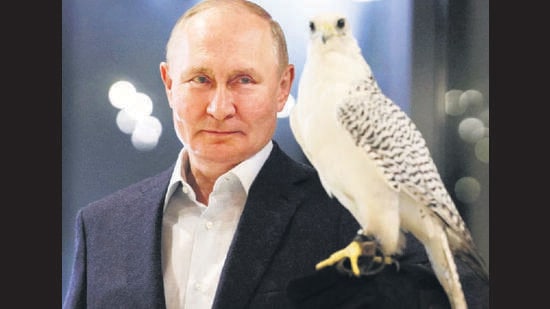
Putin declared that the Centre would breed these raptors of impeccable peerage and sell them at high prices to Arab sheikhs, who just adore Gyrfalcons, the whiter the better! Putin had even gifted Gyrfalcons to the Gulf royalty, including the King of the House of Saud, while on a State tour of West Asia. Putin’s Gyrfalcon gifting was continuing a tradition of the Tsars.
Gyrfalcons were exchanged as gifts (and for diplomatic negotiation / ransoms) between royals across the world, with rich references from the Mughal era. Falcons and hawks as gifts is a practice going back to the 21st century BC when raptors were received by Chinese princes of the Hsia dynasty. Kings and emperors were passionate about falconry, as are the Arab sheikhs even now. Esteemeds raptors in their possession were symbols of the royal pecking order. To an extent, that Northern goshawks (the Baaz) and Gyrfalcons could only be flown by emperors and the high nobility, and that quirky VVIP privilege was strictly enforced.
The Gyrfalcon — pronounced ‘Jer-falcon’ — is the largest of the globe’s true falcons. This ghostly bird that recalls to mind streaks of white lightning flashing across the sky possesses power, speed and ruthlessness. It dwells in the high Arctic region and is nowhere to be found near India. However, Mughal Emperors got this bird from Scandinavia and Iceland through travellers.
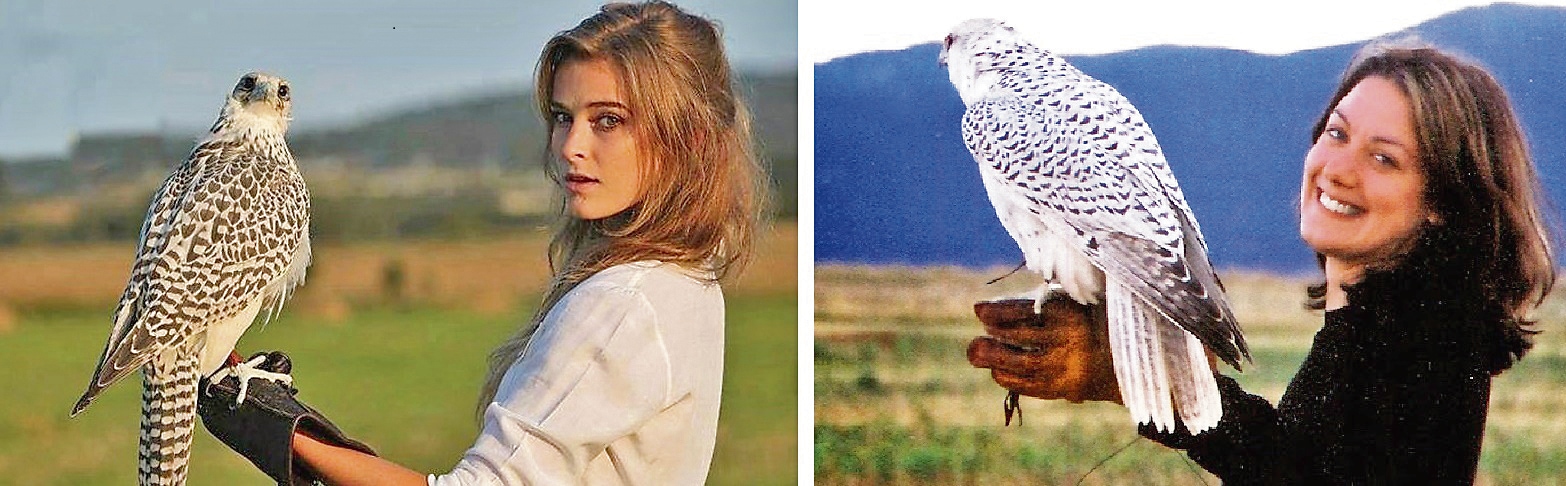
“The palest variety (called ‘Tuyghun’ by the Mughals) from Greenland were keenly sought (by Mughal Emperors)…especially prized, and as the risk of losing them could not be taken, they were never used for hawking. A superstition soon grew that the mere touch of a ‘Tuyghun’ cured a patient of fever,” wrote India’s leading authority on raptors, Rishad Naoroji, adding that “it is doubtful whether Gyrfalcons survived the torrid Indian summer.”
Jahangir’s memoirs bear testimony to the gifting of mighty and beautiful raptors between exalted rulers. “As a gift, in 1619, Shah Abbas of Safavid Persia sent a Gyrfalcon and accompanying falconer to Jahangir’s court. Before the falcon arrived at the Mughal court, a cat attacked the bird so violently that it died. ‘What can I write of the beauty of this bird’s color?’ Jahangir wrote. ‘Every feather on its wings, back and sides was extremely beautiful…I ordered Master Mansur (the legendary artist)...to draw it.’ Jahangir dismissed the falconer whose negligence had caused the bird’s demise,” wrote Kristen Hickey in the historical review titled, King of the Birds: Making Symbol, Subject, and Science in the Skies of Hindustan’.
However, a misinspired section of ornithology historians in conjunction with spurious, citation-lacking assessments hosted on the internet have gone a step further to bestow erroneous association of the Gyrfalcon with Guru Gobind Singh as he was known by the legend of ‘chitte baajan wallah’ or ‘keeper of fair hawks’. The Guru’s bird was, in fact, the goshawk, a species sporting a conspicuous white supercilium and being very fair-fronted in prime plumage.
vjswild1@gmail.com


