
 E-Paper



With dams filing fast, officials wait for Punjab’s nod to release water
Even as the flood scenario in Punjab is easing with water receding in many areas, the authorities are keeping an eye on the rising water levels in three dams over Sutlej, Beas and Ravi

 Prefer HTon Google


Even as the flood scenario in Punjab is easing with water receding in many areas, the authorities are keeping an eye on the rising water levels in three dams — Bhakra, Pong and Ranit Sagar, over Sutlej, Beas and Ravi, respectively.
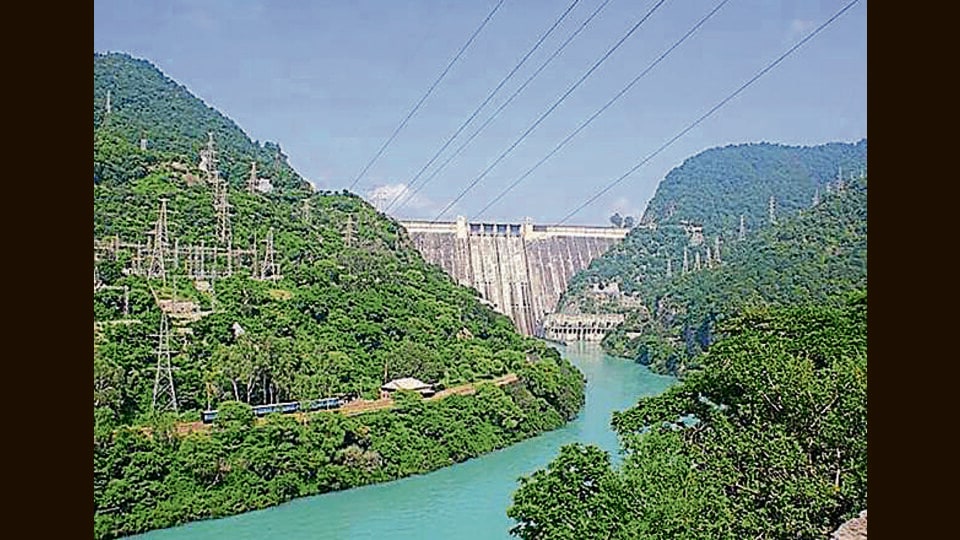
As of today, the outflows from all three dams are being controlled so as to not add additional water to already flood-ravaged areas in Punjab.
Bhakra Beas Management Board (BBMB) controls the management of Bhakra and Pong Dams while Punjab State Power Corporation Limited (PSPCL) manages Ranjit Sagar Dam (RSD).
The officials managing the dams said they are waiting for a nod from Punjab, and in case the inflows don’t reduce, there will have no option but to release the water.
On Sunday, the water level in Bhakra Dam (over Sutlej) was recorded at 1,640 feet, 40 feet below the maximum filling level of 1,680 feet.
As per the BBMB management, the water level is rising at least 2 feet every day, with the reservoir getting inflows of 60,000 cusecs daily. According to BBMB’s reservoir filling protocols, the management wants to keep the level below 1,650 feet by July 31. Bhakra Dam reservoir gets around 70% water from glacier melts, and the rest is from rivers and drains. The water filling season in all three dams is from June to September.
At present, the daily outflows from the dam are 15,740 cusecs.
BBMB secretary Satish Singla said in case the water inflows remain the same, they will have no choice but to increase the outflows.
“In case, the inflows continued at the same pace we will touch the level of 1,650 feet within four to five days. In that case, we will have to increase outflows to 30,000 cusecs for which we have already asked Punjab to give a green signal,” Singla said.
So far, there is no word from the state government on this. According to the officials in the water resources department, the government is grappling with floodwaters and doesn’t want additional water in the rivers. A decision is expected in the next week.
Similarly in Pong Dam (over Beas), water levels have touched 1,370 feet, 20 feet below its maximum filling level of 1,390 feet. The dam reservoir is getting inflows of 50,000 cusecs, while outflows are being maintained at 18,000 cusecs.
The water in the dam is expected to touch the maximum filling level in the next 8 to 10 days, after which the outflows had to be on a par with the inflows, an official said.
The water level at Ranjit Sagar Dam is just four meters below its maximum capacity. The water level has touched 1,715 feet (523 meters) with a maximum filling level of 1,729 feet (527 meters). The dam is receiving 23,000 cusecs of water, and the same amount of water is being released into the river downstream.
Generally, the filling season continues till September 20, and with rains to continue for two more months, the officials said the situation was getting tough.
“In case of normal rainfall in the catchment areas there is no problem, but if it rains heavily like it happened last week, things would be tough to deal with,” said an officer in the water resources department.


